
Introduction
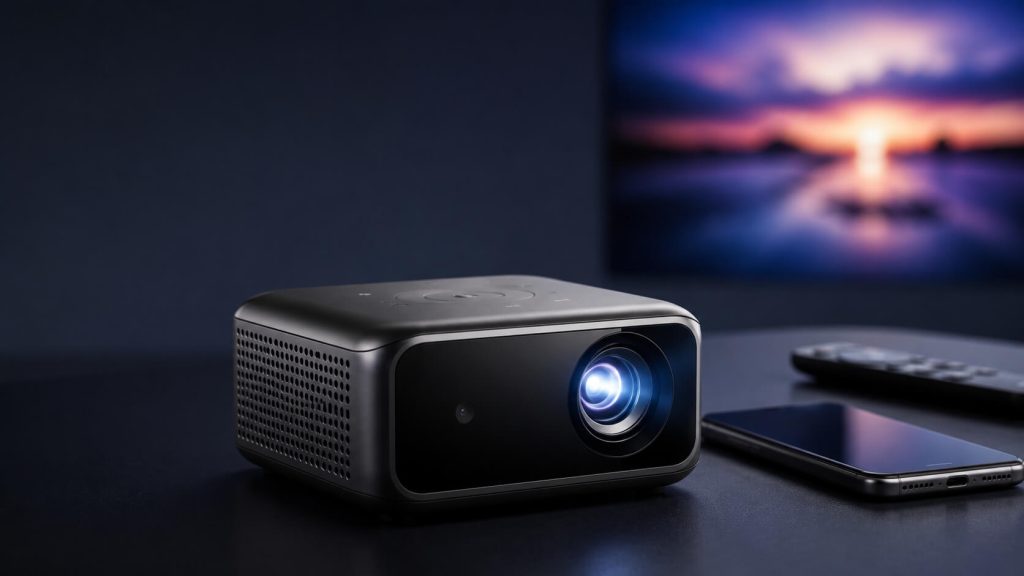
A mini projector is a compact and portable projector designed to display movies, presentations, games, and other content on a much larger screen than a smartphone, tablet, or laptop. Unlike traditional projectors, it is lightweight, easy to carry, and quick to set up, making it an excellent choice for home entertainment, outdoor movie nights, travel, education, and business presentations. Modern mini projectors also feature LED light sources, wireless connectivity, built-in speakers, and smart operating systems, offering impressive performance in a small form factor. If you’re wondering what a mini projector is, how it works, and whether it’s the right choice for your needs, this complete guide covers everything you need to know before buying one.
Unlike traditional projectors that are often designed for permanent installation or business environments, mini projectors focus on portability, convenience, and easy setup. Many models include built-in batteries, wireless connectivity, and smart features that make them ideal for travel, outdoor movie nights, and casual home entertainment.
If you’re considering buying your first portable projector, understanding what a mini projector is, how it works, and where it performs best will help you make a more informed decision.
Quick Answer
A mini projector is a compact and portable projector designed to display images and videos on a larger surface while taking up much less space than a traditional projector. Most mini projectors use LED light sources, support wireless or wired connections, and are ideal for entertainment, travel, education, and lightweight business presentations.
If you’d like a broader understanding of projector technologies, display systems, brightness, and resolution, read our complete Projectors and Display Technology guide.
What Is a Mini Projector?
A mini projector is a smaller version of a standard projector that offers many of the same core functions in a much more portable design.
Instead of requiring a large installation space, mini projectors are designed to be lightweight, compact, and easy to carry. Despite their smaller size, many modern models can project surprisingly large images, making them suitable for a wide variety of everyday uses.
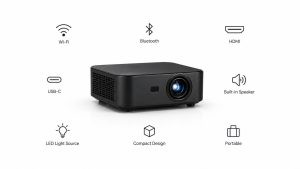
Depending on the model, a mini projector may include features such as:
- Built-in rechargeable battery
- Wi-Fi connectivity
- Bluetooth support
- HDMI and USB ports
- Screen mirroring
- Built-in speakers
- Smart operating system
These features allow users to enjoy large-screen entertainment without the complexity of traditional projector setups.
How Is a Mini Projector Different from a Traditional Projector?
Although mini projectors and traditional projectors share the same basic purpose, they are designed with different priorities.
Mini projectors emphasize:
- Portability
- Convenience
- Quick setup
- Lightweight construction
- Battery-powered operation (on some models)
Traditional projectors, on the other hand, generally prioritize:
- Higher brightness
- Larger optical systems
- Better image quality
- Professional installations
- Long-duration viewing
Mini projectors are ideal for users who value flexibility, while traditional projectors are often better suited for dedicated home theaters, classrooms, and conference rooms.
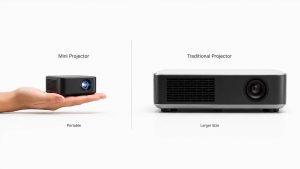
Mini Projector vs Traditional Projector
| Feature | Mini Projector | Traditional Projector |
|---|---|---|
| Size | Small | Large |
| Portability | Excellent | Low |
| Brightness | Moderate | High |
| Battery | Available | Rare |
| Best For | Travel | Home Theatre |
Want a detailed comparison? Read our Mini Projector vs Regular Projector guide to understand which option is better for your specific needs.
Main Features of a Mini Projector
Modern mini projectors include a variety of features that make them practical for everyday use.
Compact and Lightweight Mini Projector Design
The biggest advantage of a mini projector is portability.
Many models are small enough to fit into a backpack, travel bag, or even a large pocket, making them easy to carry between locations.
This portability makes them ideal for:
- Travel
- Outdoor movie nights
- Camping
- Business trips
- Student presentations
LED Light Source in Mini Projectors
Most mini projectors use LED light sources rather than traditional projection lamps.
LED technology offers several benefits:
- Longer lifespan
- Lower energy consumption
- Less heat generation
- Quieter operation
- Reduced maintenance
These advantages help make mini projectors more reliable for regular everyday use.
Wireless Connectivity
Many modern mini projectors support wireless technologies that reduce the need for multiple cables.
Common wireless features include:
- Wi-Fi
- Bluetooth
- Screen Mirroring
- Chromecast compatibility
- AirPlay support
These options allow users to stream content directly from smartphones, tablets, and laptops with minimal setup.
Built-In Battery
Some portable mini projectors include rechargeable batteries, allowing them to operate without being connected to a power outlet.
Battery-powered models are particularly useful for:
- Outdoor entertainment
- Camping trips
- Travel
- Emergency presentations
Battery life varies by model, brightness level, and usage conditions.
Smart Features in Modern Mini Projectors
Many newer mini projectors include built-in smart operating systems.
Depending on the model, users may be able to:
- Install streaming apps
- Watch YouTube
- Access Netflix (where officially supported)
- Browse the internet
- Stream content without external devices
These features make mini projectors increasingly convenient for casual entertainment.
What Devices Can You Connect to a Mini Projector?
One of the biggest advantages of modern mini projectors is their compatibility with a wide range of devices.
Commonly supported devices include:
- Smartphones
- Tablets
- Laptop computers
- Desktop PCs
- Gaming consoles
- Streaming devices
- USB storage devices
Connection methods often include:
- HDMI
- USB-C
- Wi-Fi
- Bluetooth
- Screen Mirroring
If you’re planning to use your smartphone, our How to Connect Mini Projector to Phone guide provides step-by-step instructions for both Android and iPhone users.
Types of Mini Projectors Explained
Not all mini projectors are built for the same purpose. While they all prioritize portability, different models offer unique features designed for specific users and environments.
Understanding the main types of mini projectors can help you choose the right one for your needs.
Pico Projectors
Pico projectors are the smallest category of mini projectors.
Many are compact enough to fit into a pocket, making them ideal for travel and quick presentations.
Typical features include:
- Ultra-portable design
- Rechargeable battery
- LED light source
- Wireless connectivity
- Lower brightness compared to larger projectors
These projectors work best in dark rooms where high brightness is less important.
Smart Mini Projectors
Smart mini projectors include built-in operating systems such as Android TV or Google TV.
Instead of connecting an external streaming device, users can access supported apps directly from the projector.
Common smart features include:
- Built-in streaming apps
- Voice control support
- Wi-Fi connectivity
- Bluetooth audio
- Wireless software updates
These projectors are a convenient choice for home entertainment.
Portable Business Projectors
Some mini projectors are designed for professionals who frequently travel for meetings or presentations.
These models often focus on:
- Higher brightness
- Better text clarity
- Multiple input ports
- Quick setup
- Lightweight construction
They are especially useful for educators, consultants, and business travelers.
Battery-Powered Mini Projectors
Battery-powered models allow users to project content without a nearby power outlet.
Depending on the projector and brightness level, battery life may range from a couple of hours to several hours.
They are popular for:
- Outdoor movie nights
- Camping
- Road trips
- Emergency presentations
- Family gatherings
Common Uses of Mini Projectors
Mini projectors have become versatile devices suitable for many everyday situations.
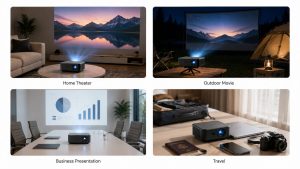
Some of the most common uses include:
Mini Projector for Home Entertainment
Many people use mini projectors to enjoy:
- Movies
- TV shows
- Sports
- YouTube videos
- Streaming platforms
A portable projector can easily transform a bedroom or living room into a simple home theater.
Mini Projector for Outdoor Movie Nights
Portable projectors are excellent for outdoor entertainment.
Combined with a portable screen and speakers, they can create a cinematic experience in a backyard, campsite, or garden.
Mini Projector for Business Presentations
Professionals often choose mini projectors because they are lightweight and easy to transport between meetings.
A compact projector can replace carrying larger presentation equipment.
Mini Projector for Education
Teachers and students use mini projectors for:
- Classroom lessons
- Group projects
- Online learning
- Educational videos
Their portability makes them practical for both schools and remote learning environments.
Mini Projector for Casual Gaming
Many gamers use mini projectors for:
- Console gaming
- Multiplayer sessions
- Large-screen experiences
While dedicated gaming projectors often provide better performance, mini projectors remain a convenient option for casual gaming.
Advantages of Using a Mini Projector
Mini projectors offer several practical benefits that explain their growing popularity.
Easy to Carry
Their compact size makes transportation simple.
Whether you’re traveling or moving between rooms, portability is one of their biggest strengths.
Quick Setup
Most mini projectors can be installed within minutes.
Many support automatic focus and keystone correction, reducing setup time even further.
Energy Efficient
Because many models use LED light sources, they consume less electricity than traditional lamp-based projectors.
This also contributes to longer operating lifespans.
Wireless Convenience
Modern mini projectors frequently support:
- Screen mirroring
- Wi-Fi
- Bluetooth
- Wireless streaming
This minimizes cable clutter and makes everyday use more convenient.
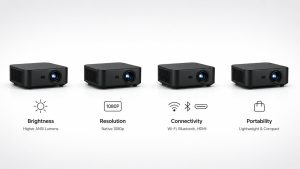
Affordable Options
Many entry-level mini projectors are available at lower prices than premium home theater projectors, making them attractive for beginners and casual users.
Limitations of a Mini Projector
Despite their convenience, mini projectors also have some limitations that buyers should understand.
Lower Brightness
Because of their compact size, many mini projectors produce fewer ANSI lumens than larger projectors.
They generally perform best in darker environments.
Smaller Speakers
Built-in speakers are often adequate for personal use but may not provide enough volume for larger rooms or outdoor events.
External Bluetooth speakers can significantly improve the experience.
Limited Battery Life
Battery-powered projectors eventually require recharging.
Long movie sessions or extended presentations may require an external power source.
Performance Varies by Model
Not all mini projectors offer the same level of image quality, resolution, or connectivity.
Comparing specifications before purchasing is always recommended.
Who Should Buy a Mini Projector?
Mini projectors are an excellent choice for users who prioritize portability and convenience over maximum brightness.
They are particularly suitable for:
- Travelers
- Students
- Apartment dwellers
- Casual movie enthusiasts
- Outdoor entertainment lovers
- Mobile professionals
- Families looking for flexible home entertainment
If you primarily need a lightweight projector for occasional use, a mini projector can be an excellent investment.
However, if you require the brightest possible image for large rooms or dedicated home theaters, a full-size projector may be a better option.
Still deciding? Our Mini Projector vs Regular Projector comparison guide explains the strengths and weaknesses of each option to help you make the right choice.
Curious about the technology behind image projection? Read How Projector Works to understand how modern projectors create large, high-quality images.
Common Myths About Mini Projectors
Mini projectors have become much more capable in recent years, but many misconceptions still influence buying decisions. Separating myths from facts helps you choose a projector that matches your expectations.
Myth 1: Mini Projectors Can’t Produce Large Images
Fact:
Despite their compact size, many mini projectors can project images ranging from 80 to over 150 inches, depending on the model and projection distance.
Image size depends on factors such as:
- Throw ratio
- Projection distance
- Lens design
- Resolution
A smaller projector does not necessarily mean a smaller screen.
Myth 2: Every Mini Projector Has Poor Picture Quality
Fact:
Picture quality varies significantly between models.
Higher-quality mini projectors may include:
- Native Full HD resolution
- HDR support
- Better color processing
- Auto focus
- Keystone correction
Choosing a reputable model is far more important than judging a projector solely by its size.
Myth 3: Mini Projectors Don’t Need External Speakers
Fact:
Most mini projectors include built-in speakers, but they are usually designed for personal listening.
For outdoor movies or larger rooms, connecting a Bluetooth speaker or soundbar often provides a much better audio experience.
Myth 4: Every Mini Projector Runs Streaming Apps Natively
Fact:
Only smart mini projectors include built-in operating systems that support streaming apps.
Many entry-level models require an external streaming device, laptop, or smartphone for services such as YouTube or other supported platforms.
Always review the product specifications before purchasing.
Mini Projector FAQs
What is a mini projector used for?
Mini projectors are commonly used for:
- Home entertainment
- Outdoor movie nights
- Business presentations
- Classroom learning
- Casual gaming
- Travel
Their portability makes them suitable for situations where a traditional projector may be less convenient.
Are mini projectors worth buying?
Yes, if portability, flexibility, and convenience are your priorities.
However, users who require maximum brightness or a permanent home theater setup may prefer a full-size projector.
Can a mini projector replace a TV?
For many users, a mini projector can provide a large-screen viewing experience for movies and streaming.
However, televisions generally offer higher brightness, making them a better choice for brightly lit rooms and everyday viewing.
Do mini projectors work with smartphones?
Yes.
Many modern mini projectors support smartphone connectivity through:
- HDMI adapters
- USB-C
- Wi-Fi
- Screen mirroring
- AirPlay
- Chromecast
Follow our complete guide to connect your Android or iPhone to a mini projector quickly and correctly.
How long does a mini projector last?
The lifespan depends primarily on the light source.
Most LED-based mini projectors are designed to operate for many years under normal home use before the light source reaches the end of its expected lifespan.
Conclusion
Mini projectors have transformed the way people enjoy entertainment, presentations, and portable display technology. Their compact size, wireless connectivity, and ease of use make them an attractive option for travellers, students, professionals, and families.
While they may not replace high-end home theatre projectors in every situation, modern mini projectors offer an excellent balance of portability, convenience, and performance for everyday use.
Before purchasing, consider factors such as brightness, resolution, battery life, connectivity, and your primary use case. Choosing a projector that aligns with your viewing environment and expectations will provide a far better long-term experience than focusing on size or price alone.
As portable display technology continues to improve, mini projectors are becoming more capable, more affordable, and more practical than ever before.