
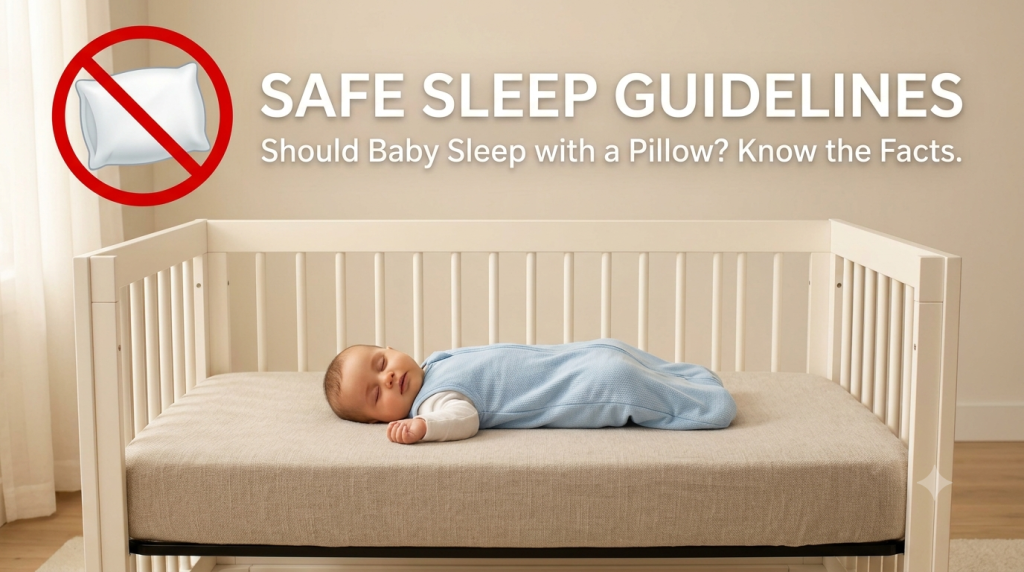
Should Baby Sleep with a Pillow? Safe Sleep Guidelines Every Parent Should Know
Introduction
Should Baby Sleep with a Pillow? This is one of the most common questions new parents ask. While pillows make adults more comfortable, they are not safe for babies during infancy. Understanding should baby sleep with a pillow is important because using one too early can increase the risk of suffocation, airway obstruction, and Sudden Infant Death Syndrome (SIDS). This guide explains when babies can safely use a pillow and how to create the safest sleep environment.

Understanding should baby sleep with a pillow is essential for creating a safe sleep environment. This guide explains when babies can safely use a pillow, why experts recommend waiting, and how to keep your child comfortable while following safe sleep recommendations.
When you walk through a baby store, you are often greeted by adorable nursery displays filled with matching quilts, bumper pads, and tiny pillows. They look cozy and comfortable, making it easy to assume that babies need pillows just like adults do.
However, when it comes to infant sleep safety, the answer is simple: babies should not sleep with a pillow. In fact, introducing a pillow too early can increase the risk of serious sleep-related accidents.
In this guide, you’ll learn why babies don’t need pillows, the risks of using them too soon, and when it finally becomes safe to introduce one.
When Is It Safe for a Baby to Sleep with a Pillow?
Most pediatric sleep experts recommend waiting until your child is at least 2 years old before introducing a pillow.
Before this age, babies should sleep on a firm, flat mattress with no pillows, blankets, stuffed animals, or other loose bedding in the crib.
By age two, most children have developed the physical strength and mobility needed to move away from objects that could interfere with breathing, making pillow use much safer.
Why Babies Should Not Sleep with a Pillow
While a pillow may seem harmless, it can pose several safety risks for infants.
Suffocation Risk
Young babies do not have the neck strength or motor skills to move themselves away if their face becomes pressed against a pillow.
A soft pillow can block the nose and mouth, creating a dangerous suffocation hazard.
Increased Risk of SIDS
Soft bedding, including pillows, is associated with a higher risk of Sudden Infant Death Syndrome (SIDS).
A bare crib provides the safest sleep environment because it eliminates objects that could obstruct a baby’s airway or trap exhaled carbon dioxide around their face.
Overheating
Babies regulate body temperature differently than adults. Soft pillows can trap heat around the head and face, increasing the risk of overheating during sleep.
Overheating has also been identified as a risk factor for sleep-related infant deaths.
Common Myths About Baby Pillows
Many parents consider using a pillow because of common misconceptions. Let’s look at some of the most common myths.
Myth #1: A Pillow Can Fix Flat Head Syndrome
Special infant pillows are often marketed as solutions for flat spots on a baby’s head.
However, pediatricians generally recommend supervised tummy time and changing your baby’s position while awake rather than using pillows during sleep.
Myth #2: Babies Must Be Uncomfortable Without a Pillow
Adults often assume babies need the same sleep setup they do.
In reality, babies have short necks and naturally flexible spines. A flat sleeping surface is actually the most comfortable and developmentally appropriate position for them.
Myth #3: A Pillow Helps Babies Sleep Longer
There is no scientific evidence showing that pillows improve infant sleep quality or duration.
Consistent routines, proper feeding, and an appropriate sleep environment are far more important for healthy sleep.
How to Keep Your Baby Comfortable Without a Pillow
Parents often worry that an empty crib looks uncomfortable. Fortunately, there are safe ways to keep babies cozy.
Use a Sleep Sack
A wearable blanket or sleep sack keeps babies warm without introducing loose bedding into the crib.
Sleep sacks are considered one of the safest alternatives to traditional blankets.
Dress Your Baby in Appropriate Layers
A good rule of thumb is to dress your baby in one more layer than an adult would wear comfortably in the same room.
Maintain a Comfortable Room Temperature
Most experts recommend keeping the nursery between 20°C and 22°C (68°F to 72°F) for safe and comfortable sleep.
When Transitioning to a Pillow: What Parents Should Know
Once your child reaches toddlerhood and is sleeping in a toddler bed, you can consider introducing a pillow.
Choose the Right Toddler Pillow
When shopping for your child’s first pillow, look for:
Small Size
Toddler pillows are smaller than standard adult pillows and provide better neck support.
Firm Support
Choose a pillow that is relatively firm and does not collapse easily under pressure.
Hypoallergenic Materials
Hypoallergenic fabrics can help reduce irritation and minimize allergy-related issues.
Essential Safe Sleep Checklist
Before putting your baby to bed, review this simple checklist:
✔ Always place your baby on their back to sleep
✔ Use a firm, flat mattress
✔ Keep the crib completely free of pillows, blankets, toys, and bumpers
✔ Use a tightly fitted crib sheet
✔ Avoid overheating
✔ Consider a sleep sack instead of loose blankets
A Reassuring Note for Parents
Many parents feel that a crib without pillows, blankets, or toys looks cold and uncomfortable. That’s completely understandable.
But babies don’t need the same sleep environment adults do. What may seem bare to us is actually the safest and most comfortable setup for an infant.
The “bare is best” approach isn’t about being strict—it’s about creating the safest possible sleeping space for your baby.
Every time you place your baby in a clear, uncluttered crib, you’re making a choice that helps reduce sleep-related risks and supports healthy development.
http://CDC Safe Sleep https://www.cdc.gov/sudden-infant-death/about/index.html
Final Thoughts
So, should a baby sleep with a pillow?
For infants, the answer is no. Experts recommend keeping pillows out of the sleep environment until your child is at least two years old.
Until then, a firm mattress, a fitted sheet, and a safe sleep sack are all your baby needs for a comfortable and secure night’s sleep.
By following safe sleep guidelines today, you’re helping protect your little one and giving yourself greater peace of mind every night.