
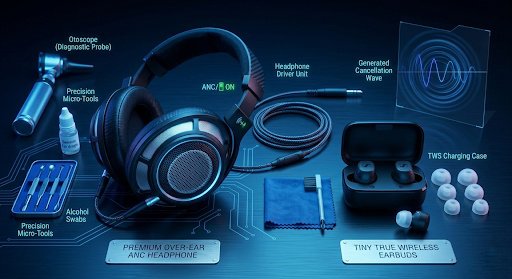
The debate over wired vs wireless audio quality has never been more relevant — or more misunderstood. Wireless headphones now outsell wired models globally by a significant margin, yet audiophiles continue to argue that wired connections deliver superior sound. Who is right? The answer is more nuanced than either camp admits. This guide examines the full technical picture — signal paths, codecs, DACs, latency, and real-world listening — to give you a definitive, evidence-based verdict for 2026.
Featured Snippet Definition:
Wired audio quality is theoretically superior because it transmits an uncompressed analog or digital signal directly to the headphone’s driver without wireless compression. Wireless audio quality has closed the gap significantly through high-bitrate codecs like LDAC and aptX Adaptive, making the difference inaudible to most listeners in real-world conditions.
Wired vs Wireless Audio Quality: What Actually Differs Between the Two?
The core difference in wired vs wireless audio quality comes down to the signal path. A wired connection delivers audio as a continuous analog electrical signal — or as an uncompressed digital signal via USB-C — directly from source to headphone driver with no compression required.
A wireless connection compresses audio into digital data, transmits it via radio waves, and decompresses it at the headphone. Each step introduces potential quality loss. However, how much quality is actually lost depends entirely on which codec handles the compression.
Here is a direct comparison of the key technical differences:
| Factor | Wired | Wireless |
|---|---|---|
| Signal path | Direct analog or digital | Compressed radio transmission |
| Compression | None (lossless) | Codec-dependent (lossy to near-lossless) |
| Latency | Under 5ms | 20ms to 200ms depending on codec |
| Interference | Zero | Possible at 2.4 GHz |
| Battery required | No | Yes |
| DAC location | Source device or headphone | Inside headphone |
| Maximum bitrate | Unlimited | Up to 990 kbps (LDAC) |
How Does the Signal Chain Affect Wired vs Wireless Audio Quality Differently?
In a wired headphone setup, the digital-to-analog conversion (DAC) and amplification happen inside the source device — your phone, laptop, or dedicated DAC/amp unit. The resulting analog signal travels along the cable to the headphone driver.
In a wireless setup, the DAC and amplifier live inside the headphone itself. The source device encodes audio digitally, transmits it wirelessly, and the headphone handles the DAC and amplification internally. Therefore, wireless headphone sound quality depends heavily on the quality of the onboard DAC and amplifier — components that vary significantly between price tiers.
How Does Compression Affect Wired vs Wireless Audio Quality?
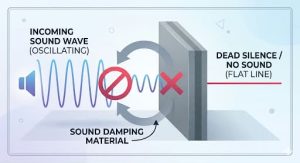
Compression is the central battleground in the wired vs wireless audio quality debate. Understanding how different codecs handle compression explains why the quality gap has narrowed dramatically since 2018.
Why Does Wired Audio Have a Compression Advantage Over Wireless?
Wired connections transmit audio without any compression whatsoever. A 24-bit/96kHz high-resolution audio file travels from source to headphone driver with every bit of its original data intact. No encoding algorithm makes decisions about which audio information to discard. Furthermore, there is no bandwidth limit imposed by a wireless protocol.
This is the genuine theoretical advantage of wired vs wireless audio quality. In a perfectly controlled environment with a high-quality source, lossless wired transmission preserves audio information that any compressed wireless transmission discards.
However, two important caveats apply. First, most commercially available music — including streaming audio from Spotify, Apple Music, and Tidal — arrives at your device already compressed. Therefore, the wired connection preserves a compressed source file, not an uncompressed original. Second, human hearing has practical limits. Research published in the Journal of the Audio Engineering Society found that trained listeners could not reliably distinguish between 320 kbps MP3 and uncompressed audio in double-blind listening tests — suggesting that compression artifacts below certain thresholds are inaudible even to experienced ears.
How Do Modern Codecs Close the Wired vs Wireless Audio Quality Gap?
The wireless audio quality landscape has transformed since the introduction of high-bitrate codecs. Here is how the major codecs compare against wired transmission:
| Codec | Bitrate | vs CD Quality (1,411 kbps) | Audible Difference from Wired? |
|---|---|---|---|
| SBC | Up to 345 kbps | 24% of CD | Potentially audible |
| AAC | Up to 256 kbps | 18% of CD | Potentially audible on iOS |
| AptX | Up to 352 kbps | 25% of CD | Minimal difference |
| AptX HD | Up to 576 kbps | 41% of CD | Very small difference |
| AptX Adaptive | Up to 1,000 kbps | 71% of CD | Nearly inaudible |
| LDAC (990 kbps) | 990 kbps | 70% of CD | Nearly inaudible |
According to What Hi-Fi’s comprehensive wired vs wireless headphone comparison, their listening panel found that LDAC at 990 kbps produced results indistinguishable from wired connections in casual and semi-critical listening. Only in highly controlled critical listening sessions with high-resolution source material did experienced listeners perceive any difference.
How Does Latency Compare in Wired vs Wireless Audio Quality Scenarios?
Latency — the delay between audio generation and sound production — is the one area where wired connections maintain a clear, measurable advantage that matters practically for specific use cases.

Why Does Wired Audio Win the Latency Battle Against Wireless?
A wired connection produces under 5 milliseconds of latency. This delay is entirely imperceptible to human hearing and creates zero practical disadvantage in any audio scenario — music, video, gaming, or communication.
Wireless audio latency varies dramatically by codec. SBC produces 150 to 200ms of delay. At this level, lip-sync offset becomes clearly visible when watching video. AptX Low Latency reduces delay to approximately 40ms — below the threshold of perceptibility for most viewers. Bluetooth LE Audio with LC3 achieves 20 to 30ms — approaching wired connection performance for practical purposes.
For gaming, communication, and video content, latency matters significantly. A 200ms audio delay during gaming disrupts audio cues that competitive players rely on. For music listening alone, latency has no practical impact because there is no visual reference to sync with.
Which Use Cases Care Most About Wired vs Wireless Audio Quality Latency?
The latency difference matters differently across use cases:
- Music listening: Latency is irrelevant. No reference exists to expose delay.
- Video watching: 40ms or less required to avoid perceptible lip-sync offset.
- Gaming: Under 40ms strongly preferable. Competitive gaming benefits from under 20ms.
- Video calls: 100ms total system latency acceptable. Under 50ms preferable.
- Music production and recording: Under 10ms essential. Wired connections strongly recommended.
For music producers, podcasters, and recording professionals, wired connections remain the clear choice specifically because of latency — not because of audio quality differences that casual listeners can perceive. The Reddit HeadphoneAdvice community’s discussion on wired vs wireless audio quality benefits reflects this nuanced reality — experienced users consistently note that use case determines which connection type is actually better.
How Do DACs and Amplifiers Affect Wired vs Wireless Audio Quality?
The DAC and amplifier in the signal chain profoundly affect perceived audio quality — and the wired vs wireless comparison changes significantly when you account for where these components live in each setup.
Why Does DAC Placement Matter in Wired vs Wireless Audio Quality Comparisons?
In a wired headphone setup using a standard 3.5mm connection, the DAC inside your source device determines audio quality. Modern smartphones use competent but not exceptional DACs. Budget phones often include DACs that introduce audible noise floors and limited dynamic range.
In contrast, a quality wireless headphone includes its own onboard DAC — often superior to the DAC in a mid-range smartphone. As a result, a $300 wireless headphone connected via Bluetooth may actually deliver better audio quality than the same headphone connected via a basic 3.5mm output from a budget phone.
Furthermore, many flagship smartphones have removed the 3.5mm headphone jack entirely. Using wired headphones with these devices requires a USB-C to 3.5mm adapter — which includes a DAC of variable quality. Budget adapters introduce measurable noise and distortion. Therefore, the wired advantage assumes a quality source output — an assumption that frequently does not hold in real-world use.
When Does Wired vs Wireless Audio Quality Favor Wired in DAC Terms?
Wired connections deliver their fullest audio quality advantage when paired with a dedicated external DAC and amplifier. Audiophile-grade USB DAC/amp units from companies like AudioQuest, FiiO, and Cambridge Audio output audio at significantly higher quality than any smartphone or laptop DAC. In this context, wired headphones receive the full benefit of that superior DAC output.
For audiophiles using dedicated source equipment, the wired vs wireless quality gap remains meaningful. However, for the vast majority of listeners using smartphones as their source, that theoretical gap is reduced or eliminated by the DAC quality limitations of the source device itself.
For a complete technical breakdown of how wireless audio hardware manages DAC and amplification inside the device, our guide on how wireless earbuds work covers every component in detail.
How Does Real-World Listening Reveal Wired vs Wireless Audio Quality Differences?
Theory and practice do not always align in audio. Real-world listening tests between wired and wireless connections reveal a more complex picture than spec sheets suggest.
What Do Blind Listening Tests Show About Wired vs Wireless Audio Quality?
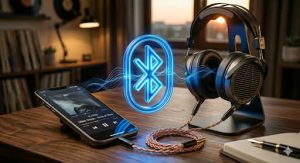
Double-blind listening tests — where neither the listener nor the tester knows which condition is active — consistently produce surprising results. Multiple studies and tests published by audio engineering institutions found that trained listeners could not reliably identify wired vs wireless audio when the wireless connection used LDAC or aptX Adaptive at maximum bitrate.
The AddaSound analysis of wired vs wireless headphone differences confirms this finding — noting that the practical audio quality difference between a high-bitrate wireless connection and a wired connection on standard listening material is negligible for the majority of users.
This does not mean no difference exists. It means the difference falls below the threshold of reliable human perception under normal listening conditions. Audible differences between wired and wireless emerge primarily when all of these conditions apply simultaneously:
- The source material is genuinely high-resolution (24-bit/96kHz or higher, uncompressed)
- The playback system includes a high-quality dedicated DAC and amplifier
- The wireless codec is SBC or AAC rather than LDAC or aptX Adaptive
- The listener has trained critical listening skills developed through years of comparative analysis
For most listeners on most occasions, none of these conditions fully apply — making the practical wired vs wireless audio quality difference inaudible.
How Does Streaming Quality Affect the Wired vs Wireless Audio Quality Debate?
The source material matters as much as the connection type. Spotify streams at a maximum of 320 kbps OGG Vorbis. Apple Music streams lossless ALAC at up to 1,411 kbps and hi-res lossless at up to 9,216 kbps. Tidal HiFi provides FLAC at 1,411 kbps.
When streaming at 320 kbps — which millions of listeners do daily — the source material already discards more audio data than even SBC wireless transmission adds. In this scenario, a wired connection preserves a 320 kbps compressed file perfectly, while an LDAC connection at 990 kbps also transmits it with only modest additional compression. The practical difference approaches zero.
However, when streaming Apple Music Lossless or Tidal HiFi at full quality to a device with a high-quality DAC, a wired connection genuinely preserves more audio data than any current wireless codec — including LDAC. Whether you can actually hear that difference remains the central question, and double-blind testing suggests most listeners cannot under normal conditions.
How Should You Choose Between Wired vs Wireless Audio Quality for Your Needs?
The answer depends on your specific use case, source equipment, and listening priorities. Neither option is universally superior.

Which Scenarios Favor Wired Audio Quality Over Wireless?
Choose wired audio when:
- You use a dedicated DAC/amp unit — Wired connections deliver the full quality benefit of high-end external source equipment.
- You record, produce, or monitor audio professionally — Latency under 5ms is essential and only wired connections reliably deliver it.
- You listen in critical conditions with high-resolution source material — The theoretical quality advantage of wired is most audible in this specific combination of circumstances.
- You prefer not to manage battery life — Wired headphones never run out of power during use.
- You use high-impedance audiophile headphones — Many require more power than wireless amplifier circuits provide. Dedicated wired amplifiers drive them more effectively.
Which Scenarios Favor Wireless Audio Quality Over Wired?
Choose wireless audio when:
- You use a smartphone as your primary source — The onboard DAC in a quality wireless headphone often matches or exceeds the DAC in a mid-range smartphone.
- You listen to standard streaming content — At 320 kbps streaming, LDAC or aptX Adaptive wireless delivers equivalent audible quality to a wired connection.
- You prioritize convenience and mobility — No cable management, freedom of movement, and multipoint connection features add real practical value.
- You need ANC for noisy environments — The hearing protection benefit of ANC in loud spaces outweighs any theoretical audio quality advantage from a wired connection at moderate volumes.
- You watch video on a device with aptX Low Latency or LE Audio — Latency under 40ms eliminates the primary practical disadvantage of wireless for video content.
For users interested in how wireless microphone systems in Bluetooth headphones handle the voice signal chain — important for calls and recordings — our detailed guide on how earbud microphones work explains every component clearly.
Frequently Asked Questions: Wired vs Wireless Audio Quality
1. Is wired audio quality actually better than wireless in 2026?
Technically yes — wired connections transmit audio without compression, preserving every bit of the original signal. Practically, however, high-bitrate wireless codecs like LDAC and aptX Adaptive have closed the gap to the point where most listeners cannot reliably distinguish wired from wireless in double-blind tests using standard streaming content. The difference is most audible with high-resolution lossless source material through a dedicated DAC/amp, not through a typical smartphone.
2. Does wireless audio quality get worse over distance?
Yes — Bluetooth audio quality can degrade at the edges of connection range or through heavy interference. However, most Bluetooth headphones maintain stable, full-quality connections within 10 meters of the source device in typical indoor environments. The codec automatically adjusts bitrate to maintain connection stability at range, which may reduce audio quality slightly at the connection limits.
3. Which wireless codec delivers the closest audio quality to wired?
LDAC at 990 kbps and aptX Adaptive at up to 1,000 kbps deliver the closest wireless approximation of wired audio quality. Both codecs transmit roughly 70% of CD-quality audio data and produce results that most listeners cannot distinguish from wired connections in double-blind testing with standard streaming content. LC3 via Bluetooth LE Audio delivers excellent efficiency at lower bitrates.
4. Does removing the headphone jack make wired audio quality worse?
Using USB-C to 3.5mm adapters introduces a DAC of variable quality. Budget adapters — often bundled with phones — include low-grade DACs that can introduce noise and distortion. Premium adapters from AudioQuest, Apple, and Anker include better DACs. Therefore, on phones without 3.5mm jacks, wireless audio via LDAC may actually deliver better practical audio quality than wired audio through a budget USB-C adapter.
5. Can audiophiles hear the difference between wired and wireless audio quality?
Some trained audiophiles can detect differences in specific, controlled conditions — high-resolution source material, quality DAC/amp, SBC or AAC wireless codec. However, multiple double-blind studies show that even trained listeners cannot reliably distinguish wired from wireless when the wireless connection uses LDAC or aptX Adaptive with standard streaming content. The difference exists measurably but falls below reliable perceptual thresholds for most listeners most of the time.
6. Does wireless audio quality work for professional music production?
No — professional music production requires latency under 10ms for monitoring, which no current wireless audio solution reliably delivers. Additionally, production environments require guaranteed signal integrity without any wireless interference risk. Wired connections remain the standard for studio monitoring, recording, and production regardless of how wireless audio quality improves for consumer listening.
7. How does the source device affect wired vs wireless audio quality?
The source device determines wired audio quality through its internal DAC and output stage. A premium smartphone or laptop with a high-quality DAC delivers excellent wired audio. A budget device with a noisy DAC delivers poor wired audio. Wireless audio quality depends on the headphone’s internal DAC instead, separating quality from the source device. Therefore, a quality wireless headphone often sounds better from a budget phone than cheap wired headphones through the same phone’s poor DAC.
8. Is there a difference in audio quality between true wireless earbuds and wired earbuds?
Yes — true wireless earbuds add wireless compression, rely on their internal DAC, and must relay audio between left and right earbuds. The relay connection between earbuds in many true wireless designs uses a second Bluetooth link with lower quality than the primary connection. Bluetooth LE Audio with isochronous channels eliminates this relay issue. Wired earbuds with a quality source deliver theoretically superior signal integrity, though the practical audible difference depends on the specific models compared.
9. Does battery level affect wireless audio quality in headphones?
It can — some headphones reduce processing power as the battery drains to extend runtime, which may affect codec performance or ANC effectiveness. Additionally, a dying battery can cause connection instability, leading the codec to reduce bitrate to maintain the connection. Therefore, maintaining adequate battery charge maximizes wireless audio quality consistency throughout listening sessions.
10. Which is better for gaming — wired or wireless audio quality?
For competitive gaming, wired connections are better due to latency. Even 40ms of wireless latency creates audio cue delays that affect competitive performance. For casual gaming where audio timing is not critical, wireless headphones with aptX Low Latency or LE Audio deliver acceptable performance. And for music composition or audio production work within a gaming context, wired remains essential. immersive single-player gaming focused on atmosphere rather than reaction time, high-bitrate wireless is perfectly adequate.
Conclusion: Wired vs Wireless Audio Quality — The Honest Verdict
Wired connections hold a genuine theoretical audio quality advantage — lossless signal transmission, zero wireless compression, and sub-5ms latency — that matters most in specific audiophile and professional scenarios. However, high-bitrate wireless codecs like LDAC and aptX Adaptive have closed the practical quality gap to the point of inaudibility for most listeners using standard streaming content through typical source devices. For everyday listening, wireless headphones with LDAC or aptX Adaptive deliver audio quality that double-blind testing cannot reliably distinguish from wired alternatives. Your use case — not the theoretical spec sheet — should determine which connection type you choose.
Ready to find the best headphones for your listening needs? Explore our complete guide on which headphones are safest and best-performing for your ears and make a fully informed choice today.