
Introduction
Wireless earbuds have completely changed the way we listen to music, make phone calls, and enjoy entertainment. With no tangled cables to worry about, they offer freedom, convenience, and advanced features packed into a tiny device. But have you ever wondered how wireless earbuds work behind the scenes?
From Bluetooth connectivity and rechargeable batteries to built-in microphones and Active Noise Cancellation (ANC), modern wireless earbuds rely on several advanced technologies working together seamlessly. In just a few seconds, they can connect to your smartphone, stream high-quality audio, and let you answer calls without touching your phone.
In this guide, you’ll learn how wireless earbuds work, how Bluetooth earbuds connect, how earbud microphones work, how do earbud headphones work, and how noise cancelling earbuds work. Whether you’re buying your first pair or simply curious about the technology, this article will answer all your questions.
What Are Wireless Earbuds?
Wireless earbuds are small, portable audio devices that transmit sound from a smartphone, tablet, laptop, or other compatible device without using physical cables.
Unlike traditional wired earphones, they communicate using Bluetooth wireless technology, allowing users to enjoy greater freedom of movement.
Most modern wireless earbuds also include:
- Built-in microphones
- Touch controls
- Noise cancellation
- Voice assistant support
- Water resistance
- Fast charging
- Long battery life
These features make wireless earbuds ideal for everyday use.
How Wireless Earbuds Work
To understand how wireless earbuds work, it’s helpful to break the process into several simple steps.
Bluetooth Sends the Audio Signal
The process begins when your smartphone or laptop plays music.
Instead of sending sound through a cable, the device converts the audio into digital data and transmits it wirelessly using Bluetooth technology.
The Bluetooth signal travels through the air to your earbuds within milliseconds.
The Earbuds Receive Wireless Audio
Each earbud contains a tiny Bluetooth receiver.
This receiver captures the incoming wireless signal and forwards it to the earbud’s internal processor.
The processor decodes the digital information into audio that can be played through the speakers.
Tiny Speakers Produce Sound
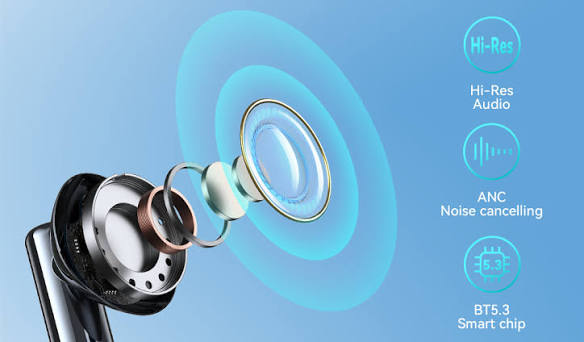
Inside every earbud is a miniature speaker known as a driver.
The driver converts electrical signals into sound waves.
When the processed digital signal reaches the driver, it vibrates rapidly, creating the music, voices, or other sounds you hear.
Rechargeable Batteries Power the Earbuds
Wireless earbuds rely on small rechargeable lithium-ion batteries.
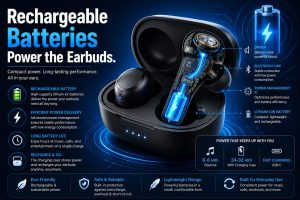
These batteries power:
- Bluetooth communication
- Audio processing
- Microphones
- Touch controls
- Noise cancellation
Charging cases provide additional battery capacity, allowing users to recharge their earbuds multiple times while traveling.
Bluetooth Technology in Wireless Earbuds
One of the most important parts of how wireless earbuds work is Bluetooth technology.
Bluetooth is a short-range wireless communication standard that allows devices to exchange information securely without cables.
Modern Bluetooth versions provide:
- Faster pairing
- Better sound quality
- Lower battery consumption
- Improved connection stability
- Longer wireless range
Most premium earbuds now use Bluetooth 5.2, 5.3, or newer versions.
How Wireless Earbuds Pair with Devices
Understanding how wireless earbuds pair helps explain why they reconnect so quickly.
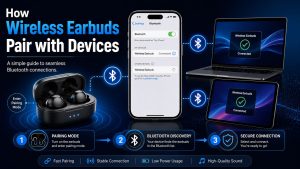
The pairing process typically follows these steps:
- Turn on the earbuds.
- Enable Bluetooth on your smartphone.
- Select the earbuds from the available devices list.
- Confirm the pairing request.
- Enjoy wireless audio.
After the initial setup, most earbuds reconnect automatically whenever they’re removed from the charging case.
Audio Codecs Used by Wireless Earbuds
An important part of how wireless earbuds work involves audio codecs.
Codecs compress digital audio before it’s transmitted over Bluetooth.
Popular codecs include:
SBC Codec
The standard Bluetooth codec compatible with nearly all devices.
AAC Codec
Provides improved sound quality, especially on Apple devices.
aptX Codec
Offers lower latency and enhanced audio performance on many Android smartphones.
LDAC Codec
Supports high-resolution wireless audio with greater detail and clarity.
The codec used depends on both your earbuds and your connected device.
Key Components That Make Wireless Earbuds Work
Several miniature components work together inside each earbud.
Bluetooth Chip
Handles wireless communication between your earbuds and connected devices.
Audio Processor
Decodes digital audio into signals the speakers can reproduce.
Speaker Driver
Produces the sound you hear.
Different driver types affect bass, clarity, and overall sound quality.
Microphone
Allows hands-free phone calls, voice recording, and voice assistant commands.
Battery
Provides power for all wireless functions.
Together, these components enable smooth wireless performance.
Advanced Features of Modern Wireless Earbuds
Today’s wireless earbuds offer much more than basic audio playback.
Active Noise Cancellation (ANC)

ANC uses microphones to detect outside noise and generate opposite sound waves that reduce background sounds.
This feature is ideal for flights, offices, and public transportation.
Transparency Mode
Transparency mode lets outside sounds pass through while you’re wearing earbuds.
This improves awareness when walking or cycling.
Touch Controls
Most earbuds allow users to:
- Play or pause music
- Skip tracks
- Adjust volume
- Answer phone calls
- Activate voice assistants
All without touching the phone.
Multipoint Connectivity
Some premium earbuds connect to two devices simultaneously.
For example, you can switch between your laptop and smartphone without reconnecting.
Common Problems with Wireless Earbuds
Although wireless earbuds are highly reliable, users occasionally encounter issues.
Earbuds Won’t Connect
Possible causes include:
- Bluetooth disabled
- Low battery
- Pairing mode not activated
- Outdated firmware
Restarting both devices often solves the problem.
Audio Delay
Gaming and video playback may experience slight audio lag.
Newer Bluetooth versions and low-latency codecs significantly reduce this delay.
One Earbud Stops Working
Sometimes one earbud loses synchronization.
Resetting the earbuds or placing both back into the charging case usually fixes the issue.
Tips to Improve Wireless Earbuds Performance
If you want better performance, follow these simple recommendations.
Keep Firmware Updated
Manufacturers frequently release updates that improve Bluetooth stability and battery efficiency.
Stay Within Bluetooth Range
Most earbuds perform best within 30 feet (10 meters) of the connected device.
Charge Regularly
Avoid letting the batteries fully discharge for long periods.
Regular charging helps maintain battery health.
Keep Earbuds Clean
Clean speaker grills and charging contacts gently using a soft, dry cloth.
This prevents dirt from affecting sound quality or charging performance.
Benefits of Understanding How Wireless Earbuds Work
Knowing how wireless earbuds work helps you make smarter buying decisions and troubleshoot issues more effectively.
Major benefits include:
- Better wireless audio experience
- Easier pairing
- Improved troubleshooting
- Longer battery life through proper care
- Better understanding of Bluetooth technology
- More informed purchasing decisions
Understanding the technology also helps you compare different earbud models based on their features and performance.
Frequently Asked Questions
How do wireless earbuds work without wires?
Wireless earbuds use Bluetooth technology to receive digital audio signals from a connected device. Built-in processors decode the signals, and miniature speaker drivers convert them into sound.
Do wireless earbuds need Wi-Fi?
No. Wireless earbuds typically rely on Bluetooth rather than Wi-Fi to connect to smartphones, tablets, laptops, and other compatible devices.
How far can wireless earbuds work?
Most wireless earbuds have an effective range of around 30 feet (10 meters) in open spaces, though obstacles may reduce this distance.
Why do wireless earbuds sometimes disconnect?
Disconnections may occur because of low battery, Bluetooth interference, outdated firmware, or moving outside the Bluetooth range.
Are wireless earbuds worth buying?
Yes. Wireless earbuds offer convenience, portability, excellent sound quality, hands-free calling, and advanced features like noise cancellation, making them a great choice for everyday use.
Conclusion
Understanding how wireless earbuds work helps you appreciate the impressive technology packed into these tiny devices. Bluetooth connectivity, rechargeable batteries, digital processors, high-quality speaker drivers, and intelligent microphones all work together to deliver a smooth and enjoyable listening experience.
Whether you’re curious about how Bluetooth earbuds connect, how earbud microphones work, how do earbud headphones work, or how noise cancelling earbuds work, each technology contributes to making modern earbuds smarter, more efficient, and more comfortable than ever before.
As wireless audio technology continues to evolve, future earbuds will become even faster, smarter, and more immersive, making them an essential accessory for music lovers, professionals, and everyday users alike.