
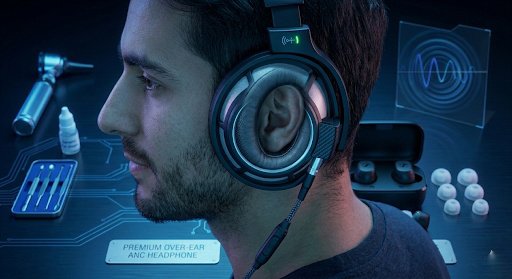
Noise is everywhere — and it is costing you more than comfort. Research from the World Health Organization estimates that 1.1 billion young people worldwide face hearing loss risk from recreational noise exposure. Understanding how active noise cancellation can help you beat noise is no longer just a tech question. It is a health question, a productivity question, and a quality-of-life question. This guide covers the full picture — the science, the benefits, the limits, and the smartest ways to use ANC technology in your daily life.
Featured Snippet Definition:
Active noise cancellation (ANC) helps you beat noise by using built-in microphones to detect ambient sound, generating an inverse anti-noise waveform through a dedicated processor, and playing it through the speaker to cancel unwanted environmental noise through destructive interference — all in real time, continuously.
How Does Active Noise Cancellation Help You Beat Noise? The Core Science
The answer is physics. Active noise cancellation helps you beat noise by exploiting a fundamental property of sound waves called destructive interference. When two identical sound waves meet in perfect phase opposition — one wave’s peak aligning with the other’s trough — they cancel each other out completely.
Here is how the process works in three clear steps:
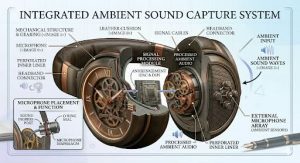
- Detection — Microphones built into the headphones continuously sample the surrounding acoustic environment.
- Inversion — A dedicated ANC processor analyzes the captured sound and calculates its exact inverse waveform in under one millisecond.
- Cancellation — The speaker plays the anti-noise signal simultaneously with any audio content. The two waves meet inside the ear cup and cancel each other out.
The result is a dramatically quieter listening environment — achieved not by physically blocking sound but by mathematically neutralizing it.
Why Does Destructive Interference Make Active Noise Cancellation So Effective at Beating Noise?
Destructive interference is effective because it targets the noise at its source — the waveform itself. Physical noise blockers like earplugs simply absorb or reflect sound energy. ANC eliminates the waveform before it registers meaningfully at the eardrum.
Furthermore, this process runs continuously and adapts in real time. As ambient noise changes — for example, as a train accelerates or a crowd grows louder — the ANC processor adjusts its anti-noise signal accordingly. Therefore, the system remains effective across changing environments, not just static ones.
According to RTINGS.com’s detailed ANC explainer, premium ANC systems achieve noise reduction of 20 to 40 decibels in the low-frequency range — a reduction that turns a distractingly loud environment into a manageable, comfortable acoustic space.
How Can Active Noise Cancellation Help You Beat Noise in Everyday Life?
The answer is: in more situations than most people realize. Active noise cancellation helps you beat noise across a surprisingly broad range of daily environments — not just on airplanes, which is where the technology first gained widespread attention.
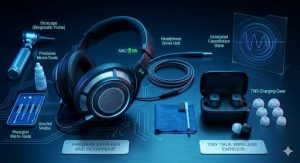
How Does ANC Help You Beat Noise During Your Daily Commute?
Urban commuting exposes people to some of the most damaging daily noise they encounter. Subway trains produce 80 to 95 dB of ambient noise. Bus engines and traffic create sustained exposure between 70 and 85 dB. According to the WHO, sustained exposure above 70 dB over eight hours can cause measurable hearing stress and fatigue.
Active noise cancellation reduces this ambient noise floor by 20 to 35 dB. Therefore, a commuter riding a 90 dB subway train with quality ANC headphones experiences an effective noise level closer to 55 to 65 dB — well within the safe listening range.
Additionally, this reduction enables significantly lower listening volumes. Instead of raising audio to 88 dB to hear clearly over 85 dB of background noise, an ANC user achieves the same perceived clarity at 60 to 65 dB. Over months and years of daily commuting, that volume reduction translates into real hearing protection.
How Does Active Noise Cancellation Beat Noise in Open-Plan Offices?
Open-plan offices consistently rank among the most acoustically damaging work environments for cognitive performance. A 2021 study from the University of Illinois found that ambient noise at 65 to 70 dB — typical of a busy open office — measurably reduces performance on complex cognitive tasks including reading comprehension, problem-solving, and creative thinking.
ANC headphones address this directly. They reduce the low-frequency HVAC hum, reduce the background murmur of distant conversations, and lower the general ambient noise floor that creates cognitive load. Furthermore, using ANC without any audio playing — a practice growing rapidly among knowledge workers — removes the additional cognitive burden of processing music while working.
For professionals exploring wireless audio solutions for their workspace, our complete guide on how wireless earbuds work covers the underlying technology in detail.
How Does Active Noise Cancellation Help You Beat Noise While Traveling?
Air travel represents the original and still most dramatic use case for how ANC helps you beat noise. Aircraft cabin noise — primarily low-frequency engine drone and airframe vibration — sits between 75 and 85 dB for the duration of a flight.
Why Is Active Noise Cancellation Particularly Effective at Beating Aircraft Noise?
Aircraft engine noise is almost ideally suited to ANC cancellation. It is low-frequency, consistent, and highly predictable — exactly the type of waveform that ANC processors model and cancel most accurately. Premium ANC headphones achieve their greatest cancellation depth in this frequency range, with some models reducing aircraft noise by 30 to 40 dB.
The Bang & Olufsen active noise cancellation research confirms that low-frequency mechanical noise — the dominant component of aircraft cabin sound — represents the sweet spot for ANC technology. Their testing shows effective cancellation between 20 Hz and 1,000 Hz, which covers the core frequency band of jet engine noise precisely.
As a result, a transatlantic flight that once produced hours of fatiguing low-level noise exposure becomes a significantly quieter experience. Passengers arrive less fatigued, better rested, and with lower cumulative acoustic exposure than they would have experienced without ANC.
How Does ANC Beat Noise on Trains, Buses, and in Vehicles?
Ground transportation noise shares many acoustic characteristics with aircraft cabin noise — particularly the low-frequency mechanical rumble of engines and wheels on tracks or roads. Therefore, ANC performs well in these environments too.
Train passengers experience ambient noise between 70 and 90 dB depending on the route and rolling stock. Bus travel typically produces 65 to 80 dB of engine and road noise. In both cases, ANC reduces the dominant low-frequency components significantly, making conversation, audio content, and rest all more comfortable and less acoustically stressful.
How Can Active Noise Cancellation Beat Noise to Protect Your Hearing?
This is the most important dimension of how active noise cancellation helps you beat noise — and the one most frequently underrepresented in competitor content. ANC is not just a comfort feature. Used correctly, it is a genuine hearing protection tool.
How Does the Lombard Effect Explain Why ANC Beats Noise for Hearing Health?
The Lombard effect is a well-documented acoustic phenomenon. It describes the instinctive tendency to raise your voice — or your audio volume — in response to increased ambient noise. This effect operates automatically, often without conscious awareness.
In practical terms: a listener on a 85 dB subway train will instinctively raise their headphone volume to 88 or 90 dB to maintain perceived clarity. With effective ANC reducing that ambient noise floor to 50 dB, the same listener achieves equivalent perceived clarity at 55 to 60 dB. That is a 28 to 30 dB reduction in actual listening volume — and a dramatic reduction in acoustic energy reaching the cochlea.
The National Institute on Deafness and Other Communication Disorders (NIDCD) states that exposure to sounds above 85 dB for extended periods damages the hair cells in the cochlea permanently. Therefore, any technology that consistently enables 85 dB exposure to become 55 to 60 dB exposure delivers meaningful, cumulative hearing protection.
How Does Active Noise Cancellation Beat Noise Without Damaging Your Ears?
The anti-noise signal itself carries no meaningful acoustic energy that damages hearing. It is an inverse waveform designed to cancel existing sound, not to add new high-amplitude sound to the environment. Therefore, ANC headphones protect hearing through two complementary mechanisms:
- Direct protection: Reducing the ambient noise floor lowers the total acoustic energy entering the ear canal.
- Behavioral protection: Lower ambient noise enables lower listening volumes, which reduces cochlear hair cell exposure.
Furthermore, over-ear ANC headphones add passive isolation from the ear cup material — physical sound blocking that handles high-frequency sounds that the ANC circuit does not cancel as effectively.
How Does Active Noise Cancellation Help You Beat Noise for Focus and Mental Performance?
Beyond hearing health, ANC delivers measurable cognitive benefits. Understanding how active noise cancellation helps you beat noise for mental performance explains why so many students, writers, programmers, and creative professionals rely on it daily.
Why Does Beating Noise with ANC Improve Concentration?
The answer lies in cognitive load theory. Every sound your brain must process — even subconsciously — consumes a portion of your available working memory. Irrelevant background speech is particularly disruptive because the language-processing centers of the brain attempt to parse it automatically, regardless of whether you are consciously listening.
A study in the Journal of Applied Psychology found that irrelevant background speech reduced reading comprehension scores by a statistically significant margin — even at moderate volume levels. Furthermore, the effect intensified with task complexity. More demanding cognitive work showed greater impairment from ambient noise.
ANC reduces this cognitive drain directly. By lowering the ambient noise floor, it reduces the number of sounds the brain must process and suppress. As a result, more cognitive resources remain available for the task at hand.
How Does Active Noise Cancellation Beat Noise Better Than Other Focus Tools?
Comparison table:
| Method | Mechanism | Total Acoustic Exposure | Cognitive Load Impact |
|---|---|---|---|
| ANC headphones (silent) | Active wave cancellation | Decreases | Decreases |
| Music without ANC | Masking | Increases | Mixed — depends on music type |
| White noise machine | Masking | Increases | Moderate decrease |
| Foam earplugs | Passive blocking | Decreases | Decreases |
| ANC + music | Active cancellation + audio | Low net increase | Depends on volume and music type |
ANC without music delivers the best combination of reduced acoustic exposure and reduced cognitive load. Foam earplugs deliver similar results acoustically but block all sound — including useful environmental awareness. ANC headphones preserve the option to use transparency mode for situational awareness while still cancelling unwanted noise.
For users who rely on headphone microphones during focus sessions — for voice notes, dictation, or calls — our guide on how earbud microphones work provides essential technical context.
How Can Active Noise Cancellation Help You Beat Noise While Sleeping?
Sleep disruption from environmental noise is a significant and growing public health concern. The European Environment Agency estimates that noise pollution disrupts the sleep of over 113 million people in Europe alone annually. ANC technology offers a practical solution for many of these individuals.
How Does Active Noise Cancellation Beat Nighttime Noise?
ANC headphones reduce the low-frequency components of nighttime noise — traffic, HVAC systems, neighbor noise through walls, and urban ambient sound — that most commonly disrupt sleep onset and sleep quality.
However, standard over-ear ANC headphones present physical discomfort during sleep due to their size and the pressure of ear cups against pillows. Therefore, dedicated sleep solutions have emerged:
- Low-profile ANC earbuds: Designed to sit flush in the ear canal without protruding, these allow side sleeping without ear cup pressure.
- ANC sleep headbands: Fabric headbands with embedded flat speakers and, in some models, ANC microphone systems. These provide noise reduction with maximum comfort for all sleep positions.
- Standard ANC earbuds: Models like the Bose QuietComfort Earbuds or Sony WF-1000XM5 work well for back sleepers who do not roll significantly during the night.
The most important consideration for sleep ANC use is that no audio content is needed. Using ANC in silence during sleep provides the full noise-reduction benefit with zero volume exposure — making it one of the most hearing-safe applications of the technology.
How Does Active Noise Cancellation Help You Beat Noise? Understanding the Technology Limits
Active noise cancellation is powerful. However, understanding its limits helps you use it more strategically and choose the right headphones for your specific noise environment.
What Sounds Can Active Noise Cancellation Not Beat Effectively?
ANC struggles with:
- High-frequency sounds: Human speech, keyboard clicks, and sharp unexpected noises. These waveforms change too rapidly for the ANC processor to model and cancel in time.
- Irregular, unpredictable sounds: Sudden impacts, alarms, and transient noises that the microphone has no time to anticipate.
- Very loud impulse sounds: A sudden loud noise may be attenuated slightly but will not be cancelled completely by ANC.
For these sounds, passive isolation from the ear cup handles most of the attenuation. Additionally, some premium ANC headphones include adaptive transparency modes that automatically attenuate sudden loud sounds — effectively adding impulse protection on top of standard ANC.
How Does the Type of ANC System Affect How Well It Beats Noise?
Three ANC architectures exist, each with different performance characteristics:
- Feedforward ANC: External microphone samples sound before it enters the ear cup. Broad frequency range but no self-correction.
- Feedback ANC: Internal microphone monitors sound at the ear. Self-correcting but narrower frequency range.
- Hybrid ANC: Combines both. Delivers the broadest coverage, greatest accuracy, and best real-world performance.
Premium headphones — including the Sony WH-1000XM6, Bose QuietComfort Ultra, and Apple AirPods Max — use hybrid ANC systems. These deliver the most comprehensive noise beating across the full range of everyday environments.
Frequently Asked Questions: How Active Noise Cancellation Can Help You Beat Noise
1. How does active noise cancellation help you beat noise on airplanes?
Active noise cancellation targets the low-frequency engine drone and airframe vibration that dominates aircraft cabin noise — reducing it by 25 to 40 dB in premium headphones. This makes long-haul flights significantly less acoustically fatiguing, enables lower listening volumes for in-flight entertainment, and allows restful sleep without continuous loud noise exposure.
2. Can active noise cancellation beat noise without any music playing?
Yes — and this is one of the most effective ways to use ANC. The noise cancellation circuit operates independently of audio playback. Using ANC in silence eliminates ambient noise without adding any audio volume to your acoustic exposure. This approach delivers the lowest possible total acoustic input while still providing full noise reduction.
3. How well does active noise cancellation beat human voices?
ANC beats human voices partially but not completely. Speech is high-frequency and irregular, making it harder to cancel electronically. However, the passive isolation of over-ear ear cups attenuates speech significantly. The combined effect — ANC plus passive isolation — reduces voice intelligibility noticeably, though not as thoroughly as it reduces mechanical or low-frequency noise.
4. Is active noise cancellation safe to use every day?
Yes. ANC technology does not produce harmful acoustic energy. Used at sensible listening volumes — below 85 dB — daily ANC headphone use poses no meaningful hearing risk. In noisy daily environments, ANC is actively hearing-protective because it enables lower listening volumes and reduces cumulative acoustic exposure.
5. How does active noise cancellation beat noise differently from noise-isolating headphones?
Noise-isolating headphones use physical materials — dense foam, tight seals — to block sound from reaching the ear. ANC uses electronic processing to cancel sound waves through destructive interference. ANC excels at low frequencies; passive isolation excels at high frequencies. The best noise-beating headphones combine both approaches — ANC for low-frequency noise and passive isolation for high-frequency attenuation.
6. How much noise can active noise cancellation beat in real-world conditions?
In real-world conditions, premium ANC headphones reduce ambient noise by 20 to 40 dB in the low-frequency range (20 Hz to 1,000 Hz). At higher frequencies, passive isolation contributes an additional 10 to 25 dB of attenuation. The combined effect can reduce a 90 dB subway environment to an effective perceived level of 50 to 65 dB — a dramatic and hearing-protective reduction.
7. Why do some people feel pressure when ANC beats noise around them?
The pressure sensation is perceptual, not physical. When ANC dramatically reduces ambient sound, the brain interprets the unusual quiet as a change in air pressure. No actual barometric change occurs inside the ear cup. This sensation is harmless for most users and typically disappears within days to weeks of regular ANC use as the auditory system adapts.
8. How does active noise cancellation beat noise better in some headphones than others?
Performance varies by ANC architecture, microphone quality, processor speed, and ear cup fit. Hybrid ANC systems — using both external and internal microphones — deliver the broadest, most accurate cancellation. Premium processors complete the inverse waveform calculation in under one millisecond. Additionally, a tight, well-fitted ear cup seal maximizes passive isolation, which works alongside ANC to deliver the total noise-beating result.
9. Can active noise cancellation help beat noise for people with sensory sensitivities?
Yes — ANC without music is particularly valuable for people with sensory processing differences, hyperacusis, or autism spectrum conditions who experience distress from environmental noise. Reducing the ambient noise floor without adding audio content makes ANC-only mode uniquely suitable for this group, offering relief without the additional sensory input of music or other audio.
10. How does active noise cancellation beat noise to improve sleep quality?
ANC reduces the low-frequency ambient noise — traffic, HVAC, urban sound — that most commonly disrupts sleep onset and maintenance. Used in silence during sleep, ANC provides noise reduction with zero audio volume exposure. Dedicated low-profile earbuds or ANC sleep headbands offer the most comfortable physical form factor for overnight use across all sleep positions.
Conclusion: How Active Noise Cancellation Can Help You Beat Noise — Key Takeaways
Active noise cancellation beats noise through real-time destructive interference — microphones detect ambient sound, processors generate an inverse waveform, and speakers cancel the noise before it meaningfully reaches your ears. In everyday environments from subway commutes to open offices to long-haul flights, ANC consistently delivers 20 to 40 dB of noise reduction in the frequency ranges that matter most. Beyond comfort, it protects hearing by enabling lower listening volumes and reducing cumulative daily acoustic exposure. Understanding how to use it — silently, at appropriate volumes, with the right headphones for your environment — makes it one of the most practical health and productivity tools available today.
Ready to put ANC to work for your hearing health and daily focus? Explore our expert-curated recommendations at which headphones are safest for your ears and make an informed, hearing-safe choice today.