
Choosing the best baby bottle materials for newborns is one of the first important decisions new parents make. Because babies use bottles several times a day, selecting a safe, durable, and easy-to-clean material can make feeding more comfortable. In addition, it can also reduce potential health concerns.
Today, baby bottles come in several different materials, including glass, BPA-free plastic, silicone, and stainless steel. Moreover, each option offers its own advantages in terms of safety, weight, durability, temperature retention, and ease of cleaning.
Although no single bottle material is perfect for every family, understanding these differences can help you make a confident decision. Therefore, you can choose based on your baby’s age, feeding habits, and daily lifestyle.
In this guide, we’ll compare the most popular baby bottle materials for newborns, explain their pros and cons, highlight key safety features, and ultimately help you choose the right bottle for your newborn.
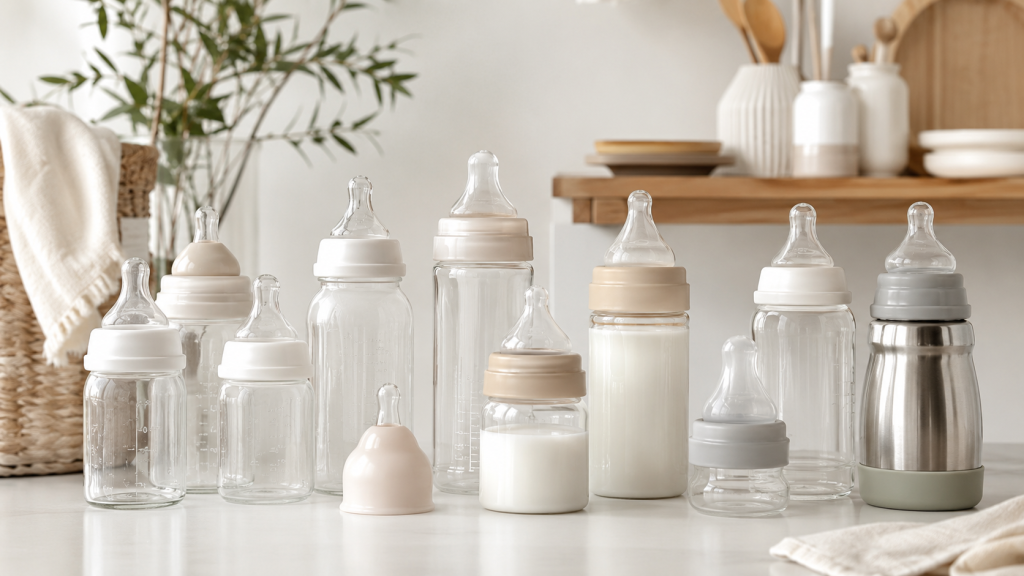
A collection of glass, BPA-free plastic, silicone, and stainless steel baby bottles arranged neatly on a clean white background with soft natural lighting.
Why Choosing the Best Baby Bottle Materials for Newborn Feeding Safety Matters
A newborn’s immune system and digestive system are still developing; therefore, the material used in baby bottles plays a crucial role in everyday feeding safety.
When you choose a high-quality newborn baby bottle material, it can help in several important ways:
- It reduces exposure to harmful chemicals
- It improves overall feeding comfort
- It supports healthy digestion
- It minimizes unwanted odors and stains
- It makes bottle cleaning much easier
- It increases long-term bottle durability
In addition, the right bottle material can reduce leaks, improve nipple compatibility, and create a more natural feeding experience—especially for babies who switch between breastfeeding and bottle feeding.

Types of Baby Bottle Materials for Newborns
Parents will usually find four common newborn baby bottle material options on the market, and each one serves a slightly different purpose.
Glass Baby Bottles for Newborns
Overall, glass bottles are ideal for parents who prioritize cleanliness, durability, and chemical-free feeding.
Pros
- Chemical-free material
- Easy to clean
- Scratch resistant
- Does not absorb odors
- Long-lasting
- Recyclable
Cons
- Heavier than plastic
- Can break if dropped
- Usually more expensive
Glass bottles are ideal for parents who prioritize durability, cleanliness, and chemical-free feeding.
BPA-Free Plastic Baby Bottles for Newborns
BPA-free plastic bottles remain one of the most widely used baby bottle material choices for newborns because they are lightweight, affordable, and easy to find.
Importantly, modern plastic bottles are manufactured without BPA, which makes them significantly safer than older plastic versions.
Pros
- Lightweight and easy to handle
- Budget-friendly
- Convenient for travel
- Available in many designs
- Less likely to break
Cons
-
- May scratch over time
- Can absorb odors
- Needs more frequent replacement
As a result, BPA-free plastic bottles strike a practical balance between convenience and cost for many families.
Medical-Grade Silicone Baby Bottles for Newborn Feeding
Medical-grade silicone bottles have gained popularity because they are soft, flexible, and designed to mimic the natural feel of breastfeeding. As a result, they are especially helpful for babies transitioning between breast and bottle feeding.
Unlike traditional plastic bottles, high-quality silicone bottles are free from BPA, PVC, and phthalates. Moreover, they are highly heat-resistant, which makes sterilization simple and safe.
Pros
- Soft, breast-like texture
- BPA-free and food-grade
- Lightweight and flexible
- Heat-resistant and sterilization-friendly
- Supports paced feeding
- Durable for daily use
Cons
- Higher price than plastic bottles
- May attract dust
- Fewer brand options available
Therefore, silicone bottles are an excellent choice for parents seeking a breastfeeding-friendly baby bottle material for newborns.
Stainless Steel Baby Bottles for Newborns
Stainless steel baby bottles are well known for their strength and long lifespan. In addition, they are naturally free from BPA and do not retain odors or stains, which makes them a highly hygienic option.
Many stainless steel bottles also feature double-wall insulation, helping maintain milk temperature for longer periods.
Pros
- Extremely durable
- BPA-free and safe
- Rust-resistant
- Maintains milk temperature longer
- Eco-friendly choice
- Long-lasting investment
Cons
- Milk level is not visible
- Usually more expensive
- Limited design variety
As a result, stainless steel bottles are often preferred by families who travel frequently or want a long-term baby bottle material for newborn feeding.
Glass vs Plastic vs Silicone vs Stainless Steel Baby Bottle Materials
| Feature | Glass | BPA-Free Plastic | Silicone | Stainless Steel |
|---|---|---|---|---|
| BPA-Free | ✅ | ✅ | ✅ | ✅ |
| Lightweight | ❌ | ✅ | ✅ | ✅ |
| Break Resistant | ❌ | ✅ | ✅ | ✅ |
| Easy to Clean | ✅ | ✅ | ✅ | ✅ |
| Odor Resistant | ✅ | ❌ | ✅ | ✅ |
| Heat Resistant | ✅ | Moderate | ✅ | ✅ |
| Eco-Friendly | ✅ | Moderate | Good | Excellent |
| Best For | Home Use | Everyday Use | Breastfed Babies | Long-Term Use |
Which Is the Safest Baby Bottle Material for Newborns?
Many parents naturally wonder which newborn baby bottle material is safest. However, the truth is that the safest option often depends on your lifestyle and feeding needs.
- Glass is ideal if you want a completely chemical-free and highly durable option.
- Medical-grade silicone is excellent for babies who switch between breastfeeding and bottle feeding.
- BPA-free plastic works well for travel due to its lightweight and affordable nature.
- Stainless steel is best for long-term durability and temperature control
Overall, all four materials can be safe as long as they are purchased from reputable brands and used according to proper care instructions.
Buying Guide: How to Choose the Best Baby Bottle Material for Newborns
Before you decide, it is important to consider a few key factors that can significantly affect your experience.
Safety Certifications for Baby Bottle Materials
Always look for bottles labeled BPA-free, food-grade, and compliant with recognized safety standards. In addition, this ensures long-term safety for your newborn.
Ease of Cleaning Newborn Baby Bottles
In general, wide-neck bottles with simple designs are easier to clean and sterilize thoroughly. Therefore, they are often recommended for new parents.
Bottle Weight and Handling for Newborn Feeding
Lightweight bottles are easier for parents to handle. Moreover, they can later help babies learn self-feeding more comfortably.
Durability of Baby Bottle Materials
If you travel often or expect heavy daily use, silicone or stainless steel bottles may be more practical than glass. As a result, they can save replacement costs over time.
Breastfeeding Compatibility of Bottle Materials
For breastfed babies, silicone bottles with slow-flow nipples often provide a smoother and more natural transition.
Budget-Friendly Baby Bottle Material Options
Plastic bottles are usually the most affordable. However, glass, silicone, and stainless steel options often last longer, which can balance the cost over time.
Best Baby Bottle Material for Newborns Based on Your Needs
Every family has different priorities; therefore, the best baby bottle material for newborns depends on your lifestyle and your baby’s feeding habits.
Choose Glass Baby Bottles for Newborns If…
- You want a chemical-free feeding option
- You mostly feed your baby at home
- You prefer bottles that resist stains and odors
- You don’t mind a slightly heavier bottle
Choose BPA-Free Plastic Baby Bottles for Newborns If…
- You need a lightweight bottle for travel or daycare
- You are looking for a budget-friendly option
- You want a wide variety of styles and sizes
Choose Silicone Baby Bottles for Newborns If…
- Your baby switches between breastfeeding and bottle feeding
- You want a soft, breast-like bottle
- You prefer a flexible and heat-resistant material
Choose Stainless Steel Baby Bottles for Newborns If…
- You want maximum durability
- You travel frequently
- You prefer an eco-friendly bottle with temperature retention
Pros and Cons Summary of Baby Bottle Materials
| Material | Pros | Cons |
| Glass | Chemical-free, odor-resistant, durable, recyclable | Heavy, breakable, higher cost |
| BPA-Free Plastic | Lightweight, affordable, travel-friendly | Can scratch over time, may absorb odors |
| Silicone | Soft, flexible, breast-like feel, heat-resistant | More expensive, attracts dust |
| Stainless Steel | Extremely durable, eco-friendly, excellent insulation | Cannot see milk level, higher price |
Frequently Asked Questions (FAQ)
What is the safest baby bottle material for newborns?
Glass and medical-grade silicone are often considered among the safest baby bottle materials for newborns because they are naturally free from BPA and other harmful chemicals. However, high-quality BPA-free plastic and stainless steel bottles are also safe when purchased from trusted brands.
Are BPA-free plastic bottles safe for newborns?
Yes, they are. In fact, modern BPA-free plastic bottles are designed without bisphenol A (BPA) and are considered safe for everyday feeding when used and replaced according to the manufacturer’s recommendations.
Which baby bottle material is best for breastfed newborns?
Silicone bottles are often preferred because their soft, breast-like feel can help babies transition more easily between breastfeeding and bottle feeding.
Do glass baby bottles break easily?
Yes, they can break more easily than plastic or silicone. However, many brands now offer tempered glass bottles with protective silicone sleeves to reduce the risk of damage.
Are stainless steel baby bottles worth buying for newborns?
If durability, insulation, and long-term use matter to you, then stainless steel bottles can be a very worthwhile investment.
How often should baby bottles be replaced?
You should replace bottles immediately if they become cracked, chipped, or warped. In addition, nipples should generally be replaced every 2–3 months or sooner if they show signs of wear.
Final Thoughts on Choosing the Best Baby Bottle Materials for Newborns
Choosing the best baby bottle materials for newborns is an important step that can directly impact feeding safety and your baby’s comfort. Whether you prefer the purity of glass, the convenience of BPA-free plastic, the flexibility of silicone, or the durability of stainless steel, the key is selecting a high-quality product from a trusted brand.
Before making a final decision, carefully consider your baby’s feeding routine, your budget, and how often the bottles will be used. At the same time, proper cleaning and sterilization are just as important as the material itself for maintaining hygiene and protecting your baby’s health.
Ultimately, by understanding the strengths and limitations of each newborn baby bottle material, you can confidently choose a bottle that supports healthy growth and makes everyday feeding much easier.