

Introduction
Wireless charging has quickly become one of the most popular charging methods for modern electronic devices. From smartphones and wireless earbuds to smartwatches and electric toothbrushes, more products than ever now support cable-free charging.
Unlike traditional charging, wireless charging allows you to recharge a device simply by placing it on a compatible charging pad. There is no need to connect or disconnect a charging cable every time you want to charge your device. This convenience has made wireless charging an attractive feature for both home and office users.
But many people still ask the same question: What Is Wireless Charging, and how does it actually work?
The answer is simpler than you might think. Wireless charging is a technology that transfers electrical energy from a charging pad to a compatible device without using a physical cable. It relies on electromagnetic induction to deliver power safely and efficiently.
If you’re looking for a complete overview of this technology, read our Wireless Charging Technology guide. It explains the different types of wireless charging, its advantages, limitations, and future developments.
In this article, you’ll learn what wireless charging is, how it differs from traditional charging, where it’s used, its benefits, limitations, and whether it’s the right choice for your everyday devices.
What Is Wireless Charging?
cable-free charging is a method of charging electronic devices without connecting a charging cable directly to the device. Instead, electrical energy is transferred through a magnetic field created between a wireless charger and a compatible device.
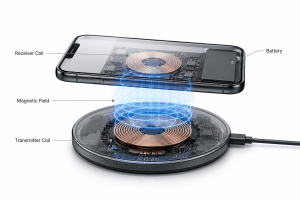
A cable-free charging system typically consists of two main components:
- A transmitter coil inside the wireless charger.
- A receiver coil inside the smartphone or other compatible device.
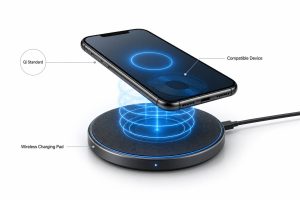
When these two coils are aligned correctly, electrical energy is transferred from the charger to the device’s battery through electromagnetic induction.
Unlike wired charging, where electricity flows through metal contacts and cables, inductive charging uses magnetic energy to deliver power over a very short distance.
This technology has become increasingly popular because it offers a cleaner, more convenient, and user-friendly charging experience.
How Does Wireless Charging Differ from Wired Charging?
Although both charging methods ultimately recharge the same battery, the way they transfer power is completely different.
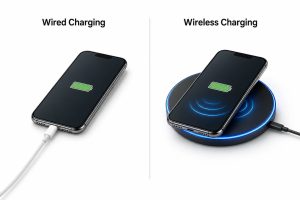
With wired charging, electricity travels directly through a cable connected to your device’s charging port.
inductive charging, on the other hand, transfers energy through an electromagnetic field, eliminating the need for a physical connection between the charger and the device.
Some of the key differences include:
| Feature | Wireless Charging | Wired Charging |
| Requires a cable | No | Yes |
| Physical charging port | Not required during charging | Required |
| Charging method | Electromagnetic induction | Direct electrical connection |
| Convenience | Very High | High |
| Charging speed | Usually slower | Usually faster |
Each method has its own advantages. Users who prioritize convenience often prefer inductive charging, while those who need the fastest charging speeds may choose wired charging.
If you’d like a detailed comparison between the two methods, check out our guide on Wireless Charging vs Wired Charging.
How Does Wireless Charging Actually Work?
Although the process seems effortless, the technology relies on advanced electrical engineering.
When a inductive charging is connected to a power source, electricity flows into a transmitter coil inside the charging pad. This creates an alternating magnetic field.
When a compatible smartphone is placed on the charger, a receiver coil inside the device captures that magnetic energy and converts it back into electrical current.
The electricity is then regulated by the phone’s battery management system before charging the battery safely.
The entire process happens automatically in just a few seconds.
For a complete step-by-step explanation, read our detailed article on How Wireless Charging Works.
Where Is Wireless Charging Used?
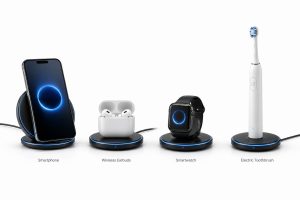
cable-free charging is no longer limited to premium smartphones. Today, it is used across a wide range of consumer electronics and smart devices.
Some common examples include:
Smartphones
Many flagship Android phones and iPhones support inductive charging, making it one of the most widely used applications of this technology.
Wireless Earbuds
Charging cases for wireless earbuds often support Qi the technology, allowing users to recharge them without plugging in a cable.
Smartwatches
Most modern smartwatches use magnetic this charging method systems designed specifically for wearable devices.
Tablets and Accessories
Some tablets, portable speakers, gaming accessories, and other smart devices also support this charging method.
As technology continues to evolve, cable-free charging is expected to become available in even more categories of electronic products.
The Evolution of Wireless Charging
cable-free charging may seem like a recent innovation, but the science behind it has existed for more than a century.
The foundation of inductive charging is based on electromagnetic induction, a principle discovered by the British scientist Michael Faraday in 1831. His research showed that a changing magnetic field could generate an electric current in a nearby conductor.
Although this discovery laid the groundwork for wireless power transfer, it took many decades before the technology became practical for everyday consumer electronics.
The first commercial applications of wireless charging appeared in products like electric toothbrushes and medical devices. These devices benefited from a charging method that required no exposed metal connectors, making them safer and more resistant to water and moisture.
Today, this charging method has become a standard feature in many smartphones, wireless earbuds, smartwatches, and other portable electronics.
As technology continues to improve, manufacturers are developing faster, more efficient, and more intelligent wireless charging solutions.
Types of Wireless Charging
Not all wireless charging technologies work in the same way. Different methods are designed for different purposes and applications.
Inductive Wireless Charging
Inductive charging is the most common wireless charging technology used today.
It transfers energy through electromagnetic induction and requires the device to be placed directly on the charging pad.
Most smartphones, wireless earbuds, and smartwatches rely on this technology because it is efficient, safe, and widely supported.
Resonant Wireless Charging
Resonant charging uses magnetic resonance instead of simple induction.
This technology allows energy to transfer over a slightly greater distance and can charge multiple compatible devices simultaneously.
Although it is less common in consumer electronics, it has significant potential for commercial and industrial applications.
Radio Frequency (RF) Charging
Radio Frequency charging transfers small amounts of energy using radio waves.
This technology is still under development and is mainly intended for low-power devices such as IoT sensors, smart tags, and wearable electronics.
Although it is not yet widely available for smartphones, RF charging represents an exciting area of future innovation.
What Devices Support Wireless Charging?
Qi charging is becoming increasingly common across many categories of electronic devices.
Some of the most popular examples include:
- Smartphones
- Wireless earbuds
- Smartwatches
- Fitness trackers
- Tablets
- Bluetooth speakers
- Electric toothbrushes
- Portable gaming devices
- Computer accessories
- Medical equipment
Before purchasing a wireless charger, it’s important to verify that your device supports charging pad.
Some budget smartphones, older models, and entry-level devices may not include the necessary receiver coil.
What Is Qi Wireless Charging?
When shopping for a wireless charger, you’ll often see the term Qi Certified.
Qi (pronounced “chee”) is the global charging pad standard developed by the Wireless Power Consortium (WPC).
It ensures that compatible devices and chargers work together safely and efficiently, regardless of the manufacturer.
A Qi-certified charger offers several advantages:
- Universal compatibility
- Automatic device recognition
- Better charging efficiency
- Temperature protection
- Foreign object detection
- Improved charging safety
Today, most flagship Android smartphones and iPhones that support cable-free charging use the Qi standard.
To understand why Qi has become the industry standard, read our complete guide on How Qi Wireless Charging Works.
Benefits of Wireless Charging
the technology continues to grow in popularity because it offers several practical benefits.
Greater Convenience
You no longer need to plug and unplug charging cables every day.
Simply placing your device on a charging pad starts the charging process automatically.
Less Wear on Charging Ports
Repeated cable insertion can gradually wear out charging ports.
this charging method reduces this physical wear and may help extend the life of your device’s charging connector.
Cleaner and More Organized Spaces
Wireless chargers reduce cable clutter, creating a cleaner desk, bedside table, or workspace.
Better Water Resistance
Because manufacturers rely less on charging ports, many modern smartphones achieve improved resistance to water and dust.
Limitations of Wireless Charging
Despite its many advantages, the technology is not perfect.
Some limitations include:
- Generally slower charging speeds than wired charging.
- Proper device alignment is required.
- Slight heat generation during charging.
- Wireless chargers usually cost more than standard charging cables.
- Not every smartphone supports compatible device.
Understanding these limitations helps users choose the charging method that best fits their needs.
If you’re unsure which charging method is right for you, compare their strengths and weaknesses in our Wireless Charging vs Wired Charging guide.
Common Myths About Wireless Charging
As cable-free charging has become more popular, several myths have also spread online. Let’s separate the facts from the fiction.
Myth 1: Wireless Charging Damages the Battery
This is one of the most common misconceptions.
The truth is that charging pad does not damage your battery when you use a Qi-certified charger and a compatible device. Modern smartphones include advanced battery management systems that monitor charging speed, voltage, and temperature to protect battery health.
If you want a detailed explanation, read our guide on Does Wireless Charging Damage Battery?
Myth 2: Wireless Charging Is Dangerous
Compatible device is designed with multiple safety features.
Certified chargers include protection against overheating, overcharging, overcurrent, and foreign object detection. When used correctly, inductive charging is considered safe for everyday use.
Myth 3: Wireless Charging Is Extremely Slow
Early wireless chargers were relatively slow, but modern technology has improved significantly.
Many current Qi-certified chargers support fast Qi charging, making them suitable for daily charging needs. While wired charging is still generally faster, the performance gap has become much smaller than it used to be.
Is Wireless Charging Worth It?
Whether the technology is worth it depends on your personal needs and lifestyle.
this charging method is an excellent choice if you:
- Prefer a cable-free setup.
- Want a cleaner workspace.
- Charge your phone overnight.
- Own multiple Qi-compatible devices.
- Want to reduce wear on your charging port.
However, if you frequently need the fastest possible charging speed, traditional wired charging may still be the better option.
For many users, the convenience of simply placing a device on a charging pad outweighs the slightly slower charging speed.
Frequently Asked Questions (FAQs)
What is wireless charging in simple words?
cable-free charging is a way of charging a compatible electronic device without plugging in a charging cable. It transfers power using electromagnetic induction between a charging pad and the device.
Do all smartphones support wireless charging?
No. Only smartphones that include a built-in inductive charging receiver can charge wirelessly. Always check your device’s specifications before purchasing a wireless charger.
Is wireless charging safe?
Yes. this charging method is safe when you use a certified charger and a compatible device. Modern chargers include several built-in safety features to protect both the charger and the battery.
Can I use my phone while it is charging wirelessly?
Yes, but lifting the phone off the charging pad will interrupt the charging process. For continuous charging, keep the device properly aligned on the charger.
Why is my phone charging slowly on a wireless charger?
Several factors can affect charging speed, including:
- A low-power charger
- Incorrect phone alignment
- A thick phone case
- High device temperature
- Charger compatibility
To learn more about the charging process and speed, read our guide on How Wireless Charging Works.
Conclusion
cable-free charging is more than just a convenient alternative to traditional charging—it represents the future of how we power modern electronic devices. By using electromagnetic induction instead of physical cables, compatible device provides a cleaner, more organized, and user-friendly charging experience.
Although it may not always match the speed of wired charging, its convenience, ease of use, and continuous improvements have made it a standard feature in many smartphones, earbuds, smartwatches, and other electronic devices.
If you’re considering buying a wireless charger, understanding how the technology works, its benefits, and its limitations will help you make a more informed decision.
As compatible device technology continues to evolve, we can expect faster charging speeds, greater efficiency, and support for even more types of devices in the years ahead.