
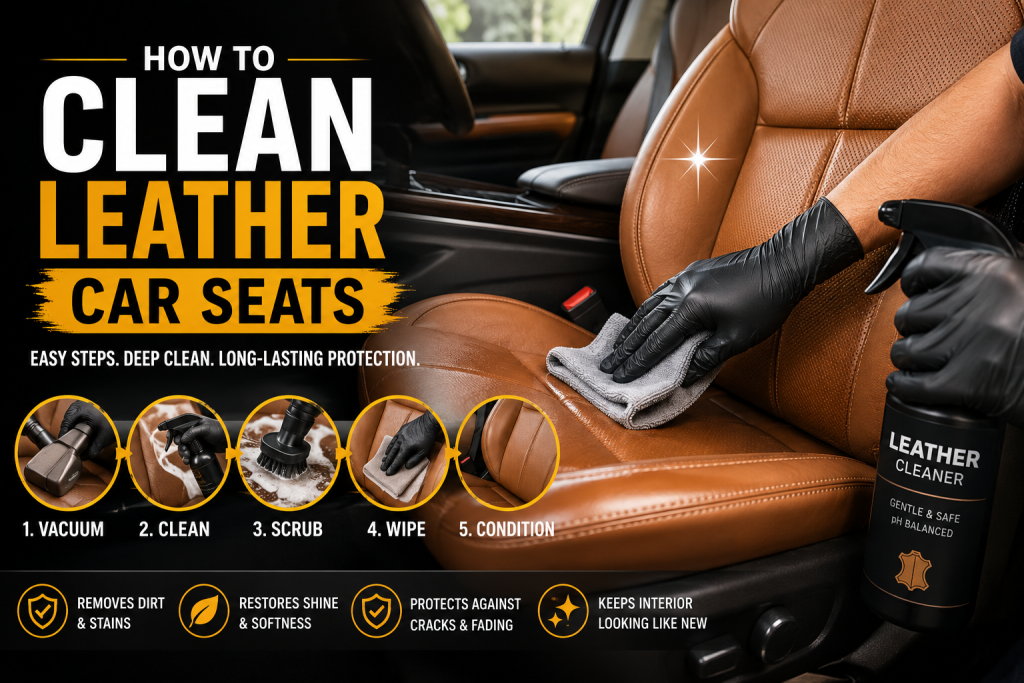
Leather car seats add a touch of luxury and comfort to any vehicle. They look elegant, feel premium, and can last for many years with proper care. However, leather is a natural material that requires regular maintenance to prevent dirt buildup, stains, fading, and cracking. Learning how to clean leather car seats correctly helps preserve their appearance while protecting your investment.
Unlike fabric seats, leather needs gentle cleaning and conditioning. Using harsh chemicals or the wrong techniques can strip away its protective coating and shorten its lifespan. The good news is that maintaining leather seats is easier than many people think.
This guide explains the best way to clean leather car seats safely, remove common stains, and keep them looking like new for years to come.
Why It’s Important to Clean Leather Car Seats Regularly
Leather seats are exposed to sunlight, body oils, dust, food crumbs, and everyday wear. Over time, these contaminants can dry out the leather, making it look dull and causing cracks to develop.
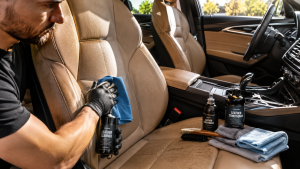
Regular cleaning offers several benefits:
- Preserves the natural appearance of leather
- Prevents dirt from becoming embedded
- Helps reduce odors
- Protects against premature cracking
- Maintains softness and flexibility
- Improves your vehicle’s resale value
Routine care takes only a little time but can significantly extend the life of your seats.
What You’ll Need for How to Clean Leather Car Seats
Before you begin, gather the right tools and cleaning products.
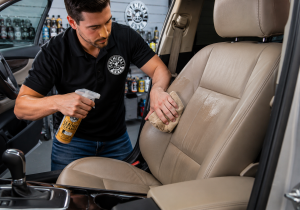
Recommended supplies include:
- Leather cleaner
- Leather conditioner
- Soft microfiber cloths
- Soft-bristle detailing brush
- Vacuum cleaner with brush attachment
- Small bucket of warm water
- Spray bottle (optional)
Avoid rough brushes, abrasive pads, or household cleaners that are not designed for leather.
How to Clean Leather Car Seats Step by Step
Following a careful cleaning process helps remove dirt while protecting the leather’s finish.
Step 1: Vacuum the Seats Thoroughly
Start by removing loose dirt, dust, and debris.
Use a vacuum with a soft brush attachment to clean:
- Seat cushions
- Between seat seams
- Around stitching
- Under seat edges
- Seat backs
Removing loose particles first prevents scratches during cleaning.
Step 2: Test the Leather Cleaner
Before cleaning the entire seat, apply a small amount of leather cleaner to an inconspicuous area.
Wait a few minutes to ensure there is no discoloration or unwanted reaction.
This simple step helps avoid accidental damage.
Step 3: Apply Leather Cleaner
Spray the cleaner onto a microfiber cloth instead of directly onto the leather.
This provides better control and prevents excess product from soaking into seams.
Gently wipe the surface using circular motions.
Work on one section at a time for consistent results.
Step 4: Clean Stubborn Dirt with a Soft Brush
If dirt has settled into the grain of the leather, use a soft-bristle brush.
Brush lightly without applying excessive pressure.
The goal is to lift dirt—not scrub the leather aggressively.
After brushing, wipe away loosened dirt with a clean microfiber towel.
Step 5: Dry the Seats
Use a dry microfiber cloth to remove any remaining cleaner.
Allow the seats to air dry naturally.
Avoid using hair dryers or placing the vehicle in direct sunlight immediately after cleaning.
High heat may dry out the leather.
Step 6: Apply Leather Conditioner
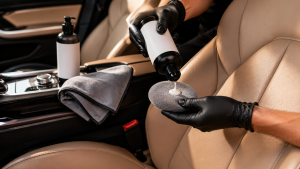
Conditioning is one of the most important parts of leather care.
Apply a small amount of leather conditioner using a clean microfiber cloth.
Massage it evenly into the leather using gentle circular motions.
Allow the conditioner to absorb according to the product instructions before buffing away any excess.
Conditioning helps:
- Restore moisture
- Prevent cracking
- Improve flexibility
- Maintain a soft finish
- Protect against UV damage
Best Products to Clean Leather Car Seats
Choose cleaners specifically formulated for automotive leather.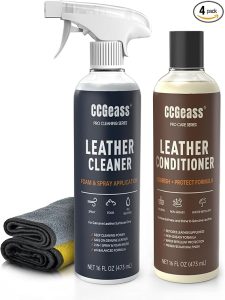
A quality leather cleaner should:
- Remove dirt without stripping natural oils
- Leave no sticky residue
- Be pH-balanced
- Be safe for coated automotive leather
- Work well with leather conditioners
Avoid using products that contain bleach, ammonia, silicone, or strong solvents.
Can You Use Household Products?
Many people wonder whether common household products are safe for leather.
Here are a few examples:
Mild Soap
A few drops of mild soap mixed with warm water may be suitable for light cleaning in some cases.
Use sparingly and wipe dry immediately.
White Vinegar
Although often recommended online, vinegar can dry out leather if used frequently.
It’s generally better to use a dedicated leather cleaner.
Baby Wipes
Some baby wipes contain chemicals or moisturizers that may leave residue on leather.
They’re not ideal for routine cleaning.
Using products made specifically for leather is usually the safest choice.
How to Remove Common Stains from Leather Car Seats
Different stains require different cleaning approaches.
Food Stains
Remove food particles first.
Clean gently with leather cleaner before the stain dries.
Ink Stains
Treat ink as quickly as possible.
Avoid rubbing aggressively, as this may spread the stain.
Oil and Grease
Blot excess oil with a dry microfiber cloth.
Use a leather-safe cleaner designed to break down oils.
Mud
Allow mud to dry completely before vacuuming.
Clean the remaining residue with leather cleaner.
The sooner you address stains, the easier they are to remove.
Mistakes to Avoid When Cleaning Leather Car Seats
Improper cleaning can permanently damage leather.
Avoid these common mistakes:
- Using bleach
- Cleaning with ammonia-based products
- Scrubbing aggressively
- Using stiff brushes
- Applying too much water
- Skipping leather conditioner
- Leaving spills unattended
- Drying seats with excessive heat
Gentle, regular care is much more effective than occasional deep cleaning with harsh products.
How Often Should You Clean Leather Car Seats?
The ideal schedule depends on your driving habits and climate.
A good routine includes:
- Dusting weekly
- Vacuuming every two weeks
- Cleaning every two to three months
- Conditioning every three to four months
If your vehicle is parked outdoors frequently or carries children and pets, more frequent cleaning may be beneficial.
Tips to Keep Leather Car Seats Looking New
Daily habits can significantly reduce wear.
Helpful tips include:
- Wipe spills immediately.
- Avoid sharp objects in pockets.
- Park in shaded areas whenever possible.
- Use a windshield sunshade.
- Vacuum regularly.
- Keep seats free from excessive dust.
- Condition leather consistently.
Small maintenance habits make a noticeable difference over time.
Frequently Asked Questions
Can I use dish soap on leather car seats?
A small amount of mild dish soap diluted with water may work for light cleaning, but a dedicated leather cleaner is safer for regular use.
Should leather seats be conditioned after cleaning?
Yes. Conditioning restores moisture, helps prevent cracking, and keeps leather soft and flexible.
Can I use steam to clean leather seats?
Steam is generally not recommended because excessive heat and moisture may damage leather or weaken protective coatings.
Why do leather car seats crack?
Leather typically cracks due to age, UV exposure, dryness, and lack of conditioning. Regular cleaning and conditioning help reduce this risk.
Final Thoughts
Knowing how to clean leather car seats properly is essential for keeping your vehicle’s interior looking elegant and well-maintained. By using leather-safe cleaners, soft microfiber cloths, and regular conditioning, you can remove dirt, prevent stains, and protect the leather from premature aging.
Instead of waiting until your seats look worn, make leather care part of your regular vehicle maintenance routine. With consistent attention and the right products, your leather car seats can remain clean, comfortable, and attractive for many years to come.