
Introduction
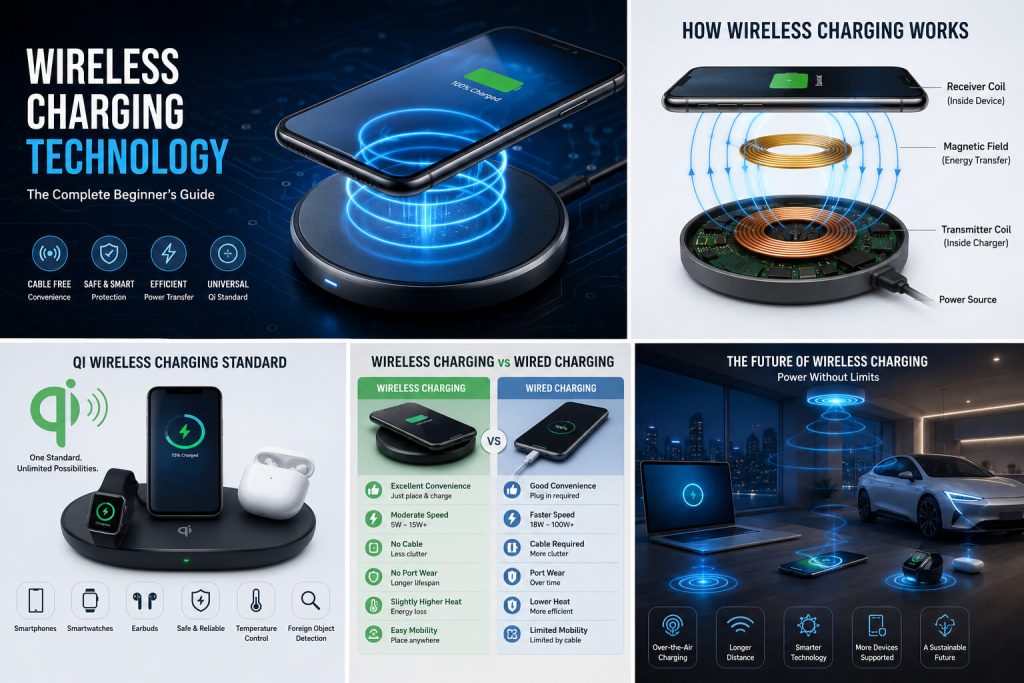
Wireless charging technology has changed the way people power their electronic devices. Instead of plugging a charging cable into your phone or smartwatch, you simply place the device on a charging pad, and charging begins automatically. This simple experience is powered by advanced engineering that transfers energy without a direct electrical connection.
Over the last few years, wireless charging has become a standard feature in many smartphones, wireless earbuds, smartwatches, and other smart devices. Leading manufacturers such as Apple, Samsung, Google, and many Android brands now include wireless charging support in their premium devices. As technology continues to improve, wireless charging is becoming faster, safer, and more convenient.
But many people still ask important questions. What exactly is wireless charging technology? How does it transfer electricity without a cable? Is it safe for your battery? Is it better than traditional wired charging? And what is Qi wireless charging?
This comprehensive guide answers all of those questions in one place. Whether you are a beginner or simply want to understand the technology better, you’ll learn how wireless charging works, its advantages and disadvantages, where it is used, and what the future may look like.
What Is Wireless Charging Technology?
Wireless charging technology is a method of transferring electrical energy from a power source to a compatible electronic device without using a charging cable. Instead of relying on metal connectors, it uses electromagnetic fields to transfer energy between a charging pad and the device being charged.
Every wireless charging system has two essential components:
- A transmitter coil inside the wireless charger
- A receiver coil inside the smartphone or other compatible device
When electricity flows through the transmitter coil, it creates a magnetic field. The receiver coil inside the device captures this magnetic energy and converts it back into electrical energy, which is then used to charge the battery.
This process happens automatically when the device is placed correctly on the charging pad.
Although the technology may seem modern, the basic principle behind wireless charging has existed for more than a century. Scientists have long understood electromagnetic induction, but only recent advancements have made it practical for everyday consumer electronics.
Today, wireless charging is commonly found in:

- Smartphones
- Wireless earbuds
- Smartwatches
- Tablets
- Electric toothbrushes
- Portable speakers
- Fitness trackers
- Medical devices
Its growing popularity is driven by convenience, reduced cable clutter, and improvements in charging efficiency.
How Does Wireless Charging Technology Work?
Wireless charging works through a scientific principle known as electromagnetic induction. Instead of sending electricity through a cable, energy is transferred using a magnetic field created between two specially designed coils.
Although the charging process appears simple to the user, several steps happen within seconds.
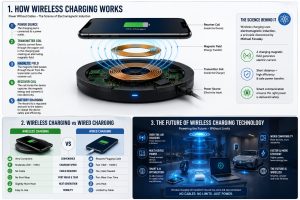
Step 1: The Charging Pad Receives Power
The process begins when the wireless charger is connected to a wall adapter or another power source.
Electricity flows into the charging pad, where electronic circuits prepare it for wireless energy transmission.
Step 2: The Transmitter Coil Creates a Magnetic Field
Inside every wireless charger is a copper transmitter coil.
When alternating current passes through this coil, it generates an alternating magnetic field above the charging surface.
This magnetic field carries energy without requiring a physical wire.
Step 3: The Receiver Coil Captures the Energy
Compatible smartphones and other wireless charging devices contain another copper coil called the receiver coil.
When the device is placed on the charging pad, this receiver coil enters the magnetic field.
The magnetic field induces an electric current inside the receiver coil.
Step 4: The Battery Starts Charging
The generated electrical current is converted into the correct voltage required by the battery.
The phone’s charging management system carefully regulates this power to ensure safe charging while protecting the battery from overheating or overcharging.
Once the battery reaches full capacity, the charging system automatically reduces or stops power transfer.
The Science Behind Wireless Charging
At the heart of wireless charging is electromagnetic induction, a principle discovered by physicist Michael Faraday.
According to this principle, a changing magnetic field can generate an electric current in a nearby conductor.
Wireless chargers take advantage of this phenomenon by creating a controlled magnetic field that transfers energy efficiently over a very short distance.
Because the distance between the charger and the device is so small, energy transfer remains efficient while minimizing power loss.
Modern wireless chargers also include intelligent communication between the charger and the device. Before transferring high levels of power, the charger first detects whether a compatible device has been placed on the charging pad. If no compatible receiver is detected, energy transfer does not begin, improving both efficiency and safety.
Common Devices That Support Wireless Charging
Wireless charging is no longer limited to premium smartphones. Today, many everyday devices support this technology.
Some of the most common examples include:
- Smartphones
- Wireless earbuds
- Smartwatches
- Tablets
- Portable gaming devices
- Bluetooth speakers
- Electric toothbrushes
- Computer accessories
- Medical equipment
As manufacturers continue adopting universal charging standards, wireless charging is expected to become even more common across consumer electronics.
Qi Wireless Charging Standard Explained
If you’ve ever searched for a wireless charger, you’ve probably seen the term Qi-certified. Qi (pronounced “chee”) is the world’s most widely used wireless charging standard, developed by the Wireless Power Consortium (WPC). It ensures that wireless chargers and compatible devices can work together safely and efficiently.
Before Qi became the industry standard, manufacturers often used proprietary charging technologies that were only compatible with their own devices. Today, Qi has solved that problem by creating a universal standard adopted by hundreds of electronics brands.
A Qi-certified charger offers several important benefits:

- Universal compatibility with supported devices
- Intelligent power management
- Automatic device detection
- Temperature monitoring
- Foreign object detection
- Protection against overcharging
Because of these features, most modern smartphones, wireless earbuds, and smartwatches can charge on any Qi-certified charging pad.
Types of Wireless Charging Technology
Wireless charging is not limited to one method. Different technologies are designed for different purposes and applications.
1. Inductive Charging
Inductive charging is the most common type used in smartphones, wireless earbuds, and smartwatches. It requires the charging device to be placed directly on the charging pad, allowing energy to transfer efficiently over a very short distance.
2. Resonant Charging
Resonant charging allows energy to transfer over slightly greater distances than inductive charging. It can also charge multiple compatible devices at the same time. This technology is often used in industrial and commercial applications.
3. Radio Frequency (RF) Charging
RF charging uses radio waves to deliver small amounts of power over longer distances. Although still an emerging technology, it has the potential to power low-energy devices such as sensors and Internet of Things (IoT) products without requiring direct contact.
As wireless charging technology continues to evolve, new methods are expected to improve charging speed, convenience, and efficiency.
Benefits of Wireless Charging Technology
Wireless charging has become increasingly popular because it offers several advantages over traditional charging methods.
Convenient and Easy to Use
One of the biggest benefits is convenience. Instead of plugging in a charging cable every time, you simply place your device on the charging pad. This makes charging faster and more effortless, especially at home or in the office.
Less Wear and Tear on Charging Ports
Charging ports experience physical wear over time due to repeated plugging and unplugging. Wireless charging eliminates this issue, helping extend the lifespan of your device’s charging port.
Reduced Cable Clutter
Wireless chargers help keep desks, bedside tables, and workspaces cleaner by reducing the number of visible charging cables.
Safer Charging Experience
Modern wireless chargers include advanced safety features such as temperature control, automatic shutoff, and foreign object detection, making charging more secure.
Universal Compatibility
Many Qi-certified chargers can charge devices from different manufacturers, making them a practical solution for households with multiple brands of smartphones and accessories.
Limitations of Wireless Charging
Although wireless charging offers many advantages, it is not perfect. Understanding its limitations helps users make informed decisions.
Slower Than Wired Charging
In most cases, wired charging remains faster, especially when using modern fast-charging technologies. Wireless charging prioritizes convenience over maximum speed.
Heat Generation
Wireless charging can produce more heat because some energy is lost during transmission. Excessive heat may reduce charging efficiency, which is why many chargers include built-in cooling and temperature management systems.
Proper Alignment Is Required
For efficient charging, the transmitter coil in the charger and the receiver coil in the device must be properly aligned. Incorrect placement may slow down charging or stop it altogether.
Higher Cost
Qi-certified chargers are generally more expensive than standard charging cables, although prices have become more affordable in recent years.
Wireless Charging vs Wired Charging
Many people wonder whether wireless charging is better than traditional wired charging. The answer depends on your priorities.
| Feature | Wireless Charging | Wired Charging |
| Convenience | Excellent | Good |
| Charging Speed | Moderate | Fast |
| Cable Required | No | Yes |
| Port Wear | None | Yes |
| Heat Generation | Slightly Higher | Lower |
| Mobility | Easy | Limited by Cable |
If convenience and a clutter-free setup are your priorities, wireless charging is an excellent choice. However, if you need the fastest possible charging speed, a wired charger is still the better option.
Is Wireless Charging Safe?
A common concern among users is whether wireless charging is safe for smartphones and batteries.
The answer is yes—provided you use a high-quality, Qi-certified charger and follow the manufacturer’s recommendations.
Modern wireless charging systems include several safety mechanisms, such as:
- Overcharge protection
- Temperature monitoring
- Foreign object detection
- Automatic power adjustment
- Short-circuit protection
- Voltage regulation
These features help ensure that compatible devices receive the correct amount of power while minimizing the risk of overheating or battery damage.
Using uncertified or low-quality chargers, however, may reduce charging efficiency or increase safety risks. For the best experience, always choose chargers from reputable manufacturers.
The Future of Wireless Charging Technology
Wireless charging technology continues to evolve, and the future looks promising. Researchers and manufacturers are working to make wireless charging faster, more efficient, and more convenient for everyday users.
One of the biggest goals is true over-the-air wireless charging, where devices can receive power without being placed directly on a charging pad. Although this technology is still in development, several companies have already demonstrated prototypes capable of charging devices from short distances.
Future advancements are expected to include:
Faster Charging Speeds
Wireless charging speeds have improved significantly in recent years. While early wireless chargers delivered only 5W of power, many modern chargers now support 15W, 30W, or even higher charging speeds.
Future generations will continue closing the performance gap between wired and wireless charging.
Longer Charging Distance
Researchers are developing technologies that allow devices to charge from several feet away instead of requiring direct contact with the charging pad.
Although commercial adoption may take time, this innovation could completely change how electronic devices receive power.
Smarter Charging Systems
Artificial intelligence (AI) may soon become part of wireless charging systems.
Future chargers could automatically:
- Detect battery health
- Optimize charging speed
- Reduce heat generation
- Extend battery lifespan
- Improve charging efficiency
More Compatible Devices
Wireless charging is no longer limited to smartphones.
In the coming years, we can expect support for:
- Laptops
- Tablets
- Computer accessories
- Electric vehicles
- Smart home devices
- Medical equipment
As adoption grows, wireless charging may become the standard charging method for many consumer electronics.
Tips for Better Wireless Charging Performance
To get the best results from wireless charging, follow these simple tips:
Use a Qi-Certified Charger
Always choose a Qi-certified charger from a trusted manufacturer. Certified chargers meet industry safety standards and provide better compatibility with supported devices.
Remove Thick Phone Cases
Some thick or metal phone cases can reduce charging efficiency or prevent charging altogether. If you notice slow charging, remove the case and try again.
Place Your Device Correctly
Proper alignment between the transmitter coil and receiver coil is essential. Most charging pads work best when the device is centered on the pad.
Keep the Charging Surface Clean
Dust, dirt, or small objects between the charger and the device can reduce charging efficiency. Clean both surfaces regularly.
Avoid Excessive Heat
Charging in hot environments may reduce charging speed and affect battery health. Keep your charger in a cool, well-ventilated location whenever possible.
Frequently Asked Questions (FAQs)
Does wireless charging damage the battery?
No. Wireless charging itself does not damage your battery when you use a certified charger and follow the manufacturer’s recommendations. Modern devices include battery management systems that regulate charging safely.
Can all smartphones use wireless charging?
No. Only smartphones with built-in wireless charging hardware can charge wirelessly. Check your device specifications before purchasing a wireless charger.
Is wireless charging slower than wired charging?
In many cases, yes. While wireless charging is more convenient, wired charging is generally faster, especially with high-wattage fast chargers.
Can I leave my phone on a wireless charger overnight?
Yes, in most cases. Modern smartphones automatically stop charging when the battery reaches 100%, helping prevent overcharging. However, using high-quality, certified chargers is recommended.
Do wireless chargers consume electricity when not charging?
Yes, but the amount is usually very small. Many modern chargers enter a low-power standby mode when no compatible device is detected.
Conclusion
Wireless charging technology has become an important part of modern consumer electronics. It offers a convenient, cable-free way to charge smartphones, earbuds, smartwatches, and many other compatible devices. By using electromagnetic induction and standardized technologies like Qi, wireless charging delivers a safe and user-friendly experience for millions of people worldwide.
Although wired charging is still the fastest option for many users, wireless charging continues to improve every year. Faster charging speeds, better energy efficiency, and wider device compatibility are making it an increasingly practical choice for both home and office use.
Whether you’re buying your first wireless charger or simply want to understand how the technology works, learning the basics will help you choose the right products and use them more effectively.
As new innovations emerge, wireless charging is expected to play an even bigger role in the future of consumer technology.