

Introduction
Smartphones, tablets, wireless earbuds, smartwatches, and other portable devices have become part of our everyday lives. However, these devices are only useful as long as they have enough battery power. This is where a power bank becomes incredibly useful.
A power bank is a portable rechargeable battery that allows you to charge compatible electronic devices without needing access to a wall outlet. Whether you’re traveling, commuting, working remotely, or facing a power outage, a backup battery provides a convenient source of backup power whenever you need it.
Although power banks are now common accessories, many people still wonder what they are, how they differ from ordinary chargers, and why choosing the right one matters.
Quick Answer
A external battery pack is a portable rechargeable battery that stores electrical energy and transfers it to compatible devices such as smartphones, tablets, wireless earbuds, cameras, and other USB-powered electronics. It acts as a portable charging solution when a traditional power outlet is unavailable.
If you’re looking for a complete overview of portable charging, read our comprehensive guide on Power Banks and Portable Charging, where we explain charging technologies, battery capacity, safety, and buying considerations.
In this guide, you’ll learn exactly what a power bank is, how it’s used, its main features, common types, and why it has become an essential accessory for modern devices.
What Is a Power Bank?
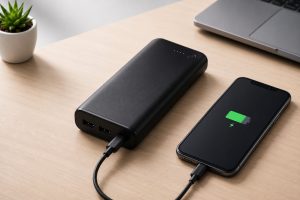
A power bank is a portable device that stores electrical energy in rechargeable battery cells and later uses that stored energy to charge other electronic devices.
Unlike a wall charger, which supplies electricity directly from a power outlet, a portable charge first stores energy inside its internal battery. You can then carry that stored energy with you and use it whenever your device’s battery runs low.
Power banks are designed to work with a wide variety of USB-powered devices, making them one of the most versatile charging accessories available today.
They are especially useful for:
- Travelers
- Students
- Office workers
- Remote professionals
- Outdoor enthusiasts
- Emergency preparedness
Their portability and convenience make them an essential backup power solution in everyday life.
What Does a Power Bank Do?
The primary purpose of a backup battery is to provide portable electrical power when a fixed power source isn’t available.
Instead of searching for a wall outlet, you simply connect your device to the portable charging device using a compatible cable—or wirelessly, if supported.
Depending on its battery capacity and output power, a portable battery pack can recharge a device once or multiple times before needing to be recharged itself.
Modern power banks can power a variety of devices, including:
- Smartphones
- Tablets
- Wireless earbuds
- Smartwatches
- Bluetooth speakers
- Digital cameras
- Portable gaming consoles
- USB-powered accessories
Some advanced models can even charge lightweight laptops that support USB-C Power Delivery.
Why Do People Use Power Banks?
Portable charging has become increasingly important because today’s electronic devices consume more power than ever before.
Activities such as:
- Video streaming
- GPS navigation
- Mobile gaming
- Video conferencing
- Social media browsing
- Photography and video recording
can quickly drain a battery.
A power bank provides a practical solution by allowing users to recharge their devices wherever they are.
Some of the most common reasons people carry a power bank include:
- Staying connected during travel
- Charging devices during long commutes
- Working without worrying about battery life
- Emergency backup during power outages
- Keeping multiple devices charged throughout the day
For many users, a power bank offers peace of mind by ensuring their essential devices remain powered when they need them most.
How Is a Power Bank Different from a Charger?
Although both products are used for charging devices, they serve different purposes.
A traditional charger transfers electricity directly from a wall outlet to your device.
A power bank, on the other hand, stores electricity in advance and then delivers that stored energy later.
This makes a power bank portable and independent of a fixed electrical outlet.
| Feature | Power Bank | Wall Charger |
| Stores electricity | ✅ Yes | ❌ No |
| Portable | ✅ Yes | Limited |
| Works without a wall outlet | ✅ Yes | ❌ No |
| Rechargeable | ✅ Yes | Not applicable |
| Best for travel | ✅ Yes | Limited |
Understanding this difference helps you choose the right charging solution for different situations.
What Is Inside a Power Bank?
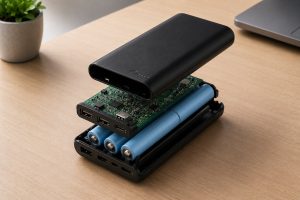
Although power banks come in different sizes and designs, most contain the same essential components.
Rechargeable Battery Cells
These cells store electrical energy until it is needed.
Most modern power banks use Lithium-ion (Li-ion) or Lithium-polymer (Li-Po) batteries because they provide excellent energy density and long service life.
Charging Controller
The charging controller manages the charging and discharging process, ensuring electricity flows safely and efficiently.
Input and Output Ports
Input ports allow the power bank to recharge, while output ports deliver energy to connected devices.
Modern models often include USB-C and USB-A ports for better compatibility.
Protection Circuit
Built-in protection circuits help safeguard both the power bank and connected devices by monitoring voltage, current, temperature, and charging conditions.
Want to know how these components work together? Read our detailed guide on How Power Bank Works for a complete technical explanation.
Different Types of Power Banks
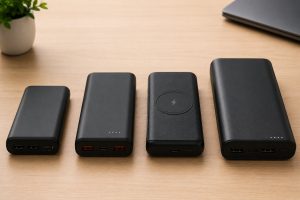
Power banks are available in several types, each designed for different charging needs and lifestyles. Understanding these options can help you choose the most suitable portable charger.
Standard Power Banks
Standard power banks are the most common option for everyday use.
They charge devices through USB-A or USB-C ports and are suitable for smartphones, tablets, wireless earbuds, Bluetooth speakers, and many other USB-powered devices.
They are available in a wide range of battery capacities, making them ideal for both casual and frequent users.
Fast Charging Power Banks
Fast charging power banks support technologies such as USB Power Delivery (PD) and Qualcomm Quick Charge (QC).
These models can charge compatible devices much faster than standard power banks, reducing the amount of time needed to recharge your phone or tablet.
They are an excellent choice for users who travel frequently or rely heavily on their mobile devices.
Wireless Power Banks
Wireless power banks allow you to charge compatible smartphones without connecting a charging cable.
Instead, you simply place your device on the charging surface.
Most wireless power banks use the Qi wireless charging standard, making them compatible with many modern smartphones.
Although convenient, wireless charging is generally slower than wired charging.
High-Capacity Power Banks
High-capacity models typically offer 20,000mAh or more, allowing users to recharge multiple devices several times before needing to recharge the power bank itself.
These models are ideal for:
- Long trips
- Camping
- Business travel
- Emergency backup
- Charging multiple devices
Key Features of a Modern Power Bank
Modern power banks offer much more than simple portable charging.
Here are some of the most useful features to look for.
Multiple Charging Ports
Many power banks include two or more output ports, allowing you to charge several devices simultaneously.
USB-C Connectivity
USB-C has become the industry standard because it supports faster charging, faster data transfer, and greater compatibility across devices.
Many newer power banks use USB-C for both input and output.
LED Battery Indicators
Most power banks include LED lights or digital displays that show the remaining battery level.
This makes it easier to know when it’s time to recharge the power bank.
Fast Charging Support
Power banks with USB PD or Quick Charge technology can significantly reduce charging times for compatible devices.
Built-in Safety Protection
Quality power banks include multiple protection systems designed to improve both safety and battery longevity.
These protections often include:
- Overcharge protection
- Over-current protection
- Short-circuit protection
- Temperature protection
- Over-voltage protection
Benefits of Using a Power Bank
A power bank offers several practical advantages beyond simply charging your phone.
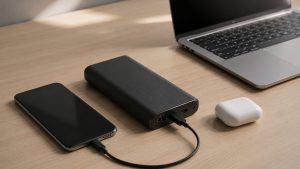
Some of the biggest benefits include:
- Portable charging anywhere
- Emergency backup power
- Greater convenience while traveling
- Reduced dependence on wall outlets
- Ability to charge multiple devices
- Improved productivity for remote work
- Reliable backup during power outages
For students, professionals, travellers, and outdoor enthusiasts, a power bank has become an essential everyday accessory.
What Devices Can a Power Bank Charge?
Modern power banks are compatible with a wide variety of electronic devices.
Depending on the output power and supported charging protocols, you can charge:
- Smartphones
- Tablets
- Wireless earbuds
- Smartwatches
- Bluetooth speakers
- Digital cameras
- Portable gaming consoles
- GPS devices
- E-readers
- USB-powered lights and fans
Some high-output USB-C power banks can also charge compatible laptops.
Always check your device’s charging requirements before connecting it to a power bank.
How to Choose the Right Power Bank
Choosing the best power bank depends on your personal charging needs rather than simply selecting the largest battery.
Consider the following factors before buying one:
Battery Capacity
Think about how many times you want to recharge your devices.
A larger capacity generally provides more charging cycles but also increases size and weight.
Learn how battery capacity affects real-world performance in our guide on Power Bank Capacity Explained.
Charging Speed
If your smartphone supports fast charging, choose a power bank that also supports USB Power Delivery (PD) or Qualcomm Quick Charge (QC).
Port Compatibility
Check whether the power bank includes the ports required by your devices, such as USB-C or USB-A.
Build Quality and Safety
Choose products from trusted manufacturers that include certified safety features and reliable battery management systems.
Portability
If you carry a power bank every day, consider its size and weight in addition to its battery capacity.
A compact model may be more practical for daily use than a larger, heavier unit.
Common Myths About Power Banks
Despite being widely used, there are still several misconceptions about power banks. Let’s separate the myths from the facts.
Myth 1: Every Power Bank Is the Same
Fact: Power banks differ in battery capacity, charging speed, safety features, port types, and build quality. A higher-quality power bank usually offers better efficiency, faster charging, and longer battery life.
Myth 2: Bigger Capacity Always Means a Better Power Bank
Fact: While a larger battery capacity allows for more charging cycles, it also makes the external battery pack heavier and less portable.
The best choice depends on your daily charging needs, the devices you use, and how often you travel.
Learn how battery capacity affects real-world charging performance in Power Bank Capacity Explained.
Myth 3: Power Banks Are Only for Smartphones
Fact: Modern power banks can charge many USB-powered devices, including tablets, wireless earbuds, Bluetooth speakers, smartwatches, cameras, portable gaming consoles, and even some USB-C laptops.
Myth 4: Charging Overnight Always Damages a Power Bank
Fact: Most quality power banks include intelligent charging circuits that help stop or reduce charging once the battery is full.
However, following the manufacturer’s recommendations is still the best practice for maximizing battery lifespan.
For safe charging tips and best practices, read How to Charge a Power Bank.
Frequently Asked Questions (FAQs)
What is a power bank used for?
A power bank is used to store electrical energy and recharge portable electronic devices when a wall outlet isn’t available. It provides convenient backup power for travel, work, school, and emergencies.
Can a power bank charge any phone?
Most power banks can charge smartphones that support USB charging.
However, charging speed depends on the phone’s charging protocol, cable quality, and the power bank’s output capabilities.
Do power banks need electricity to work?
Yes.
A power bank must first be charged using a compatible power source. Once charged, it stores that energy and can later transfer it to other devices.
What is the difference between a power bank and a portable charger?
These terms are often used interchangeably.
Technically, a USB charging solution is a type of portable charger that stores energy in rechargeable battery cells for later use.
How do I know which power bank is right for me?
The right external battery pack depends on:
- Your device’s battery size
- How often you need portable charging
- Desired charging speed
- Battery capacity
- Port compatibility
- Portability requirements
Understanding these factors helps you choose a model that matches your everyday needs.
Our complete Power Banks and Portable Charging guide explains how to compare different models and choose the right one.
Conclusion
A power bank is much more than a portable battery. It is a practical charging solution that keeps your devices powered whenever access to a wall outlet is limited or unavailable.
Whether you’re traveling, working remotely, studying, or preparing for emergencies, a reliable backup battery offers convenience, flexibility, and peace of mind.
By understanding what a USB charging solution is, how it differs from a traditional charger, the types available, and the features that matter most, you’ll be able to make a more informed purchasing decision and choose a model that fits your daily needs.
If you’re new to portable charging, learning the basics is the first step toward getting the most from your devices and your power bank.