
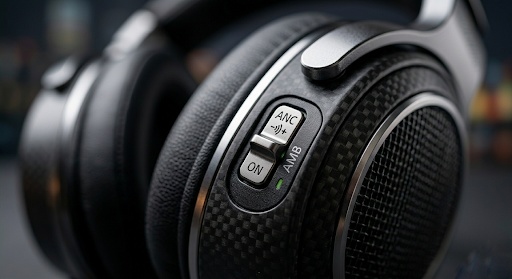
Audiophiles have debated headphone burn-in for decades. Some swear their headphones sounded noticeably better after 100 hours of use. Others call it pure myth. So — is headphone break-in real? This guide cuts through the anecdote and gets straight to the evidence. We examine the physics, review the most rigorous studies conducted on this question, and give you a clear, honest answer backed by acoustics science rather than forum opinion.
Featured Snippet Definition:
Headphone break-in — also called burn-in — is the practice of playing audio through new headphones for extended periods before critical listening, based on the belief that the driver components loosen and improve over time. Current scientific evidence does not support measurable acoustic changes from burn-in in well-controlled tests.
Is Headphone Break-In Real? Understanding What the Theory Claims
The answer to whether headphone break-in is real depends first on understanding exactly what proponents claim happens. The break-in theory holds that new headphone drivers — the transducers that convert electrical signals into sound — undergo mechanical changes during initial use that alter their acoustic output.
Specifically, burn-in advocates argue that:
- The diaphragm loosens — The thin membrane that moves air to create sound becomes more flexible with repeated movement.
- The surround material relaxes — The ring of material connecting the diaphragm to the driver frame softens and stretches slightly.
- The suspension settles — The spider or suspension system that controls diaphragm movement reaches its intended operating position.
These changes, proponents argue, shift the headphone’s frequency response — typically improving bass extension, smoothing the treble, and creating a more balanced overall sound signature.
Is the Break-In Theory for Headphones Real Based on Loudspeaker Science?
The mechanical loosening theory has legitimate roots. Large loudspeakers — particularly woofers and subwoofers — do exhibit measurable changes during initial use. Their heavier cones, longer excursion ranges, and stiffer surrounds can take time to reach their designed operating parameters.
However, headphone drivers are fundamentally different in scale and construction. Their diaphragms move in fractions of a millimeter. Their surrounds are far thinner and lighter than loudspeaker surrounds. Therefore, directly applying loudspeaker break-in logic to headphone drivers requires an assumption that the same mechanical principles operate at dramatically different scales — an assumption the evidence does not clearly support.
Is Headphone Break-In Real According to Scientific Testing?
The most rigorous answer to whether headphone break-in is real comes from controlled measurement studies — and the results are striking.
What Did the RTINGS.com Headphone Break-In Study Find?
RTINGS.com conducted one of the most methodologically sound studies on headphone break-in available to the public. Their team measured the frequency response of multiple headphone models before and after 100 hours of burn-in using standardized test signals. They used an industry-standard artificial ear measurement rig to eliminate listener subjectivity entirely.
Their findings: the measured frequency response of every tested headphone remained within the measurement margin of error before and after burn-in. No statistically significant acoustic change appeared in any model tested. The Audio Science Review forum’s detailed discussion of the RTINGS burn-in study confirms this conclusion, with engineers and acoustics specialists reviewing the methodology and largely agreeing with the outcome.
Furthermore, the study controlled for temperature variation, humidity, and measurement position — variables that can introduce false-positive differences in repeated acoustic measurements. Even with these controls in place, no measurable break-in effect appeared.
What Do SoundGuys and Other Audio Researchers Say About Whether Break-In Is Real?
SoundGuys’ analysis of headphone burn-in reaches a similarly skeptical conclusion. Their review of available evidence found no peer-reviewed acoustic study demonstrating measurable frequency response changes attributable to headphone burn-in under controlled conditions.
Their key argument: if burn-in produced real, measurable acoustic changes, headphone manufacturers would either specify a burn-in period in their product documentation or burn-in headphones at the factory before shipping. Virtually no major manufacturer does either. Sony, Sennheiser, Bose, and Apple do not mention burn-in periods anywhere in their technical specifications or user guides.
This manufacturer silence is itself significant evidence. Companies with extensive acoustic engineering departments would document burn-in requirements if the phenomenon reliably affected their products’ performance.
Is Headphone Break-In Real or Is It Perceptual? The Psychology Behind the Belief
Even without measurable acoustic changes, millions of listeners genuinely believe their headphones improved after burn-in. This belief deserves a serious explanation — and psychology provides one.
How Does Perceptual Adaptation Make Break-In Feel Real?
The human auditory system does not function like a measurement microphone. It adapts continuously to new stimuli. When you first put on a new pair of headphones, their specific tonal signature — brighter treble, stronger bass, particular midrange coloration — sounds unfamiliar. Your brain has not yet normalized to that acoustic profile.
After extended listening, your auditory system adapts to the headphone’s sound signature. The initially prominent treble no longer sounds harsh because your perceptual baseline has shifted. The bass that seemed excessive on day one sounds natural by day five. This process is called auditory adaptation or perceptual normalization — and it is entirely independent of any physical change in the headphone driver.
Therefore, what many listeners interpret as the headphone “opening up” or “smoothing out” is actually their own perception recalibrating. The headphone has not changed. The listener has.
Why Does Expectation Bias Make Headphone Break-In Feel More Real?
Confirmation bias and expectation effects compound the perceptual adaptation process. If you read on an audiophile forum that your new headphones require 200 hours of burn-in before reaching their potential, you enter the listening experience expecting improvement. Over time, your brain selectively notices positive changes and attributes them to the burn-in process.
This is not a character flaw — it is a universal feature of human perception. Double-blind audio tests consistently demonstrate that listeners cannot reliably distinguish differences they confidently claim to hear in open listening conditions. Home Studio Basics’ nuanced examination of the burn-in grey area makes this point well — acknowledging that while the subjective experience of improvement is real, the causal attribution to physical driver changes is not supported by measurement data.
Is Headphone Break-In Real for Dynamic Drivers Specifically?
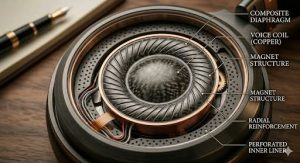
The break-in debate most commonly centers on dynamic driver headphones — the type that use a voice coil, magnet, and moving diaphragm to produce sound. This is the most common driver type in consumer headphones. So is headphone break-in real specifically for dynamic drivers?
Do Dynamic Driver Headphones Change Physically During Break-In?
Dynamic drivers do contain moving mechanical components — the diaphragm, voice coil, and suspension. In theory, these components could exhibit mechanical changes during initial use. In practice, however, the manufacturing tolerances and material stiffness of headphone-scale dynamic drivers are extremely consistent from the factory.
Modern headphone diaphragms use materials including bio-cellulose, polyethylene naphthalate (PEN), beryllium, and liquid crystal polymer. These materials are selected specifically for their dimensional stability and consistent mechanical behavior across a wide range of temperatures and excursion levels.
Additionally, the excursion range of a headphone driver at normal listening volumes is measured in fractions of a millimeter. The mechanical stress involved is orders of magnitude lower than what large loudspeaker woofers experience. Therefore, the physical case for meaningful mechanical loosening in headphone dynamic drivers at normal listening volumes is weak.
Is Headphone Break-In Real for Planar Magnetic and Electrostatic Drivers?
Planar magnetic headphones use a thin membrane with embedded conductors suspended between magnets. Electrostatic headphones use an ultra-thin membrane suspended between charged stators. Neither design has a traditional suspension or surround that would logically loosen over time.
Proponents occasionally argue that planar magnetic membranes may relax slightly during initial use. However, no controlled measurement study has demonstrated this effect in planar magnetic headphones any more conclusively than in dynamic driver models. The RTINGS study included planar magnetic models alongside dynamic driver headphones — and found no significant measured changes in either category.
Is Headphone Break-In Real Enough to Be Worth Doing?
Given that the scientific evidence does not support measurable acoustic changes from headphone break-in, is there any practical reason to do it anyway?
What Are the Arguments For Still Doing Break-In Even If It Is Not Fully Real?
Some audiophiles argue for a pragmatic middle position. Even if burn-in does not change the headphone, they argue, the listening time involved in a break-in period serves a useful function — it gives your ears time to adapt to a new sound signature before you form strong opinions about the headphone’s character.
This is a reasonable position. Spending 10 to 20 hours listening to a new headphone before writing a detailed review or forming firm conclusions allows your auditory system to normalize. Your assessment after that adaptation period will reflect the headphone’s actual sound signature more accurately than your first-hour impressions.
Furthermore, break-in carries no meaningful risk. Playing audio through headphones at moderate volume for extended periods does not damage drivers under normal conditions. Therefore, if you find the practice psychologically satisfying, there is no harm in doing it.
What Is the Best Way to Approach New Headphones If Break-In Is Not Real?
The best approach — supported by both the acoustic science and by experienced listeners — involves three practical steps:
- Listen for 10 to 20 hours before critical assessment. Give your auditory system time to adapt to the new sound signature before forming conclusions.
- Use EQ to address tonal preferences immediately. If the bass is too prominent or the treble too bright on day one, parametric EQ adjusts these characteristics far more reliably than hoping burn-in will fix them.
- Trust measurements over anecdote. Frequency response measurements from sources like RTINGS.com give you an objective picture of what a headphone actually sounds like — independent of burn-in mythology or expectation effects.
For listeners interested in how headphone drivers compare to the speaker systems inside wireless earbuds, our guide on how wireless earbuds work covers the full driver technology landscape clearly.
Is Headphone Break-In Real? What the Audiophile Community Actually Experiences
The audiophile community’s position on break-in is more divided than either pure believers or pure skeptics acknowledge. A nuanced middle ground exists — and it is worth understanding.
Why Do Experienced Audiophiles Still Believe Break-In Is Real?
Many experienced listeners with decades of critical listening experience genuinely report hearing improvement after burn-in. Their subjective experience is real. However, experience alone cannot distinguish between three possible explanations:
- The headphone physically changed and sounds different.
- The listener’s perception adapted and the headphone now sounds different to them.
- The listening conditions, recording choices, or volume level changed between early and late listening sessions.
Blind testing consistently shows that when listeners cannot see which condition they are in — broken-in or new — they fail to reliably identify which sample is which above chance levels. This is the strongest available evidence against the physical break-in theory.
How Does the Break-In Debate Reflect Broader Challenges in Audio Perception Research?
The break-in debate exemplifies a broader challenge in audio perception research. Human hearing is extraordinarily sensitive in some dimensions and remarkably susceptible to bias in others. Listeners reliably detect frequency response differences as small as 0.5 dB in controlled conditions — yet the same listeners make dramatically inconsistent judgments about absolute sound quality when expectation and context vary.
Bang & Olufsen’s research on acoustic perception touches on this point in the context of their own driver development — noting that subjective sound quality assessment requires extensive controls to produce meaningful data. The difficulty of conducting rigorous perceptual research partly explains why the break-in debate has persisted despite the lack of supporting measurement evidence.
For users interested in how microphone technology inside audio devices handles the similar challenge of capturing versus perceiving sound accurately, our detailed guide on how earbud microphones work provides useful technical context.
Frequently Asked Questions: Is Headphone Break-In Real?
1. Is headphone break-in real according to science?
Current scientific evidence does not support headphone break-in as a measurable acoustic phenomenon. The most rigorous controlled studies — including RTINGS.com’s frequency response measurements before and after 100 hours of burn-in — found no statistically significant changes in any tested headphone model. The perceived improvement most listeners report is better explained by auditory adaptation and expectation bias than by physical driver changes.
2. How long does headphone break-in take if it is real?
Break-in advocates typically recommend between 40 and 200 hours of burn-in, depending on the headphone type and the source of the recommendation. However, since controlled measurements show no acoustic changes attributable to burn-in, there is no scientifically validated duration. Spending 10 to 20 hours listening before forming critical judgments is reasonable for auditory adaptation — but extended burn-in rituals beyond that offer no measured benefit.
3. Is headphone break-in real for expensive headphones more than budget ones?
No evidence supports the idea that expensive headphones benefit from break-in more than budget models. The break-in theory applies to driver mechanics, not price tier. Interestingly, some audiophiles report more pronounced break-in effects in expensive headphones — but this likely reflects stronger expectation bias, since listeners invest more psychological weight in expensive purchases and therefore look harder for improvement.
4. Does burn-in damage headphones?
Playing audio through headphones at moderate volume for extended periods does not typically damage drivers under normal conditions. However, using excessively loud signals or test tones at very high volumes during burn-in can stress drivers unnecessarily and potentially reduce longevity. If you choose to burn in headphones, use normal listening content at normal listening volume — not maximum-volume test signals.
5. Is headphone break-in real for bass response specifically?
Bass is the most commonly cited area of claimed improvement from break-in. The argument is that the diaphragm loosens and achieves better low-frequency extension. However, measurement studies show no meaningful bass response change before and after burn-in in controlled conditions. The perception of improved bass after extended use is consistent with auditory adaptation to a headphone’s specific low-frequency character.
6. Should I burn in my new headphones before using them?
There is no scientific reason to burn in new headphones before first use. You will not miss any acoustic improvement by using them immediately out of the box. However, avoid forming strong permanent opinions about a headphone’s sound quality in the first hour. Give your ears 10 to 20 hours to adapt to the new sound signature before making final judgments or considering a return.
7. Is headphone break-in real for in-ear monitors (IEMs)?
The break-in debate applies to IEMs as well as over-ear headphones, with the same scientific conclusion. IEM drivers — particularly balanced armature drivers used in many audiophile IEMs — have no traditional suspension or surround to loosen. Dynamic driver IEMs have very small excursion ranges. Controlled measurements of IEMs before and after burn-in similarly show no statistically significant acoustic changes.
8. Why do so many audiophiles believe in break-in if it is not real?
The belief persists for several reasons. First, auditory adaptation is real — listeners genuinely hear their headphones differently after extended use, and this perceptual change is easily misattributed to physical driver changes. Second, confirmation bias is powerful — expecting improvement makes improvement more likely to be perceived. Third, the audiophile community has historically passed on burn-in wisdom through oral tradition rather than controlled testing.
9. Is headphone break-in real for planar magnetic headphones?
Planar magnetic headphones are particularly unlikely to benefit from burn-in. Their driver design — a thin membrane with embedded conductors suspended between magnets — contains no traditional suspension or surround material. There is no mechanical component that logically undergoes loosening during initial use. Measurement studies that have included planar magnetic models alongside dynamic driver headphones have found no break-in effect in either category.
10. What is the best way to evaluate a new headphone without the break-in myth affecting my judgment?
The best approach combines objective and subjective evaluation. First, check frequency response measurements from trusted sources like RTINGS.com before listening, so you know what to expect acoustically. Second, listen for at least 10 to 20 hours before forming final opinions, allowing auditory adaptation to occur. Third, use parametric EQ to address any tonal characteristics you dislike rather than waiting for burn-in to fix them. Finally, compare your impressions against your initial measurement-informed expectations to separate perception from reality.
Conclusion: Is Headphone Break-In Real — The Bottom Line
The scientific consensus is clear: headphone break-in does not produce measurable acoustic changes in controlled testing. The most rigorous studies find no statistically significant frequency response differences before and after extended burn-in in dynamic driver, planar magnetic, or other headphone types. What listeners genuinely experience as improvement is best explained by auditory adaptation and expectation bias — both real psychological phenomena, but neither caused by physical changes in the driver. The practical takeaway is straightforward: use your headphones immediately, give your ears time to adapt naturally, and use EQ rather than burn-in rituals to address any tonal preferences. Your headphones sound the same on day one as they will on day 100 — measured objectively, the evidence is consistent on this point.
Ready to choose headphones based on real performance data rather than myths? Explore our complete guide on which headphones are safest and best-performing for your needs and make a decision grounded in evidence.