

Quick Answer:
The real advantages of an AI dashcam are faster hazard warnings, footage that sorts itself, and stronger evidence when someone disputes what happened. It can catch staged-accident fraud in the act and shorten insurance claims. The least-discussed advantage is psychological. Most of the daily value comes from a worry you stop carrying, not from one dramatic save.
Most “top 10 benefits” articles about dashcams just recycle marketing copy in a listicle costume. You can usually tell within a paragraph or two. The tenth benefit is somehow always “peace of mind,” and it stretches thin enough to fill a whole header. This one tries something different. It covers fewer benefits, but argues them properly. It also includes a couple that rarely show up elsewhere because they are harder to market and more interesting to think about.
Quick housekeeping before the list. If you want the full definition of what makes a dashcam “AI” in the first place, our beginner’s guide explains that. And if you’re trying to decide between an AI model and a plain one specifically, our full comparison is the more balanced read. This article focuses specifically on why AI dashcams excel.
- Real-time collision warnings
- Lane departure alerts
- Footage that filters itself
- Object-aware parking protection
- Driver fatigue and distraction alerts
- Stronger evidence in a dispute
- Protection against staged-accident fraud
- Faster, less stressful insurance claims
- A quiet, ongoing nudge toward better habits
- Fewer things you personally have to remember
The rest of this article is really about the last five. The first five get plenty of coverage everywhere else, including in our own features guide. So we’ll move through them quickly before spending real time on the ones nobody bothers to explain properly.
The Obvious Five, Briefly
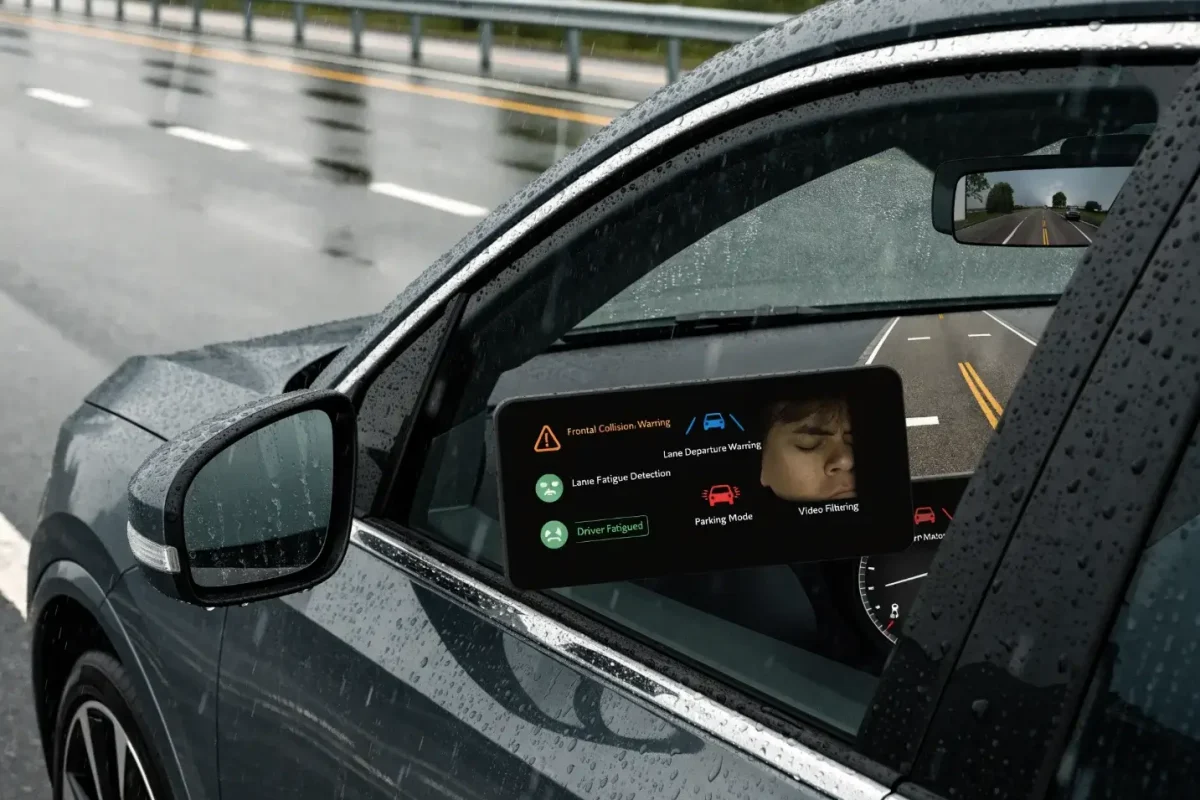
Real-time collision and lane warnings buy you a fraction of a second. That sounds small. At highway speed, a fraction of a second can mean several car lengths. Object-aware parking mode saves and flags the footage that matters: a dent, a scrape, or someone testing your door handle. It keeps those moments from disappearing inside eight hours of empty parking-lot video.
Driver monitoring catches fatigue and distraction patterns you may not notice in yourself. That matters because fatigue impairs your ability to notice your own decline. And footage that filters itself, instead of dumping everything on you to review, is a quality-of-life upgrade most people undervalue, one that only becomes obvious once you’ve tried the alternative and hated it.
None of that is news if you’ve read anything else on this topic, including our own articles. It’s real value, and it’s also the value every competing article already covers reasonably well. Almost nobody covers the harder question: whether any of it actually works, and what else you’re getting that nobody put on the box.
Do the Safety Alerts Actually Prevent Accidents?
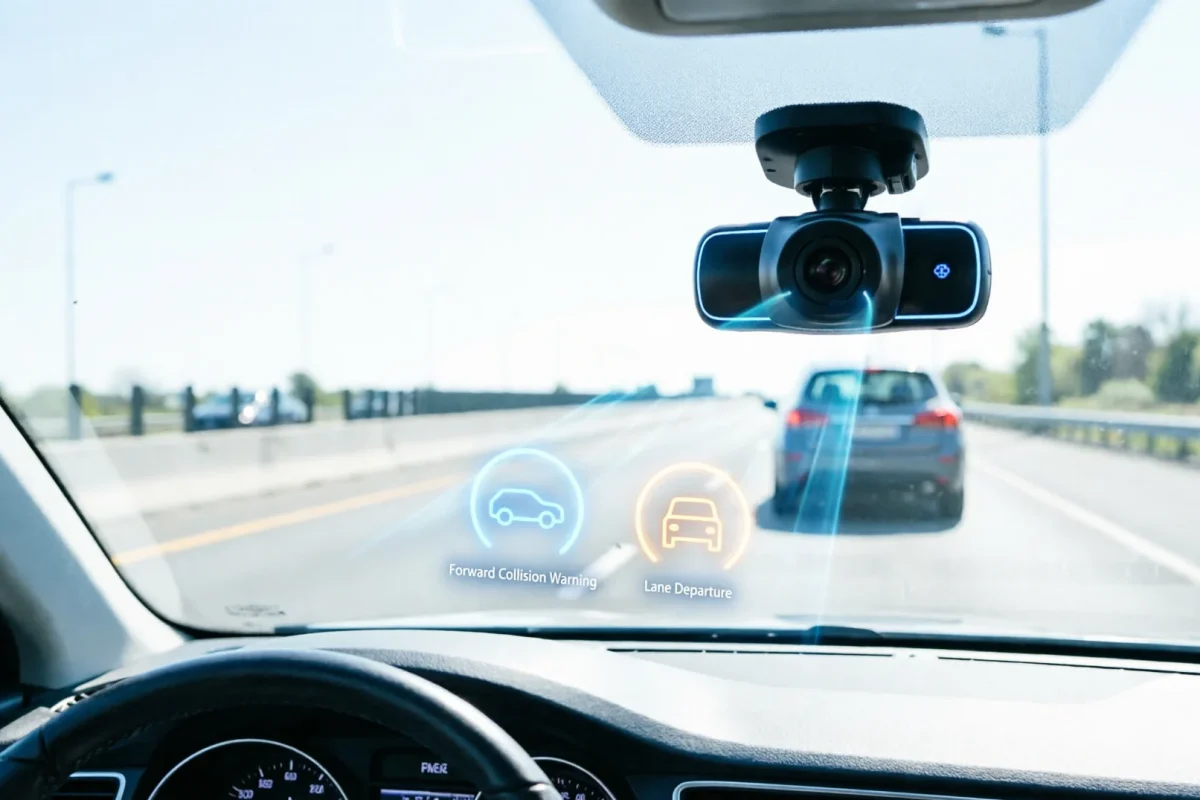
Worth answering honestly rather than just asserting, since it’s the whole premise. Researchers have studied forward collision warning more than most AI dashcam features. It mirrors technology automakers have built into new cars for years. The evidence holds up well. Federal crash data shows these systems reduce rear-end crashes by about 25% when drivers react promptly.. This applies when drivers react promptly to alerts.
It’s the kind of figure that shows up because researchers have had enough real-world data to study millions of systems automakers built in at the factory properly.
Lane departure warning and driver monitoring have thinner research in aftermarket dashcam form. The technology is newer. It is also harder to prove that one alert changed one outcome, especially when the outcome is not a clear collision. That doesn’t mean they don’t work. It means the honest answer is closer to “researchers understand the underlying mechanism, and the collision-warning cousin of this technology has real evidence behind it” than to a single, clean statistic for every feature on the box.
The Advantage That Actually Surprises People: Fraud Protection
A Real Staged-Crash Case
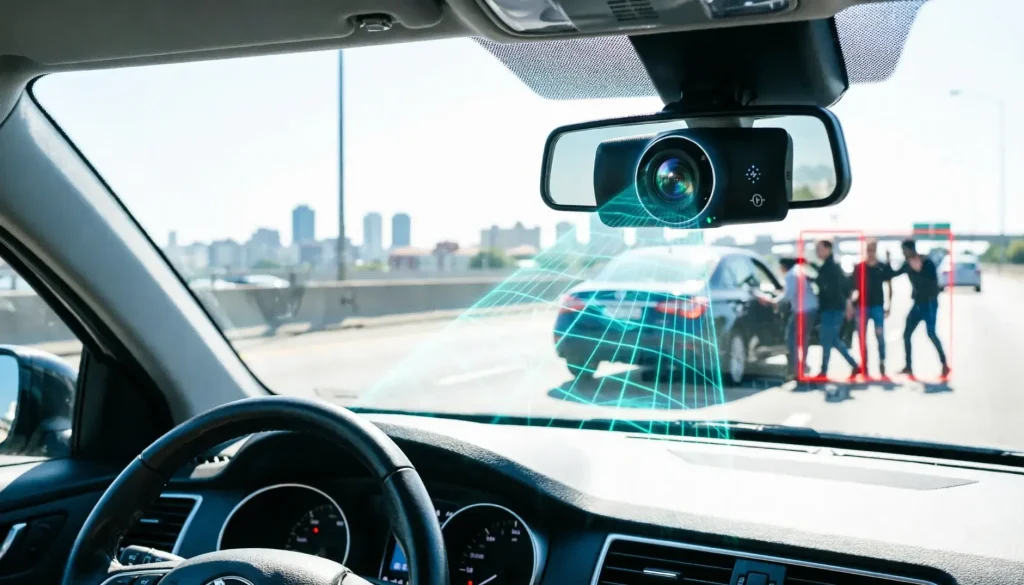
In October 2024, Ashpia Natasha was driving on the Belt Parkway in Queens. Another car cut her off, stopped short, and then reversed into her SUV. Four people got out, clutching their necks and backs, and someone inside the other car draped a tarp over its rear window before they all climbed out to “exchange information.” Natasha’s dashcam had caught the entire thing, cleanly enough that when she posted it, it went viral within a day. Prosecutors later charged two men. Investigators described a coordinated staged-crash operation on that same highway. The group allegedly recruited people with cash to fake injuries and file insurance claims. Without her footage, this would have been her word against four people who’d rehearsed their story before she’d even stopped her car.
How AI Catches the Setup Before Impact
That’s the sharpest version of a genuinely common problem. Staged collisions, or what the industry calls “cash for crash” schemes, are more common than most drivers assume insurance-industry trackers have counted thousands of suspected cases in a single year in New York and California alone. An AI dashcam does not only record the crash. Object detection and continuous tracking can capture the other vehicle’s approach before impact. That window often reveals the difference between a normal accident and a deliberate stop-and-reverse maneuver. Regular dashcams capture the same raw footage, to be clear. What AI adds is a better chance the camera flags and saves the right ten seconds. A plain dashcam usually records over them first.
Why This Speeds Up Ordinary Insurance Claims
Even away from outright fraud, this same footage tends to shorten and simplify ordinary insurance claims. Adjusters can watch what happened instead of reconciling two conflicting accounts. That’s a big part of why insurers process video-backed claims faster. Other parties also contest them less often than he-said-she-said cases.
The Psychological Advantage Nobody Puts on the Box
Marketers struggle with this one, because it doesn’t photograph well and it isn’t a feature you can screenshot. A lot of the day-to-day value of owning one of these things isn’t the alerts you get. It’s the low hum of anxiety you stop carrying around about the ones you might need someday.
Anyone who’s been in a minor accident without a witness knows the grinding stress of the aftermath. The other driver’s version shifts slightly each time they repeat it. Then comes the slow realization that it may come down to who sounds more convincing. That stress is a real cost, even though nobody lists it on a spec sheet next to megapixels and night vision. Knowing the footage exists, and that it’s the specific footage that matters rather than six hours of raw parking-lot video, removes a genuine source of low-grade dread before anything ever happens. You don’t notice you’re carrying it until it disappears.
The Habit-Forming Effect
People drive differently when they know a camera is recording them. They don’t need a formal coaching program watching over their shoulder. This isn’t a controversial claim either. Behavioral researchers have documented the same pattern for decades. Awareness of observation changes how people act, often for the better, even without explicit feedback. An AI dashcam applies a quieter version of the same effect. You do not need a weekly scorecard for the camera to nudge you. It may encourage a gentler brake or a wider following distance. Even if you never say it out loud, your own driving is now part of the record.
This is a genuinely long-term benefit in a way the collision-warning pitch isn’t. A warning saves you in a specific moment. This effect, if it takes hold at all, quietly reshapes the moments that never required a rescue in the first place.
Why This Beats a Regular Dashcam, Specifically
Strip everything above down to one sentence: a regular dashcam gives you the same raw material without the processing. It’s still recording when the staged accident happens. It’s still capturing your parking spot. What it isn’t doing is deciding, in real time, which ten seconds actually matter. That’s the entire difference. One version protects you. The other sits unwatched until the camera records over it. Our full comparison covers the tradeoffs both ways in more depth. It includes the cases where a plain dashcam is the smarter, cheaper choice. But the advantage case is simple: an AI dashcam turns raw recording into something closer to an actual witness.
To Be Fair
None of this makes an AI dashcam magic. It won’t stop a determined tailgater. It won’t fix bad weather. And in the moment that matters most, a driver who ignores every alert has no more protection than one without a dashcam. The advantages here are real, but they’re advantages of preparation and evidence, not a substitute for the driving itself. Our companion piece on AI dashcam limitations covers the fuller, less flattering picture, including the overreliance research manufacturers don’t advertise.
Key Takeaways
- The core safety case has real evidence behind it, particularly for forward collision warning, which draws on the same research base as factory ADAS systems.
- Fraud protection is the most underrated advantage — staged “cash for crash” collisions are a documented, ongoing problem, and continuous object tracking is what actually catches them.
- Clear video evidence tends to make insurance claims faster and less contested, beyond the extreme fraud cases.
- A meaningful part of the value is psychological — reduced background anxiety about the “what if I need this someday” scenario.
- Simply being recorded tends to shift driving habits quietly over time, independent of any formal coaching feature.
- None of this replaces attentive driving. The advantages are about preparation and evidence, not immunity from bad outcomes.
Frequently Asked Questions
What are the main advantages of an AI dashcam?
Real-time collision and lane warnings, footage that filters itself instead of requiring manual review, object-aware parking protection, and driver fatigue alerts cover the well-known list. Less discussed: stronger legal and insurance protection, including catching staged-accident fraud, and a quieter psychological benefit from not having to worry about whether you’ll have proof if something happens.
Do AI safety alerts actually prevent accidents?
Forward collision warning has solid evidence behind it, with analyses of federal crash data suggesting it can meaningfully reduce rear-end collisions when drivers respond to the alert. Newer features like lane departure and driver monitoring have a well-understood mechanism but thinner dedicated research specifically in aftermarket dashcam form.
Why is an AI dashcam better than a regular one?
Because it decides which footage matters instead of leaving that entirely to you. A regular dashcam records the same raw material, like a staged accident or a parking-lot bump. But an AI dashcam automatically flags and preserves the specific clip. This is often the difference between usable evidence and footage the system overwrites before anyone can save it.
What are some hidden benefits of an AI dashcam that don't get mentioned much?
Reduced background anxiety about proving what happened if something goes wrong, a quiet, long-term shift toward gentler driving habits simply from knowing you’re recorded, and real protection against staged-accident insurance fraud, which is a documented and ongoing problem in several US states.
Are there long-term benefits, or is it mostly about the moment of an accident?
Both, but the long-term side is underrated. Beyond any single saved moment, continuous awareness of being recorded tends to nudge driving habits gradually, and the cumulative effect of fewer harsh moments over years matters as much as any one prevented collision.
A Note on Sources
The staged-accident case referenced here is a real, publicly reported incident, prosecuted by the Queens District Attorney’s office, not a hypothetical example. The collision-warning effectiveness figure draws on published analyses of federal crash data rather than a dashcam manufacturer’s own marketing claims. If we couldn’t trace a claim to something verifiable, we left it out rather than stating it as fact.
This guide is for general informational purposes and is not legal or insurance advice.