
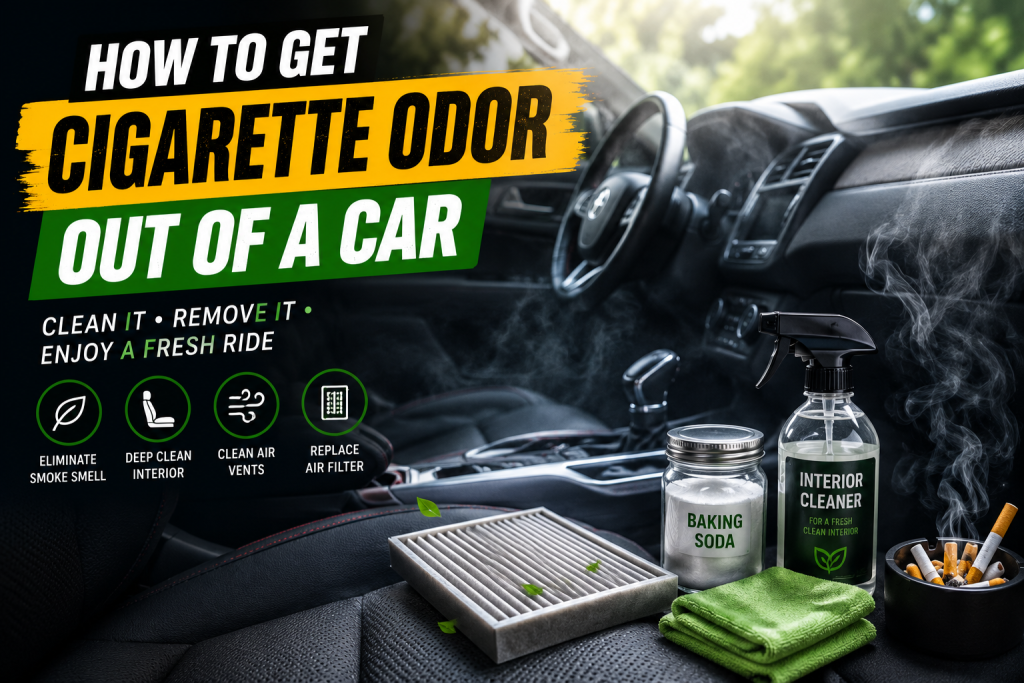
Cigarette odor out of a car is a goal for many drivers who want a cleaner, healthier, and more pleasant driving experience. Cigarette smoke doesn’t just disappear after opening a window—it settles into fabric seats, carpets, headliners, air vents, and even the cabin air filter. Over time, the smell becomes trapped inside your vehicle, making it difficult to eliminate with ordinary air fresheners.
Fortunately, removing smoke odor is possible with the right cleaning methods and a little patience. Whether you’ve recently bought a used car or want to freshen up your own vehicle, a thorough interior cleaning can significantly reduce or completely remove lingering cigarette smells.
In this guide, you’ll learn why smoke odor is so persistent, how to clean every part of your car’s interior, and the best ways to keep your vehicle smelling fresh long after the cleaning is complete.
Why Cigarette Smoke Smells Stay Inside a Car
Unlike ordinary odors, cigarette smoke contains tiny particles and sticky residues known as smoke residue or tar. These particles cling to nearly every interior surface, including upholstery, plastic trim, leather, glass, and even the ventilation system.
Every time the cabin heats up in the sun, those trapped particles release odor molecules back into the air. This is why a car may smell fine one day but strongly of smoke the next.
The longer smoking continues inside the vehicle, the deeper the residue penetrates soft materials such as cloth seats and carpets, making complete removal more challenging.
How to Get Cigarette Odor Out of a Car
Before using any cleaning products, remove loose debris from the entire interior.
Vacuum the seats, carpets, floor mats, trunk, and hard-to-reach areas beneath the seats. Pay special attention to seat creases where ash and dust often collect.
If your car still has ash in the ashtray or cup holders, empty and clean them thoroughly. Even small amounts of leftover ash can continue producing unpleasant odors.
Removing loose dirt first also allows cleaning products to work more effectively on the smoke residue.
Remove Smoke Residue from Interior Surfaces
Many people focus only on the seats, but cigarette smoke affects almost every surface inside the vehicle.
Use an automotive interior cleaner to wipe the dashboard, steering wheel, center console, door panels, cup holders, gear selector, and other hard surfaces.
Don’t forget the windows. Smoke leaves behind a thin film that often goes unnoticed until you begin cleaning. A quality automotive glass cleaner removes this residue and improves visibility at the same time.
Cleaning every surface helps eliminate the sticky particles responsible for lingering odors.
Clean the Seats Thoroughly
Car seats absorb smoke faster than almost any other part of the interior.
For cloth or fabric seats, use a quality automotive upholstery cleaner and gently work it into the fabric with a soft brush. Avoid soaking the seats because excessive moisture can lead to mildew or unpleasant smells.
Leather seats should always be cleaned with leather-safe products. After cleaning, apply a leather conditioner to restore moisture and protect the material.
If your seats already have stains in addition to smoke odor, cleaning them first produces better overall results.
Best Ways to Remove Cigarette Odor Out of a Car
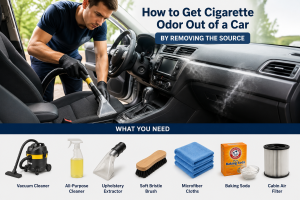
Carpets absorb smoke particles just as easily as upholstery.
Remove the floor mats and clean them separately using an automotive carpet cleaner. Allow them to dry completely before placing them back inside the vehicle.
Vacuum the carpet thoroughly before applying carpet cleaner. Work in small sections and blot away excess moisture with microfiber towels.
If possible, leave the doors open or park in a well-ventilated area while the carpets dry.
Replace or Clean the Cabin Air Filter
Many drivers overlook one important source of smoke odor—the cabin air filter.
As air circulates through the vehicle, smoke particles become trapped inside the filter. Even after cleaning the interior, a dirty cabin air filter may continue blowing unpleasant odors through the air vents.
Replacing the filter is often inexpensive and can make a noticeable difference in air quality.
Check your owner’s manual for the recommended replacement interval and filter location.
Use the Right Interior Cleaning Products
Using household cleaners may remove dirt, but they aren’t always suitable for automotive materials.
Choose products specifically designed for car interiors to protect upholstery, leather, plastics, and vinyl from discoloration or damage.
Natural Methods to Eliminate Smoke Smell
If a slight cigarette smell remains after deep cleaning, natural odor absorbers can help freshen the interior.
Baking soda is one of the simplest options. Sprinkle a light layer over cloth seats and carpets, leave it overnight, then vacuum thoroughly. It helps absorb lingering odors without damaging most upholstery.
Activated charcoal is another effective odor absorber. Place a small container under a seat or in the trunk for a few days. It naturally traps odor molecules instead of masking them.
Coffee grounds are also popular for reducing unwanted smells. Place dry grounds in an open container and leave them inside the car overnight. Although they won’t completely eliminate heavy smoke odor, they can help reduce mild lingering smells.
These methods work best after you’ve already cleaned the interior thoroughly rather than as a replacement for proper cleaning.
Clean the Air Vents and Ventilation System
Even after cleaning the seats and carpets, smoke odor can remain trapped inside the ventilation system.
Turn on the air conditioner and switch between fresh air and recirculation modes while using an automotive air vent cleaner designed for HVAC systems. This helps remove odor-causing particles from the ductwork.
Use a soft detailing brush to clean dust around the air vents, as smoke residue often sticks to these areas.
If the odor persists, replacing the cabin air filter is usually the next step. A clean filter improves airflow and prevents old smoke particles from circulating through the cabin.
Common Mistakes to Avoid
Many people try to hide cigarette smell instead of removing its source.
One of the biggest mistakes is relying only on air fresheners. While they may provide a pleasant scent temporarily, they simply cover the odor rather than eliminating the smoke residue.
Another mistake is skipping the headliner. The fabric on the ceiling absorbs smoke surprisingly well. Clean it gently using a microfiber cloth and an upholstery-safe cleaner without soaking the material.
Ignoring the cabin air filter is another common problem. Even after deep-cleaning the interior, an old filter can continue spreading smoke odor throughout the vehicle.
Using harsh household chemicals is also risky. Bleach, ammonia, and strong solvents may damage upholstery, leather, and plastic trim.
Finally, avoid rushing the drying process. Moisture left inside the vehicle can create new odors that replace the old ones.
How to Prevent Cigarette Odor from Returning
Once your vehicle smells fresh again, a few simple habits can help keep it that way.
Avoid smoking inside the vehicle whenever possible. Even occasional smoking leaves residue that gradually builds up over time.
Empty the ashtray regularly and clean it with an interior-safe cleaner. Leaving cigarette ash inside the car allows odor to linger.
Vacuum the interior every few weeks to remove dust and debris before it traps additional odors.
Keeping the cabin air filter clean also helps maintain fresh airflow throughout the vehicle.
Opening the windows occasionally and allowing fresh air to circulate can reduce moisture and improve the overall freshness of the interior.
Frequently Asked Questions
Can cigarette odor be completely removed from a car?
Yes. With thorough cleaning, proper ventilation, and a clean cabin air filter, most smoke odors can be greatly reduced or completely eliminated.
Does baking soda remove cigarette smell?
Baking soda helps absorb lingering odors from carpets and cloth seats, especially after deep cleaning.
Why does my car still smell like smoke after cleaning?
Smoke particles may remain inside the headliner, air vents, cabin air filter, or other hidden areas that haven’t been cleaned.
How long does it take to remove cigarette odor?
Light odors may disappear within a day or two, while heavy smoke buildup can require several cleaning sessions over a week.
Will air fresheners remove cigarette smell?
No. Air fresheners only mask the odor temporarily. Removing smoke residue is the most effective long-term solution.
Final Thoughts
Learning how to get cigarette odor out of a car takes more than simply spraying an air freshener. Smoke particles settle into upholstery, carpets, headliners, air vents, and the cabin air filter, making a complete interior cleaning essential.
By vacuuming thoroughly, cleaning every interior surface, washing the seats and carpets, replacing the cabin air filter, and using natural odor absorbers when needed, you can restore a clean and fresh-smelling cabin.
Regular maintenance also helps prevent smoke odor from returning. Cleaning spills promptly, vacuuming often, and keeping the ventilation system in good condition will improve both comfort and air quality.