
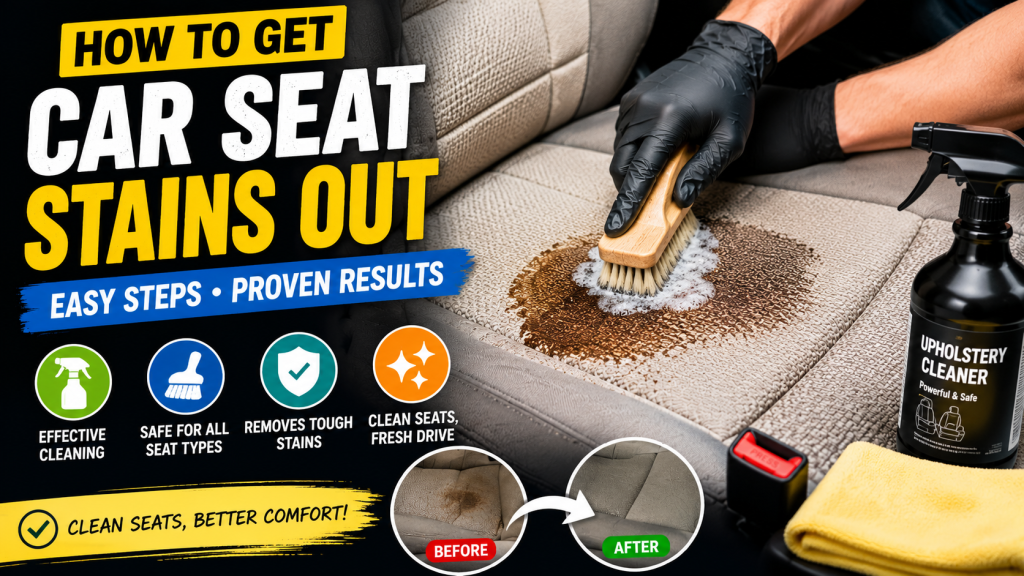
Car Seat Stains Out is something every car owner wants to achieve after dealing with coffee spills, food, mud, grease, ink, or pet accidents. Stains can quickly make your vehicle’s interior look dirty and neglected, while also creating unpleasant odors if left untreated. The good news is that most stains can be removed safely with the right cleaning methods and products.
Keeping your car clean is about more than washing the exterior. The seats often collect coffee spills, food crumbs, mud, ink, pet accidents, and everyday dirt that can leave stubborn stains behind. Over time, these marks not only make your vehicle look untidy but can also create unpleasant odors and reduce its resale value.
The good news is that most stains can be removed without hiring a professional detailer. Using the right cleaning techniques and products, you can restore your car seats and keep them looking fresh for years.
In this guide, you’ll learn how to get car seat stains out safely from cloth, fabric, and leather seats. We’ll also explain how different types of stains should be treated, common mistakes to avoid, and simple maintenance tips that help prevent future stains.
Why Car Seat Stains Are So Difficult to Remove
Car seat stains become harder to clean because upholstery is designed to absorb moisture and provide comfort. When a drink, food, or greasy substance is spilled, it quickly penetrates the fabric or settles into the natural texture of leather.
As time passes, dirt sticks to the stain, making it darker and more noticeable. Heat from sunlight can also cause certain stains to bond more firmly with the upholstery fibers.
Cleaning the stain as soon as possible greatly increases the chances of removing it completely.
How to Get Car Seat Stains Out Without Damaging the Upholstery
The safest cleaning method begins with removing loose dirt before applying any cleaning solution.
Start by vacuuming the seats thoroughly. Dust, crumbs, and grit can scratch the upholstery if rubbed during cleaning.
Next, identify the type of seat material. Cloth, fabric, and leather all require different cleaning methods and products. Using the wrong cleaner may cause fading, discoloration, or permanent damage.
Before using any cleaning solution, test it on a hidden area of the seat to make sure it doesn’t affect the color or texture.
Apply the cleaner in small sections and gently work it into the stain using a microfiber cloth or a soft-bristle brush. Avoid scrubbing aggressively, as this can spread the stain or damage the upholstery.
Once the stain begins to lift, wipe away the residue with a clean, damp microfiber cloth and allow the seat to dry naturally.
Common Types of Car Seat Stains
Not every stain responds to the same cleaning method. Understanding what caused the stain helps you choose the most effective treatment.
Food and beverage stains are among the most common. Coffee, soda, juice, and sauces can leave noticeable marks if they aren’t cleaned quickly.
Mud stains should always be allowed to dry before cleaning. Trying to wipe wet mud usually spreads it over a larger area.
Ink stains require gentle treatment because strong solvents can damage upholstery.
Oil and grease stains often penetrate deeply into fabric and may require specialized upholstery cleaners.
Pet accidents not only stain the seats but can also leave lingering odors if not cleaned thoroughly.
Each stain requires a slightly different approach, but acting quickly is always the best strategy.
Best Products for Removing Car Seat Stains
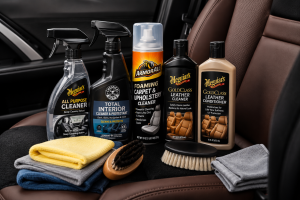
Choosing the right cleaning products makes a significant difference.
Automotive upholstery cleaners are formulated specifically for cloth and fabric seats, helping lift dirt without damaging the fibers.
Leather seats should always be cleaned with leather-safe products designed to preserve the material’s protective finish.
Microfiber cloths are excellent for wiping away dirt because they trap particles without scratching delicate surfaces.
A soft detailing brush helps loosen stubborn stains while remaining gentle on the upholstery.
Avoid using bleach, ammonia, strong detergents, or abrasive scrubbing pads. These products may permanently damage automotive interiors.
Removing Food and Drink Stains
Food spills should be cleaned as soon as possible.
Begin by blotting excess liquid with a clean microfiber cloth rather than rubbing it deeper into the upholstery.
Spray a small amount of upholstery cleaner onto the stain and allow it to sit for a minute or two.
Gently work the cleaner into the fabric using circular motions before wiping away the residue with a damp cloth.
Repeat the process if necessary until the stain disappears.
Cleaning Grease and Oil Marks
Grease stains require special attention because oil doesn’t dissolve easily in water.
Blot the affected area first to remove excess grease.
Use an automotive upholstery cleaner designed for oil-based stains and clean the area gently.
Cleaning Cloth, Fabric, and Leather Seats
Different upholstery materials require different cleaning techniques.
Cloth and fabric seats can usually be cleaned using automotive upholstery cleaners and a soft brush.
Leather seats should be cleaned with leather-safe cleaners followed by a quality conditioner to keep the material soft and protected.
Removing Old and Stubborn Car Seat Stains
Fresh stains are always easier to remove, but older stains can often be cleaned with patience and the right technique.
Start by vacuuming the affected area to remove loose dirt. This prevents debris from being rubbed deeper into the upholstery during cleaning.
Apply an automotive upholstery cleaner to the stain and allow it to sit for a few minutes. This gives the cleaner time to break down dried residue.
Using a soft-bristle brush, gently loosen the stain with small circular motions. Avoid scrubbing too hard, especially on delicate fabrics or leather, as this may damage the material.
Wipe away the loosened dirt with a damp microfiber cloth. If the stain remains, repeat the process instead of using stronger chemicals. Several gentle cleaning sessions are usually more effective than one aggressive attempt.
For stains that have penetrated deep into the seat foam, professional detailing may be the best option.
Natural Ways to Get Car Seat Stains Out
If you prefer simple household solutions, a few natural ingredients can help with light stains.
Baking soda is useful for absorbing odors and lifting mild stains. Sprinkle it over the affected area, let it sit for several hours, then vacuum it thoroughly.
White vinegar mixed with water can help remove certain food and drink stains from cloth seats. However, always test the solution on a hidden area first to ensure it doesn’t affect the upholstery.
Club soda may also help loosen fresh beverage stains when gently blotted with a microfiber cloth.
Although natural remedies can be effective for minor spills, they may not completely remove heavy grease, ink, or deeply embedded stains. Automotive upholstery cleaners generally provide more consistent results.
Common Mistakes to Avoid
Many car owners accidentally make stains worse during the cleaning process.
One of the biggest mistakes is rubbing a fresh spill instead of blotting it. Rubbing spreads the stain and pushes it deeper into the upholstery.
Using too much water is another common problem. Excess moisture can soak into the seat foam, increasing drying time and encouraging mold or mildew growth.
Harsh household cleaners such as bleach, ammonia, or strong detergents should also be avoided. These chemicals may fade colors, weaken stitching, or damage protective coatings on leather.
Skipping the patch test is another mistake. Even products designed for automotive use should be tested on an inconspicuous area before cleaning the entire seat.
Finally, don’t leave the seats damp after cleaning. Good ventilation helps the upholstery dry completely and prevents unpleasant odors.
Tips to Prevent Future Seat Stains
Preventing stains is much easier than removing them.
Clean spills as soon as they happen to stop liquids from soaking into the upholstery. Regular vacuuming also prevents dirt from becoming embedded in the fabric.
If you frequently travel with children or pets, consider using seat covers to protect the original upholstery from food spills, mud, and pet hair.
Avoid placing open drinks or greasy food directly on the seats, and transport automotive fluids or cleaning products in sealed containers to reduce the risk of accidental leaks.
Routine interior cleaning keeps your car looking newer and reduces the chance of permanent staining.
Frequently Asked Questions
Can old car seat stains be removed?
Yes. Many old stains can be reduced or removed with the right upholstery cleaner and repeated gentle cleaning.
What is the best cleaner for car seat stains?
A high-quality automotive upholstery cleaner is usually the safest and most effective choice for cloth and fabric seats.
Can baking soda remove seat stains?
Baking soda can help absorb odors and lift light stains, but stubborn stains may require a dedicated upholstery cleaner.
Should I scrub hard to remove stains?
No. Gentle cleaning protects the upholstery and often produces better results than aggressive scrubbing.
How often should I clean my car seats?
Vacuum the seats every few weeks and perform a deep cleaning every two to three months, or sooner if spills occur.
Final Thoughts
Learning how to get car seat stains out doesn’t have to be complicated. Whether you’re dealing with coffee spills, mud, grease, ink, or everyday dirt, acting quickly and using the right cleaning method can restore your seats without damaging the upholstery.
Regular maintenance, prompt spill cleanup, and using products designed for automotive interiors will keep your car looking cleaner and help preserve its value over time.