
You clean your ears regularly — yet you keep noticing more wax than usual. Your headphone use might be the reason. Can headphones cause earwax buildup? The answer is yes — but the risk varies dramatically by headphone type, fit style, and daily listening habits. This guide explains exactly how and why different audio devices affect your ear’s natural cerumen production, which devices carry the highest risk, and what you can do right now to protect your ear health without giving up your music.
Featured Snippet Definition:
Headphones can cause earwax buildup by blocking the ear canal’s natural airflow, creating warm moist environments that stimulate cerumen-producing glands, and physically obstructing the outward migration of wax. In-ear earbuds carry the highest risk. Over-ear headphones carry minimal risk because they do not contact the ear canal at all.
Can Headphones Cause Earwax Buildup? The Science of Cerumen Production
The answer is yes — certain headphones can cause earwax buildup through three distinct biological mechanisms. Understanding each mechanism helps you identify which devices pose real risk and which do not.
Earwax — medically known as cerumen — serves a vital protective function. It traps dust, debris, and microorganisms before they reach the eardrum. Under normal conditions, the ear canal is self-cleaning. Jaw movement during chewing and talking naturally massages cerumen outward. It dries, flakes, and exits the canal without any intervention needed.
However, any device that disrupts this natural process can trigger excess wax production or prevent normal outward migration. Here is how the three key mechanisms work:
- Thermal stimulation — Blocked airflow raises canal temperature. Heat directly activates cerumen glands, increasing wax secretion above baseline levels.
- Migration obstruction — Physical objects in the canal block the outward jaw-movement massage that moves wax naturally toward the canal exit.
- Mechanical gland stimulation — Direct contact between a device and the canal wall stimulates cerumen glands through pressure, regardless of temperature changes.
All three mechanisms apply specifically to in-ear earbuds. Furthermore, the more completely an earbud seals the canal, the more strongly all three mechanisms operate simultaneously.
How Does Airflow Blockage Explain Whether Headphones Can Cause Earwax Buildup?
Airflow blockage is the primary driver of headphone-related cerumen increase. The ear canal normally exchanges air continuously with the environment. This airflow regulates temperature, maintains appropriate moisture levels, and prevents the microclimate conditions that overstimulate wax production.
When you insert sealed earbuds, you create an enclosed chamber between the device and your eardrum. Body heat accumulates in this sealed space rapidly. Canal temperature rises noticeably above baseline within minutes of insertion. According to research referenced by Columbia University Medical Center’s ear health team, this thermal effect is one of the most consistently documented contributors to elevated cerumen production in regular earbud users.
Therefore, the longer your listening session and the more completely your earbud seals the canal, the greater the cerumen-stimulating thermal effect becomes.
Can Headphones Cause Earwax Buildup Differently Depending on Type?
Yes — different headphone types carry dramatically different earwax risks. The variation is not subtle. Over-ear headphones and in-ear earbuds sit at opposite ends of the earwax risk spectrum, with on-ear headphones and open-fit earbuds falling in between.
How Do In-Ear Earbuds Cause the Most Earwax Buildup?
In-ear earbuds are the highest-risk category for earwax buildup. They cause cerumen accumulation through every mechanism simultaneously — thermal stimulation, migration obstruction, and mechanical gland pressure.
Silicone and foam ear tips that create a complete canal seal are the most problematic. Foam tips particularly deserve attention. They expand to fill the canal completely, creating the most airtight seal of any consumer earbud design. As a result, foam-tip earbuds block airflow most effectively, trap the most heat, and most thoroughly obstruct natural wax migration.
Custom-fit in-ear monitors (IEMs) — used by musicians and audiophiles — carry even higher risk. Their precise canal-matching fit creates an essentially complete seal. Professional musicians who use custom IEMs daily frequently report clinically significant earwax accumulation requiring regular audiologist care.
Boots Hearing Care’s clinical analysis of earwax and headphone use notes that in-ear devices represent one of the most common lifestyle factors contributing to cerumen impaction in otherwise healthy adults — a finding consistent across multiple hearing clinic case series.
Can On-Ear Headphones Cause Earwax Buildup at a Moderate Level?
On-ear headphones carry moderate earwax risk — significantly lower than in-ear earbuds but not entirely zero. They do not enter the ear canal, which eliminates direct migration obstruction and most mechanical gland stimulation. However, on-ear headphones press against the outer ear, which can slightly alter jaw mechanics during extended wear.
The primary on-ear earwax concern is indirect. Extended on-ear wearing sessions create a warm microenvironment against the outer ear that may modestly increase overall canal temperature. This thermal effect is much weaker than the sealed-canal effect of earbuds, but it remains a consideration for users wearing on-ear headphones for six or more hours daily.
Do Over-Ear Headphones Cause Earwax Buildup?
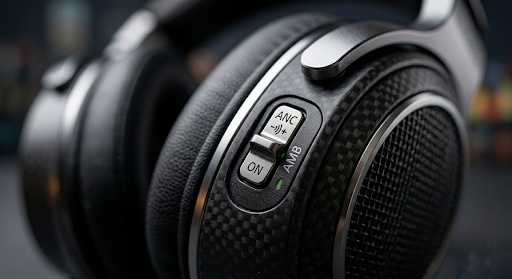
Over-ear headphones carry minimal earwax risk for the vast majority of users. They sit entirely around the outer ear, with no contact with the ear canal whatsoever. They do not obstruct wax migration. They do not insert into the canal to create thermal buildup. They do not apply mechanical pressure to canal walls.
The warm microclimate over-ear cups create around the pinna — the outer ear — has negligible impact on cerumen gland activity inside the ear canal itself. This is why audiologists consistently recommend over-ear designs as the hearing-safe choice for users prone to earwax problems.
For a comprehensive guide to which headphone types protect your ears most effectively across all health dimensions — including earwax, hearing loss risk, and infection risk — read our complete resource on which headphones are safest for your ears.
Can Headphones Cause Earwax Buildup That Leads to Serious Health Problems?
Yes — if earwax accumulation from headphone use goes unaddressed, it can escalate from a minor inconvenience to a genuine health problem. Understanding the progression helps you recognize when to act.

What Health Problems Can Earwax Buildup from Headphones Cause?
Cerumen impaction — the medical term for significant wax blockage — can cause the following problems:
- Conductive hearing loss — Impacted wax physically blocks sound transmission to the eardrum. This type of hearing loss is temporary and fully reversible with proper treatment. However, many users mistake it for permanent hearing damage before receiving a diagnosis.
- Tinnitus — Ringing, buzzing, or humming sounds in one or both ears can result from earwax pressing against the eardrum or altering its vibration characteristics.
- Ear fullness and pressure — Blockage creates a sensation of fullness or pressure inside the ear canal that persists regardless of swallowing or jaw movement.
- Ear infections (otitis externa) — Impacted wax traps moisture, creates warmth, and provides a growth medium for bacteria. Outer ear infections are significantly more common in regular earbud users than in the general population.
- Dizziness — Severe impaction can affect the pressure balance in the ear canal and trigger vestibular symptoms including mild dizziness or unsteadiness.
According to the American Academy of Otolaryngology, cerumen impaction affects approximately 6% of the general population — but rates are considerably higher among frequent in-ear device users. Furthermore, this condition accounts for over 12 million physician visits annually in the United States alone.
How Quickly Can Headphones Cause Earwax Buildup to Become Problematic?
The timeline varies by individual. People with naturally high cerumen production, narrow ear canals, or very dry wax types accumulate blockages more rapidly. Individuals who use sealed in-ear earbuds for four or more hours daily may develop significant impaction within weeks.
Signs that earwax accumulation requires attention include:
- Muffled hearing that improves temporarily after removing earbuds
- Visible wax appearing on earbud tips after shorter-than-usual listening sessions
- Itching or discomfort inside the ear canal during or after earbud use
- Recurring ear fullness that does not resolve overnight
- Tinnitus that appears during or after listening sessions
Any of these symptoms warrants reducing earbud use and consulting an audiologist or ENT specialist. Do not attempt to resolve significant impaction with cotton swabs — this compacts wax deeper against the eardrum and worsens the problem consistently.
Can Headphones Cause Earwax Buildup Through Bacterial Transfer?
Yes — this is a frequently overlooked mechanism. Earbuds that enter the ear canal accumulate bacteria on their surface during use. Reinserting unwashed earbuds reintroduces this bacterial load directly into the canal on every subsequent use.

How Do Earbud Tips Transfer Bacteria and Worsen Earwax Buildup?
The ear canal contains its own microbiome — a balance of beneficial bacteria that helps regulate the canal environment. Introducing external bacteria from earbud surfaces disrupts this balance. The disruption can trigger inflammatory responses in the canal lining, which in turn stimulates cerumen gland activity as part of the protective response.
Additionally, bacteria that accumulate in impacted wax find an ideal growth environment — warm, moist, protected from airflow, and nutrient-rich. As a result, earwax impaction and bacterial ear infection frequently co-occur in frequent earbud users.
Earwax Care UK’s clinical guidance on avoiding earwax buildup from headphone use strongly recommends cleaning earbud tips after every single use — not weekly, but daily — specifically to interrupt the bacterial transfer cycle that compounds cerumen impaction risk.
How Does Sharing Earbuds Affect Earwax Buildup Risk?
Sharing earbuds between users dramatically increases bacterial transfer risk. Each user contributes their own bacterial profile to the earbud tip surface. When the next user inserts the earbud, they receive this combined bacterial load directly into their ear canal.
This is particularly relevant in household settings where family members share earbuds, or in workplace environments where shared audio equipment exists. Never share earbuds without thoroughly cleaning all contact surfaces between users.
How Can You Prevent Headphones from Causing Earwax Buildup?
Prevention is straightforward once you understand the mechanisms. The best prevention strategy addresses all three causes — thermal stimulation, migration obstruction, and bacterial transfer — simultaneously.
What Are the Most Effective Ways to Prevent Earwax Buildup from Headphones?
Follow these seven evidence-based practices to prevent cerumen accumulation from audio device use:
- Switch to over-ear headphones for primary listening — This single change eliminates canal contact, removes all three buildup mechanisms, and reduces earwax risk to near zero. For device recommendations across all budgets, our guide on which headphones are safest for your ears covers every category.
- Limit in-ear session length to 60 minutes maximum — Taking breaks allows canal temperature to normalize, restores natural airflow, and gives the jaw-movement massage time to move accumulated wax outward.
- Clean earbud tips after every single use — Wipe silicone tips with a dry or slightly damp cloth. Remove and clean foam tips separately. Replace foam tips monthly regardless of visible cleanliness.
- Choose shallow-insertion silicone tips over deep foam tips — Shallow-insertion tips seal the canal less completely, reducing thermal buildup and creating less migration obstruction while still providing adequate sound isolation.
- Never use cotton swabs inside the ear canal — This is the most important negative rule. Cotton swabs compact wax against the eardrum, worsening impaction and potentially damaging the delicate canal lining. Clean only the visible outer canal entrance using a soft cloth.
- Use over-the-counter cerumen softening drops if prone to buildup — Carbamide peroxide, hydrogen peroxide, or mineral oil drops soften accumulated wax and support natural migration. Use as directed. Do not use if you have a perforated eardrum or ear tubes.
- Schedule annual ear health checks — An audiologist can assess cerumen levels, identify buildup before it becomes impaction, and perform professional microsuction if needed. Annual checks are particularly important for daily in-ear device users.
Does Switching to Noise-Cancelling Headphones Help Prevent Earwax Buildup?
Yes — switching from in-ear earbuds to over-ear noise-cancelling headphones addresses earwax risk while maintaining excellent audio quality and noise reduction performance. Over-ear ANC headphones eliminate all canal contact while delivering superior ambient noise reduction compared to earbuds without ANC.
This combination — zero earwax risk plus strong noise cancellation — makes over-ear ANC headphones the optimal choice for health-conscious listeners. Understanding how noise-cancelling technology works helps you choose the right model confidently. Read our guide on what headphone noise cancelling is for a complete technical overview, and our explanation of how noise-cancelling headphones work for the full science behind the technology.
Can Headphones Cause Earwax Buildup in Children More Than in Adults?
Yes — children face elevated earwax buildup risk from headphone and earbud use compared to adults. Their anatomy and behavioral patterns both contribute.
Why Are Children More Vulnerable to Earwax Buildup from Headphones?
Children’s ear canals are narrower than adults. A narrower canal leaves less space for natural wax migration. Even modest cerumen production increases can cause significant impaction in a child’s canal where the same production level would cause no problems in an adult.
Furthermore, children’s ear canals are more horizontal than adults’ more angled canals. This anatomical difference means gravity assists wax migration less effectively in children, making them naturally more dependent on jaw-movement massage for wax clearance. Any device that obstructs this massage creates proportionally greater impaction risk in children than in adults.
Additionally, children frequently use earbuds incorrectly — inserting them too deeply, using the wrong tip size, and wearing them for extended unmonitored sessions. These behavioral factors compound the anatomical vulnerability.
The safest approach for children: over-ear headphones exclusively for children under 12, with volume limiting at 85 dB or below. If older children insist on earbuds for sports or specific activities, supervise session length, choose properly fitted shallow silicone tips, and check for earwax symptoms regularly.
Frequently Asked Questions: Can Headphones Cause Earwax Buildup?
1. Can headphones cause earwax buildup even with occasional use?
Yes — even occasional in-ear earbud use can contribute to earwax accumulation in people who are naturally prone to high cerumen production or who have narrow ear canals. However, for most users, occasional use causes minimal risk. The primary risk comes from daily extended use of sealed in-ear earbuds. Over-ear headphones do not cause earwax buildup regardless of use frequency.
2. Do foam ear tips cause more earwax buildup than silicone tips?
Yes — foam tips create a deeper, more airtight seal than silicone tips. This complete sealing blocks airflow more thoroughly, traps more heat, and more completely obstructs natural wax migration. For users concerned about cerumen buildup, shallow-fitting silicone tips are the better choice. They provide adequate noise isolation with significantly less canal disruption than foam alternatives.
3. Can wireless earbuds cause more earwax buildup than wired earbuds?
The wireless connection itself does not affect earwax production. What matters is the fit style — whether the tip seals the ear canal. A wireless earbud with a sealed foam tip causes the same earwax buildup risk as a wired earbud with the same tip design. True wireless earbuds that sit deeper in the canal (ANC-equipped models) may cause slightly more buildup than standard wireless models due to their deeper insertion depth.
4. How do I know if my earwax buildup is caused by headphone use?
The connection is likely if your earwax symptoms correlate with your listening habits — worsening during periods of heavy earbud use and improving during breaks. Additional signs include visible wax on earbud tips after shorter sessions than usual, ear fullness that appears primarily during or after listening, and hearing that improves noticeably after removing earbuds. An audiologist can confirm cerumen impaction and assess its severity.
5. Can cleaning earbuds prevent earwax buildup?
Yes — regular cleaning interrupts the bacterial transfer cycle that compounds cerumen impaction. However, cleaning earbuds prevents bacterial-related cerumen stimulation but does not address thermal buildup or migration obstruction. Cleaning is necessary but not sufficient on its own. Combining regular cleaning with session length limits and periodic breaks addresses all three buildup mechanisms more completely.
6. Are bone conduction headphones safe from causing earwax buildup?
Yes — bone conduction headphones transmit sound through the skull bones without entering the ear canal at all. They eliminate all three earwax buildup mechanisms simultaneously. No canal contact means no thermal buildup, no migration obstruction, and no bacterial transfer to the canal. For users with chronic earwax problems, bone conduction headphones represent the safest audio option from a cerumen perspective.
7. Can headphones cause earwax buildup that affects hearing permanently?
Earwax-related hearing loss is almost always temporary and fully reversible with appropriate cerumen removal. However, prolonged untreated impaction can lead to secondary complications — particularly bacterial ear infections — that can cause more lasting damage if severe. The key is addressing buildup symptoms promptly rather than ignoring them. Hearing loss from earwax impaction itself resolves completely after professional or careful home removal.
8. Is professional earwax removal necessary if headphones caused the buildup?
Professional removal is recommended for significant impaction — particularly when home remedies have not resolved symptoms within two to three weeks. Audiologists and ENT specialists perform microsuction, which safely removes compacted cerumen without the eardrum contact risk of ear irrigation. Never attempt to remove significant impaction with cotton swabs, hairpins, or other objects inserted into the canal.
9. Do all in-ear earbuds equally cause earwax buildup?
No — earwax buildup risk varies significantly among in-ear designs. Deeply sealed foam-tip models cause the most buildup. Shallow silicone-tip models cause moderate buildup. Open-fit earbuds — which rest at the canal entrance without sealing it — cause minimal buildup because they maintain canal airflow and do not obstruct wax migration. The seal depth and completeness are the primary variables determining risk within the in-ear category.
10. Can switching from earbuds to headphones reverse existing earwax buildup?
Switching to over-ear headphones removes the primary cause of ongoing buildup, allowing the ear’s natural self-cleaning process to resume. For mild accumulation, this switch — combined with cerumen softening drops — often resolves the buildup within weeks without professional intervention. For significant impaction, switching headphone type is a necessary preventive step, but professional cerumen removal remains advisable to address the existing accumulation.
Conclusion: Can Headphones Cause Earwax Buildup — The Clear Answer
Yes — in-ear earbuds can cause earwax buildup through three simultaneous mechanisms: thermal stimulation from blocked airflow, physical obstruction of natural wax migration, and bacterial transfer from unclean device surfaces. Over-ear headphones carry minimal earwax risk because they maintain complete ear canal independence. Switching from earbuds to over-ear headphones is the single most effective preventive step for chronic earwax problems. Combining that switch with regular device cleaning, 60-minute session limits, and annual hearing checks provides comprehensive protection for your long-term ear health.
Ready to make a hearing-safe switch? Explore our complete guide on which headphones are safest for your ears and find the right pair for your lifestyle today.