
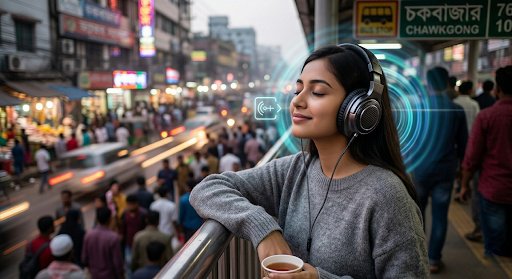
You put on your ANC headphones and the world goes quiet. But then a nagging thought appears — is noise-cancelling headphones bad for your ears? That subtle pressure sensation. That faint electronic hiss. The feeling that something unusual is happening inside your ears. These experiences lead millions of users to question whether ANC technology poses hidden risks. This guide cuts through the confusion with evidence-based answers, audiologist perspectives, and the complete picture of what noise cancellation actually does — and does not do — to your hearing health.
Featured Snippet Definition:
Noise-cancelling headphones are not bad for your ears. ANC technology generates an inverse sound wave to cancel ambient noise — it does not produce harmful acoustic energy or damaging pressure changes. In noisy environments, ANC headphones actively protect hearing by enabling lower listening volumes than non-ANC alternatives allow.
Is Noise-Cancelling Headphones Bad for Your Ears? Understanding What ANC Actually Does
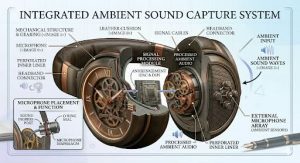
The answer is no — noise-cancelling headphones are not bad for your ears when used responsibly. This is the consistent conclusion of audiologists, acoustic engineers, and hearing health researchers who have examined the question carefully. To understand why, you first need to understand precisely what ANC technology does inside the ear cup.
Active noise cancellation works through three components operating in a continuous real-time loop:
- External microphones detect incoming ambient sound continuously
- A dedicated ANC processor calculates the exact inverse waveform of that ambient sound in under one millisecond
- The speaker driver plays this anti-noise signal simultaneously with your audio content
The anti-noise signal and the original ambient sound meet inside the ear cup. They cancel each other through destructive interference — a fundamental property of wave physics. The result is a quieter acoustic environment without any new harmful sound being introduced.
Critically, the anti-noise signal carries no meaningful acoustic energy that damages cochlear hair cells. It is an engineered waveform designed to neutralize existing sound, not to add new high-amplitude energy to the environment. Therefore, ANC itself does not generate the sustained loud sound that causes noise-induced hearing loss (NIHL).
Why Do People Think Noise-Cancelling Headphones Are Bad for Your Ears?
The concern arises from two real but misunderstood experiences. First, many new ANC users feel a subtle pressure or fullness sensation when noise cancellation activates. Second, some users notice a faint background hiss from the ANC circuitry itself. Both experiences are real. However, neither indicates hearing damage or physical harm.
Understanding why these sensations occur — and what they actually mean — resolves the concern for most users. Furthermore, separating ANC-specific effects from the general question of headphone volume management clarifies where the genuine hearing health attention should focus.
Is the Pressure Sensation Proof That Noise-Cancelling Headphones Are Bad for Your Ears?
No — the pressure sensation is not proof of harm. It is perceptual rather than physical. This distinction is fundamental to understanding ANC safety, and it is the point that most competitor content fails to explain adequately.
What Causes the Pressure Feeling When Noise-Cancelling Headphones Are Active?
The pressure sensation occurs because of how the brain interprets an unexpectedly quiet acoustic environment. Your auditory system has calibrated expectations about ambient sound levels. In any normal environment — even a quiet room — background sound exists at some level. Your brain uses this ambient sound as an acoustic reference point.
When ANC suddenly removes 20 to 35 dB of that ambient sound, the brain receives an acoustic input that has no familiar reference. The auditory cortex interprets this unusual quiet as a change in air pressure — similar to the sensation of ear pressure during altitude changes in an aircraft or entering a tunnel. However, no actual barometric change occurs inside the ear cup. The air pressure around your eardrum remains identical to the ambient air pressure outside.
This is confirmed by the research reviewed in a study published in the National Institutes of Health PubMed Central database, which examined user-reported ANC sensations and found the pressure experience to be a consistently perceptual rather than physical phenomenon across tested subjects.
Does the Pressure Sensation from Noise-Cancelling Headphones Cause Permanent Ear Damage?
No — the pressure sensation does not cause permanent damage. No clinical evidence supports a connection between the perceptual pressure experience of ANC use and eardrum damage, middle ear injury, or cochlear harm in healthy users.
For most people, this sensation diminishes significantly within the first one to two weeks of regular ANC use. The auditory system adapts to the new acoustic reference point, and the brain stops interpreting quiet as pressure once it has experienced ANC conditions repeatedly.
However, users with pre-existing conditions should exercise caution. Individuals with Eustachian tube dysfunction, perforated eardrums, or significant auditory sensory sensitivities may experience the pressure sensation more intensely and persistently. These users should consult an audiologist before making ANC headphones a daily habit.
Is Noise-Cancelling Technology in Headphones Bad for Your Ears in Specific Environments?
The answer varies by environment — and in most real-world scenarios, noise-cancelling headphones are actively beneficial for your ears rather than harmful.
How Does ANC Protect Your Ears in Noisy Environments?
The primary hearing health benefit of noise-cancelling headphones is behavioral. In noisy environments, listeners instinctively raise their audio volume to compete with background noise — a well-documented reflex called the Lombard effect. This volume increase is the leading pathway through which headphone use causes hearing damage.
Consider a concrete example. A commuter riding a subway train producing 83 dB of ambient noise instinctively raises their earbud volume to 86 or 88 dB to hear their podcast clearly. With quality ANC headphones reducing that ambient noise to 50 dB, the same commuter achieves comfortable listening clarity at 62 to 65 dB. That represents a 20 to 25 dB reduction in actual listening volume on every single commute.
The National Institute on Deafness and Other Communication Disorders (NIDCD) states that sustained exposure above 85 dB causes permanent cochlear hair cell damage. ANC headphones consistently push daily listening volume well below this threshold in environments where standard headphones or earbuds push users above it. Over months and years of daily use, this volume reduction provides meaningful, cumulative hearing protection.
Soundcore’s analysis of whether noise cancelling is bad for your ears reaches the same conclusion — the volume reduction benefit of ANC in real-world noisy environments is the dominant hearing health effect, and it operates protectively rather than harmfully.
Is Noise-Cancelling Bad for Your Ears in Quiet Environments?
In already-quiet environments, the hearing health calculus shifts slightly. When ambient noise is minimal, ANC provides little volume reduction benefit because there is no significant background noise driving listening volume upward. In these situations, the main ANC-related experience is the pressure sensation and the faint circuitry hiss — both of which are uncomfortable for some users but clinically harmless.
The Guardian’s 2025 audiologist report on ANC headphones raises an important nuance. Some audiologists express concern that extended ANC use in quiet environments — particularly during tasks requiring environmental awareness — may reduce users’ natural engagement with ambient auditory cues over time. This is not a hearing damage concern. Rather, it is a question about auditory cognitive engagement that warrants further research.
This concern does not make ANC headphones medically harmful. However, it suggests that using transparency mode or ANC-off mode during quiet home listening is sensible — reserving ANC for the noisy environments where its protective volume-reduction benefit is most meaningful.
Is Noise-Cancelling Headphones Bad for Your Ears Compared to Regular Headphones?
No — noise-cancelling headphones are not worse for your ears than regular headphones. In most real-world scenarios, they are demonstrably better for hearing health. This comparison deserves direct examination because it is the practical question most users actually face when choosing between ANC and non-ANC options.
How Do ANC and Non-ANC Headphones Compare for Hearing Safety?
Here is a direct comparison across the key hearing health metrics:
| Factor | ANC Headphones | Non-ANC Headphones |
|---|---|---|
| Listening volume in noise | Lower — ANC reduces need to raise volume | Higher — Lombard effect drives volume up |
| Anti-noise signal risk | None — no harmful acoustic energy | Not applicable |
| Pressure sensation | Mild perceptual effect in some users | None |
| Circuitry hiss | Faint — model dependent | None |
| Hearing protection in noisy environments | Strong | Weak to moderate |
| Hearing protection in quiet environments | Equivalent | Equivalent |
| Overall hearing safety | Equal or better | Baseline |
The table makes the conclusion clear. In noisy environments — where most people use headphones — ANC models deliver better hearing protection through their volume reduction effect. In quiet environments, the protection is equivalent. ANC headphones are never worse for your ears than non-ANC alternatives at equivalent listening volumes.
Is the ANC Hiss in Noise-Cancelling Headphones Bad for Your Ears?
No — the ANC hiss is not harmful to your ears. This faint broadband noise — sometimes described as white noise or static — is a byproduct of the ANC circuitry generating the anti-noise signal. It becomes most perceptible in silence when no audio content plays and no ambient noise exists to mask it.
The acoustic level of this hiss in premium headphones is extremely low — typically below 25 to 30 dB. This falls well below the threshold of any hearing concern. By comparison, a quiet library produces approximately 30 dB of ambient sound. The ANC hiss in a quality headphone is quieter than a library.
Budget ANC headphones may produce a more perceptible hiss due to less refined electronics. However, even at its most noticeable, the ANC hiss in consumer headphones does not approach acoustic levels associated with hearing damage. For a deeper understanding of what ANC technology actually is and how it generates this signal, read our complete guide on what headphone noise cancelling is.
Is Long-Term Use of Noise-Cancelling Headphones Bad for Your Ears?
No — long-term ANC headphone use is not bad for your ears when volume is managed responsibly. This is the question that genuinely concerns regular users who rely on ANC headphones for daily commuting, remote work, or frequent travel.
What Does Long-Term ANC Use Actually Do to Your Ears?
Long-term ANC use at safe listening volumes has not been documented to cause cumulative hearing damage. The anti-noise signal does not accumulate acoustic energy over time. Each listening session is acoustically independent — there is no additive effect from repeated ANC exposure that increases hearing risk session by session.
What long-term ANC use does affect is auditory cognitive adaptation. Audiologists note that listeners who spend many hours daily in ANC-created quiet develop strong perceptual preferences for low-noise environments. This is not a medical problem — it is simply a matter of personal preference. However, it explains why many long-term ANC users find noisy environments increasingly uncomfortable when they remove their headphones.
Furthermore, long-term daily ANC use builds the healthy habit of listening at lower volumes. Users who establish low-volume listening habits through ANC use carry these habits into non-ANC listening contexts. Over years of daily use, this behavioral effect contributes meaningfully to hearing preservation.
How Should You Use Noise-Cancelling Headphones Long-Term to Protect Your Ears?
The best long-term ANC use practices combine technology with responsible listening behavior:
- Keep volume below 85 dB at all times — Use your device’s volume limit setting to set a hard ceiling. Most smartphones display dB readings in hearing health settings.
- Apply the 60/60 rule — Maximum 60% device volume for maximum 60-minute continuous sessions, then take a 5-minute break.
- Use transparency mode in safe environments — Switch to transparency or ANC-off mode when walking outdoors, cycling, or in any situation requiring environmental awareness.
- Reserve ANC for noisy environments — Let the technology work where its volume-reduction benefit is greatest — commutes, flights, and open offices.
- Take full listening breaks — Remove headphones entirely for at least 15 minutes after every two hours of use. This allows your auditory system to recalibrate to natural sound levels.
- Get annual hearing assessments — Regular audiological checks catch any early changes in hearing sensitivity before they progress.
For the complete guide to safe headphone use across all types and price points, our expert resource on which headphones are safest for your ears covers every category and consideration.
Is Noise-Cancelling Headphones Bad for Your Ears for Specific Groups?

Is Noise-Cancelling Bad for Your Ears If You Have Existing Hearing Loss?
For most people with mild to moderate hearing loss, noise-cancelling headphones are not bad for their ears and may actually be more beneficial than standard headphones. Strong ANC reduces ambient noise competition, enabling people with hearing loss to hear audio content more clearly at lower volumes than they would need without noise cancellation.
However, people with specific auditory conditions should consult an audiologist before regular ANC use. Those with Eustachian tube dysfunction may find the pressure sensation more intense and persistent. Those with hyperacusis — heightened sound sensitivity — may find the ANC hiss disproportionately bothersome. An audiologist can recommend specific ANC models and settings that minimize these experiences.
Is Noise-Cancelling Bad for Your Ears for Children?
Children can use ANC headphones safely with appropriate precautions. The pressure sensation may be unfamiliar and distressing for young children who cannot articulate what they are experiencing. Volume-limiting ANC headphones — with hardware limits at 85 dB or below — are the safest option for children.
Over-ear ANC headphones are strongly preferable to in-ear ANC earbuds for children under 12. In-ear ANC devices contact the ear canal, carry earwax and infection risks specific to that design, and produce proportionally higher acoustic pressure in children’s narrower canals. For a full comparison of headphone types and their specific effects on different user groups, read our guide on how noise-cancelling headphones work.
Frequently Asked Questions: Is Noise-Cancelling Headphones Bad for Your Ears?
1. Is noise-cancelling headphones bad for your ears if used every day?
No — daily ANC headphone use is not bad for your ears when volume stays below 85 dB. The ANC technology itself generates no harmful acoustic energy. In fact, daily ANC use in noisy commuting environments typically results in lower cumulative acoustic exposure than daily non-ANC headphone use in the same environments, because ANC enables consistently lower listening volumes.
2. Does the pressure from noise-cancelling headphones damage your eardrum?
No — the pressure sensation is perceptual, not physical. No actual barometric pressure change occurs inside the ear cup during ANC operation. The eardrum experiences no mechanical stress from this sensation. For the vast majority of users, the sensation fades within one to two weeks of regular ANC use as the auditory system adapts to the new acoustic reference.
3. Can noise-cancelling headphones cause tinnitus?
ANC technology does not directly cause tinnitus. Tinnitus — persistent ringing or buzzing in the ears — results from cochlear hair cell damage caused by excessive acoustic exposure. If a user develops tinnitus while using ANC headphones, the cause is almost certainly excessive listening volume rather than the ANC circuitry. Some users report temporarily noticing the ANC hiss more in silence, which is distinct from clinical tinnitus.
4. Is noise-cancelling bad for your ears during pregnancy?
No clinical evidence indicates that ANC headphone use poses any specific pregnancy-related risk to maternal hearing health. The anti-noise signal does not penetrate beyond the ear canal environment. Standard safe listening guidelines — below 85 dB, with regular breaks — apply during pregnancy as at all other times. Pregnant women with specific concerns should discuss them with their healthcare provider.
5. Are noise-cancelling headphones bad for your ears if you feel dizzy?
Dizziness during ANC use is documented but uncommon. It typically reflects the vestibular-auditory system responding to the unusual acoustic environment of ANC — particularly during initial use. If dizziness is persistent, severe, or accompanied by nausea, discontinue ANC use and consult an ENT specialist. Underlying vestibular conditions sometimes interact poorly with the perceptual effects of strong ANC.
6. Is it safe to use noise-cancelling headphones while sleeping?
From an ANC technology standpoint, sleeping with ANC headphones active is safe for your ears. However, over-ear headphones create physical discomfort and potential circulation pressure in the outer ear during extended side sleeping. In-ear ANC earbuds are more physically suitable for sleep but carry earwax risks from extended canal contact. From a hearing safety perspective, sleeping with ANC at low or no volume poses no risk.
7. Do noise-cancelling headphones help people with sensory sensitivities?
Yes — many people with sensory processing differences, autism spectrum conditions, or hyperacusis find ANC headphones significantly beneficial. Reducing overwhelming environmental noise without requiring audio content makes ANC-only mode valuable for this group. However, the ANC pressure sensation and hiss can themselves be distressing for some sensory-sensitive individuals. A trial period with a returnable product helps determine individual suitability.
8. Is noise-cancelling bad for your ears on airplanes specifically?
The opposite — noise-cancelling headphones are particularly beneficial for your ears on airplanes. Aircraft cabin noise sits at 75 to 85 dB. ANC reduces this by 25 to 35 dB, allowing comfortable audio at 50 to 60 dB or enabling quiet rest with no audio at all. Frequent flyers who use ANC headphones accumulate dramatically less cochlear acoustic exposure from flight noise than those without ANC.
9. How do noise-cancelling headphones compare to earplugs for ear safety?
Earplugs provide passive noise attenuation — typically 15 to 30 dB across all frequencies — through physical canal occlusion. ANC headphones provide active cancellation for low frequencies plus passive isolation from the ear cup. In comparable noise environments, premium over-ear ANC headphones deliver similar or greater total noise reduction than standard earplugs while also providing audio playback capability. Neither option is harmful at appropriate use durations.
10. Is noise-cancelling headphones bad for your ears if you use them without music?
No — using ANC headphones without music is actually one of the most hearing-safe ways to use them. With no audio playing, the ears experience only the result of noise cancellation — a quieter environment — with zero volume exposure from any content. This approach provides full noise reduction benefit with the absolute lowest possible total acoustic input. Many users adopt ANC-without-music for focus work, travel rest, and sleep specifically for this reason.
Conclusion: Is Noise-Cancelling Headphones Bad for Your Ears — The Definitive Answer
Noise-cancelling headphones are not bad for your ears. ANC technology generates no harmful acoustic energy, creates no damaging physical pressure changes, and does not cause cochlear hair cell damage through its operation. The pressure sensation that some users experience is a perceptual response to an unusually quiet acoustic environment — not a sign of physical harm. In noisy environments, ANC headphones actively protect hearing by enabling listening volumes 20 to 25 dB lower than non-ANC alternatives require. Volume management — keeping listening below 85 dB with regular breaks — remains the primary hearing safety factor, and ANC technology helps most users achieve this naturally.
Ready to find the safest ANC headphones for your specific lifestyle and budget? Explore our complete audiologist-informed guide on which headphones are safest for your ears and make your next headphone decision with full confidence.