
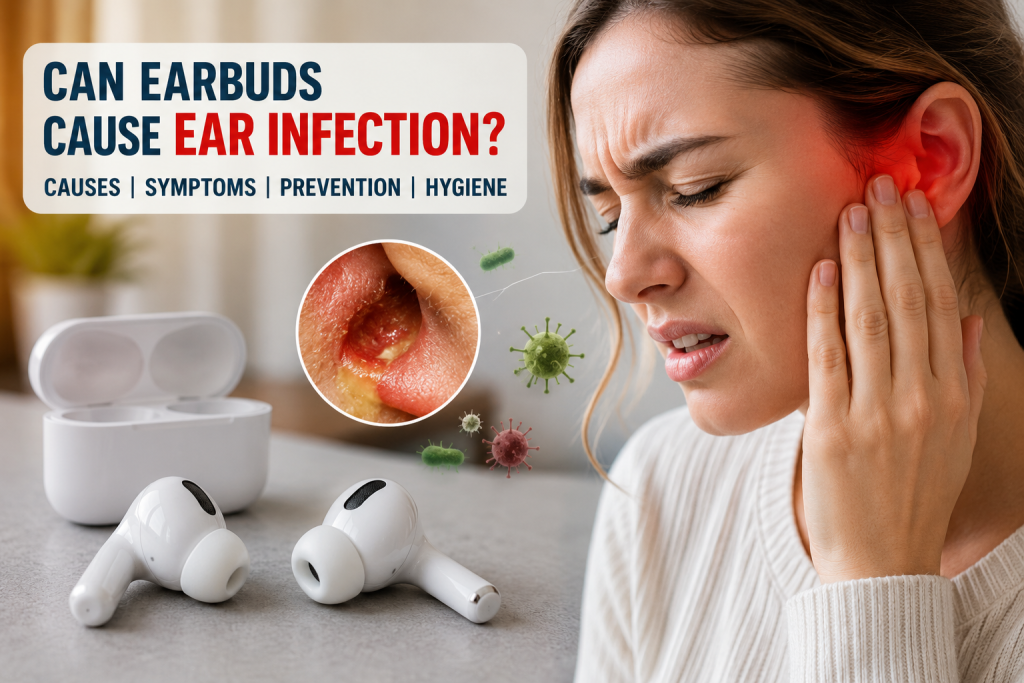
Wireless earbuds have become part of everyday life. Whether you’re listening to music during your commute, taking work calls, or enjoying podcasts at the gym, earbuds offer unmatched convenience. However, many users eventually wonder, can earbuds cause ear infection? The short answer is yes—but not because earbuds themselves are dangerous. Instead, infections can develop when earbuds are used improperly, shared with others, worn for long periods, or cleaned infrequently.
The good news is that ear infections related to earbuds are often preventable. By understanding the causes, recognizing the symptoms early, and practicing good hygiene, you can continue using your favorite earbuds safely. This guide explains everything you need to know about can earbuds cause ear infection and how to protect your ears without giving up your listening experience.
Can Earbuds Cause Ear Infection?
Yes, earbuds can contribute to ear infections under certain conditions. Earbuds sit directly inside the ear canal, where they create a warm, enclosed environment. Moisture from sweat, trapped earwax, and bacteria can build up over time, increasing the risk of infection.
It’s important to understand that earbuds don’t create bacteria on their own. Instead, they can transfer bacteria back into your ears if they aren’t cleaned regularly. Wearing dirty earbuds repeatedly may expose your ear canal to germs that can irritate the skin or lead to infection.
Most people can safely use earbuds every day as long as they maintain proper hygiene and avoid habits that increase the risk.
Common Causes of Ear Infections from Earbuds
Several everyday habits can increase the likelihood of developing an ear infection while using earbuds.
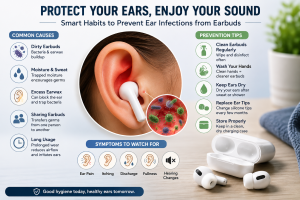
One of the biggest causes is poor earbud hygiene. Earbuds collect earwax, sweat, dust, and skin oils during regular use. If these contaminants are not removed, bacteria can multiply on the surface and enter the ear canal.
Another common cause is wearing earbuds for many hours without breaks. Long listening sessions reduce airflow inside the ear canal, allowing moisture and heat to accumulate. These conditions encourage bacterial and fungal growth.
Sharing earbuds with family members or friends can also transfer bacteria between users. Even if the earbuds appear clean, microscopic germs may remain on the ear tips.
Using earbuds immediately after swimming, showering, or intense exercise may increase the risk as well. Moisture trapped inside the ear canal creates an ideal environment for microorganisms to grow.
Symptoms of an Ear Infection You Should Never Ignore
Recognizing the symptoms early can help prevent a minor irritation from becoming a more serious infection.
Common symptoms include:
- Ear pain or discomfort
- Itching inside the ear canal
- Redness or swelling
- Fluid drainage from the ear
- Reduced hearing
- A feeling of fullness or pressure
- Increased sensitivity when touching the ear
Some people may also experience ringing in the ears or mild dizziness, depending on the type of infection.
If symptoms become severe, persist for several days, or include fever or significant hearing loss, it’s important to seek medical advice promptly.
Who Is Most at Risk of Ear Infection?
Although anyone can develop an ear infection, some people are more likely to experience problems while using earbuds.
People who naturally produce excessive earwax may notice more frequent buildup on their earbuds. This wax can trap bacteria and reduce airflow inside the ear.
Individuals who wear earbuds during workouts are also at higher risk because sweat increases moisture inside the ear canal.
Those with sensitive skin, eczema, allergies, or previous ear infections may experience irritation more easily than others.
Children and teenagers should also avoid sharing earbuds, as bacteria can spread more easily between users.
Can Dirty Earbuds Cause Ear Infection?
Dirty earbuds are one of the most common contributors to ear-related problems.
Each time earbuds are inserted into the ears, they pick up small amounts of earwax, oils, and bacteria. Without regular cleaning, these materials accumulate on the speaker mesh and silicone ear tips.
Every time the earbuds are reused, some of those bacteria may be transferred back into the ear canal.
Cleaning your earbuds regularly doesn’t just improve sound quality—it also reduces the number of germs that come into contact with your ears.
How to Prevent Ear Infections While Using Earbuds
Fortunately, preventing infections is much easier than treating them.
Start by cleaning your earbuds at least once a week. Wipe the exterior with a microfiber cloth and gently clean the speaker mesh using a soft brush or cotton swab. If your earbuds have removable silicone tips, wash them separately with warm water and mild soap before allowing them to dry completely.
Avoid wearing earbuds continuously for several hours. Giving your ears short breaks allows airflow to reduce moisture buildup.
Never share earbuds with other people, even family members. Personal audio devices should remain personal to minimize bacterial transfer.
If your ears become wet after swimming, showering, or exercising, dry them before inserting your earbuds.
Keeping both your ears and your earbuds clean is the most effective way to reduce infection risk.
Does Earwax Increase the Risk of Infection?
Earwax actually serves an important purpose. It protects the ear canal by trapping dirt, dust, and harmful microorganisms before they reach deeper parts of the ear.
Problems arise when excessive earwax builds up or becomes trapped by frequent earbud use. Impacted earwax can create pressure, reduce airflow, and provide a place where bacteria may grow.
Rather than removing all earwax, focus on maintaining healthy ears and cleaning only the outer portion of the ear. Avoid inserting cotton swabs deep into the ear canal, as this can push wax farther inside.
Safe Earbud Hygiene Habits

Good hygiene plays a major role in keeping your ears healthy.
Store your earbuds in their charging case when not in use to protect them from dust and dirt. Clean the charging case occasionally as well, since bacteria and debris can collect inside.
Wash your hands before handling your earbuds whenever possible. This simple habit reduces the transfer of germs to both the earbuds and your ears.
If you notice visible wax buildup, clean the earbuds before using them again instead of waiting until sound quality decreases.
Replacing worn or damaged silicone ear tips can also improve hygiene and comfort.
When Should You Stop Using Earbuds?
If you experience persistent pain, swelling, or fluid leaking from your ear, stop using your earbuds until your ears have healed.
Continuing to wear earbuds during an active infection may worsen irritation and delay recovery.
Once symptoms have resolved and any recommended treatment is complete, thoroughly clean your earbuds before using them again.
If infections occur repeatedly despite good hygiene, consult a healthcare professional to identify any underlying ear conditions.
Frequently Asked Questions
Can earbuds cause ear infection if used every day?
Daily use alone usually doesn’t cause infections. Problems are more likely if earbuds are dirty, worn for long periods, or used while your ears are damp.
Is it safe to sleep with earbuds?
Sleeping with earbuds isn’t recommended. Wearing them overnight can trap moisture, increase pressure inside the ear canal, and encourage bacterial growth.
How often should I clean my earbuds?
Cleaning your earbuds once a week is sufficient for most users. If you use them during workouts or wear them daily for long hours, clean them more frequently.
Can sharing earbuds spread bacteria?
Yes. Sharing earbuds can transfer bacteria, fungi, and viruses between users, increasing the risk of ear infections.
Should I stop using earbuds if my ear hurts?
Yes. If you experience pain, swelling, discharge, or hearing changes, stop using earbuds until you determine the cause. Seek medical advice if symptoms persist or worsen.
Final Thoughts
So, can earbuds cause ear infection? The answer is yes—but in most cases, the problem isn’t the earbuds themselves. Poor hygiene, prolonged use, trapped moisture, and sharing earbuds are the factors that increase the risk. Fortunately, these issues are easy to avoid with regular cleaning, proper storage, and healthy listening habits. By taking a few simple precautions, you can enjoy your earbuds comfortably while protecting your ears from unnecessary infections and maintaining both your hearing and your overall ear health.