
Introduction
If you’ve ever wondered how do earbud headphones work, you’re not alone. Earbud headphones have become one of the most popular audio devices for listening to music, taking calls, gaming, and exercising. Despite their compact size, these tiny gadgets pack advanced technologies that deliver clear sound, wireless connectivity, and intelligent features like active noise cancellation and voice assistants.
Modern earbuds combine miniature speakers, Bluetooth technology, rechargeable batteries, microphones, and digital signal processors into a lightweight design. Whether you use wired or wireless models, understanding how do earbud headphones work can help you choose the right pair and get the best listening experience.
In this guide, we’ll explain the science behind earbud headphones, explore how wireless earbuds work, discuss how Bluetooth earbuds connect, reveal how noise cancelling earbuds work, and explain how earbud microphones work in simple terms.
How Do Earbud Headphones Work? Understanding the Basics
To understand how earbud headphones work, it’s helpful to think of them as miniature speakers designed to fit comfortably inside your ears.
The basic process looks like this:
- Your phone, tablet, or computer sends an audio signal.
- The earbud receives that signal.
- The internal driver converts electrical energy into mechanical movement.
- The driver creates sound waves.
- Those sound waves travel into your ear canal.
- Your brain interprets them as music, voices, or other sounds.
Although this happens almost instantly, several sophisticated components work together to produce clear, balanced audio.
The Main Components That Make Earbud Headphones Work
Understanding the parts inside an earbud helps explain why sound quality varies between different models.
Audio Driver: The Heart of Earbud Headphones
The driver is the most important part of every earbud.
Its job is simple:
- Convert electrical signals into sound
- Produce bass, mids, and treble
- Deliver accurate audio reproduction
Most consumer earbuds use dynamic drivers, which are known for their rich bass and durability.
Premium earbuds may also include:
- Balanced armature drivers
- Planar magnetic drivers
- Hybrid driver systems
Each type affects how the earbuds reproduce different frequencies.
Voice Coil and Magnet Inside Earbud Headphones
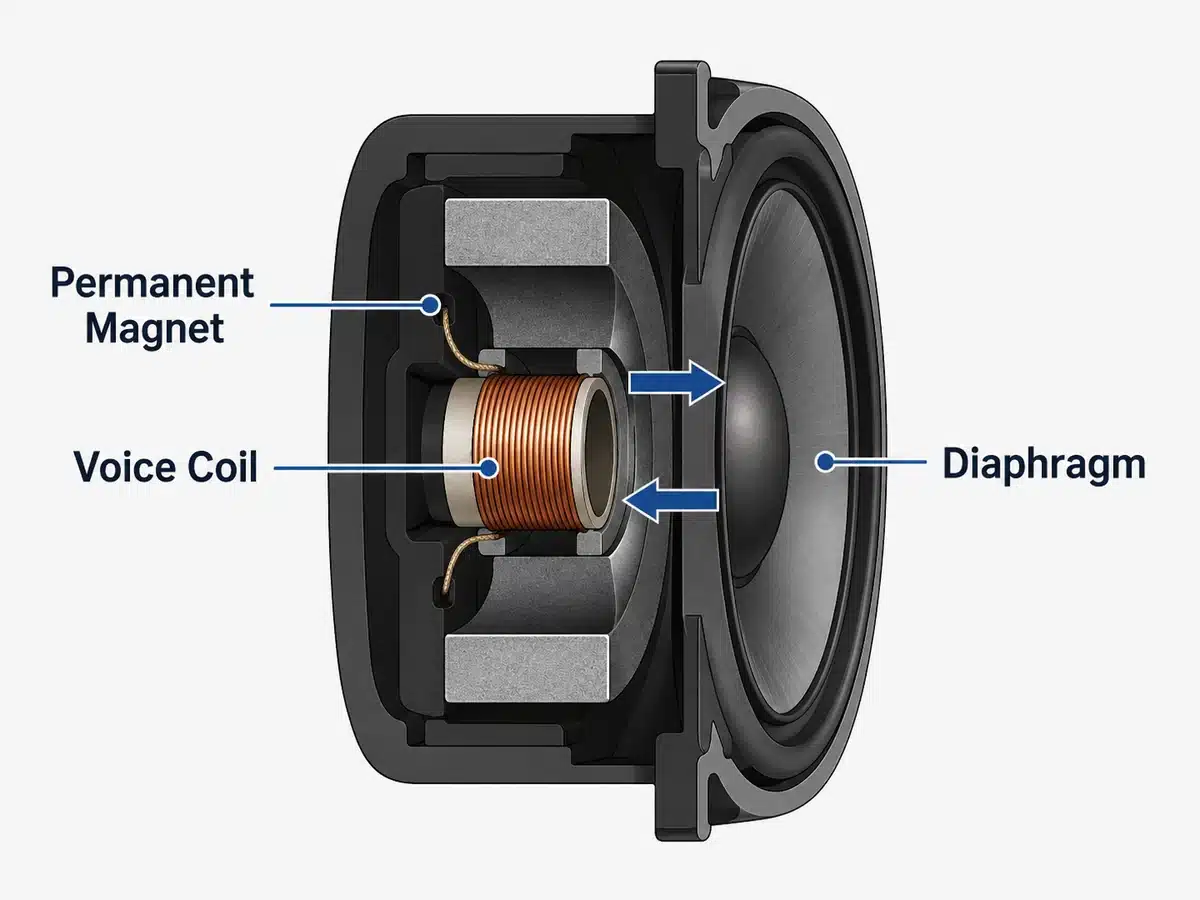
One of the most important technologies behind how earbud headphones work is electromagnetic motion.
Inside every dynamic driver are:
- A permanent magnet
- A tiny copper voice coil
- A lightweight diaphragm
When electricity flows through the voice coil, it creates a magnetic field.
This magnetic field interacts with the permanent magnet, causing the coil to move back and forth rapidly.
How the Diaphragm Produces Sound in Earbuds
Attached to the voice coil is a very thin diaphragm.
As the coil moves, the diaphragm vibrates.
These vibrations push surrounding air molecules, creating sound waves that travel directly into your ear canal.
The faster the diaphragm vibrates:
- The higher the sound frequency
- The more detailed the audio
Larger diaphragm movement creates deeper bass notes.
How Wired Earbud Headphones Work
Wired earbuds are surprisingly simple compared to wireless models.
Here’s how they function:
- Your device stores digital audio.
- The digital signal is converted into an analog electrical signal.
- That signal travels through the headphone cable.
- The driver receives the electrical signal.
- The diaphragm vibrates.
- You hear the sound.
Since the audio travels directly through a cable, wired earbuds often provide:
- Lower latency
- Stable audio quality
- No battery requirements
That’s why many musicians, gamers, and audio professionals still prefer wired headphones.
How Wireless Earbud Headphones Work with Bluetooth Technology
Wireless earbuds add another layer of technology.
Instead of using a cable, they receive audio through Bluetooth.
The process works like this:
Bluetooth Pairing Between Devices

When you first connect wireless earbuds:
- Your phone searches for nearby Bluetooth devices.
- The earbuds broadcast their availability.
- The devices pair securely.
- Future connections happen automatically.
Once paired, audio is transmitted wirelessly.
Digital Audio Transmission in Bluetooth Earbuds
Instead of electrical signals traveling through a cable, Bluetooth sends compressed digital audio.
The earbuds then:
- Receive the wireless signal
- Decode the digital information
- Convert it into analog audio
- Send it to the driver
Modern Bluetooth codecs help preserve sound quality while reducing delay.
Popular codecs include:
- SBC
- AAC
- aptX
- LDAC
- LC3
Battery and Internal Electronics in Wireless Earbuds
Wireless earbuds also contain:
- Rechargeable lithium batteries
- Bluetooth chips
- Digital signal processors (DSP)
- Charging circuits
These components allow earbuds to operate independently without physical cables.
How Earbud Headphones Produce Different Sound Frequencies
Every sound consists of different frequencies.
Earbud drivers reproduce them all:
Low Frequencies (Bass)
Bass ranges from approximately 20 Hz to 250 Hz.
These sounds include:
- Drum beats
- Bass guitars
- Explosions
- Deep voices
Good earbuds reproduce bass without overwhelming other sounds.
Mid Frequencies
Mid frequencies contain:
- Most vocals
- Podcasts
- Piano
- Guitar
Clear mids are essential for natural-sounding audio.
High Frequencies (Treble)
Treble includes:
- Cymbals
- String instruments
- Bird sounds
- Fine musical details
High-quality earbuds reproduce treble clearly without sounding harsh.
How Earbud Microphones Work During Calls
Ever wondered how earbud microphones work during phone calls?
Most wireless earbuds include multiple miniature microphones.
These microphones capture your voice while reducing surrounding noise.
The audio processor separates your speech from background sounds using advanced algorithms.
Many premium earbuds feature:
- Beamforming microphones
- AI voice enhancement
- Wind noise reduction
- Echo cancellation
- Environmental noise suppression
These technologies help callers hear your voice more clearly, even in busy environments.
How Noise Isolation and Noise Cancellation Improve Earbud Performance
Many people confuse these two technologies.
Passive Noise Isolation
Passive isolation simply blocks outside sounds using:
- Silicone ear tips
- Foam ear tips
- Secure earbud fit
This method requires no battery.
Active Noise Cancellation (ANC) in Earbud Headphones
Active Noise Cancellation is much more advanced.
ANC earbuds use microphones to detect external noise.
The processor then creates an opposite sound wave that cancels unwanted background sounds before they reach your ears.
This technology is especially useful during:
- Flights
- Train rides
- Office work
- Busy streets
Common Types of Earbud Headphones
Different earbud designs suit different users.
Traditional Wired Earbuds
Best for:
- Students
- Office work
- Gaming
- Budget users
Advantages include:
- No charging
- Stable connection
- Affordable pricing
True Wireless Earbuds
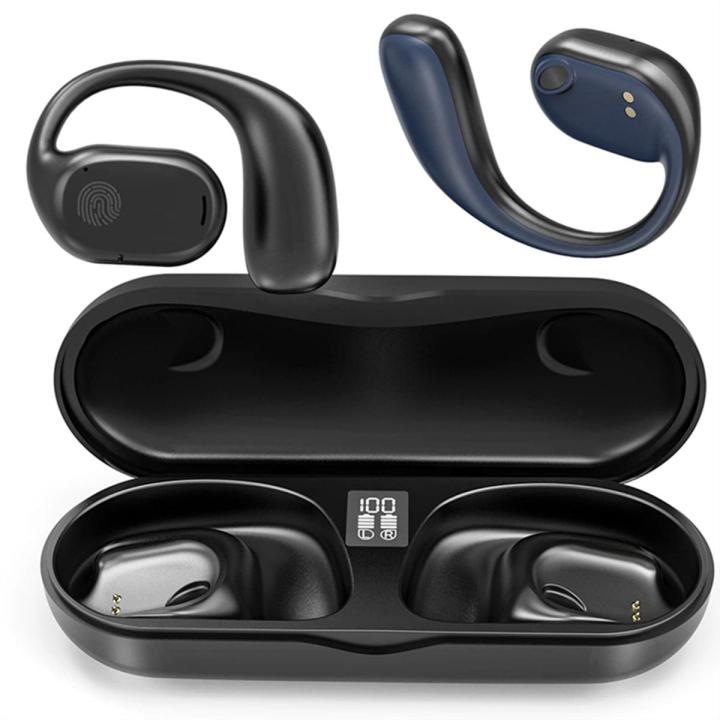
True wireless earbuds have no connecting cable at all.
Benefits include:
- Maximum portability
- Easy storage
- Bluetooth connectivity
- Smart touch controls
Sports Earbuds
Designed specifically for active users, sports earbuds often include:
- Sweat resistance
- Secure ear hooks
- Longer battery life
- Water resistance
Factors That Affect How Earbud Headphones Sound
Several factors determine sound quality.
Driver size
Larger drivers often produce stronger bass.
Audio codec
Higher-quality codecs improve wireless audio.
Ear tip fit
A proper seal improves bass and blocks external noise.
Source quality
High-resolution audio files sound better than heavily compressed files.
Internal tuning
Manufacturers tune earbuds differently depending on their target audience.
Tips for Getting the Best Performance from Earbud Headphones
To maximize sound quality:
- Keep earbuds clean.
- Use properly fitting ear tips.
- Charge wireless earbuds regularly.
- Update firmware when available.
- Avoid maximum volume for extended periods.
- Store earbuds in their charging case.
Proper maintenance helps extend both battery life and audio performance.
Frequently Asked Questions
Do earbuds use magnets?
Yes. Most earbuds use permanent magnets along with a voice coil to create sound.
Why do wireless earbuds need batteries?
Wireless earbuds require power for Bluetooth communication, audio processing, microphones, and noise cancellation.
Are wired earbuds better than wireless earbuds?
Wired earbuds generally offer lower latency and don’t require charging, while wireless earbuds provide greater convenience and mobility.
Can earbuds damage hearing?
Listening at very high volumes for extended periods may contribute to hearing damage. Keeping the volume at moderate levels and taking listening breaks is recommended.
Conclusion
Understanding how do earbud headphones work makes it easier to appreciate the technology packed into these small devices. From miniature speaker drivers and Bluetooth chips to advanced microphones and Active Noise Cancellation, every component plays an important role in delivering high-quality audio.
Whether you’re interested in how wireless earbuds work, curious about how Bluetooth earbuds connect, or want to know how noise cancelling earbuds work, modern earbuds combine innovative engineering with user-friendly features to create a seamless listening experience. By choosing the right earbuds and taking good care of them, you can enjoy reliable performance, crystal-clear sound, and comfortable listening for years to come.