
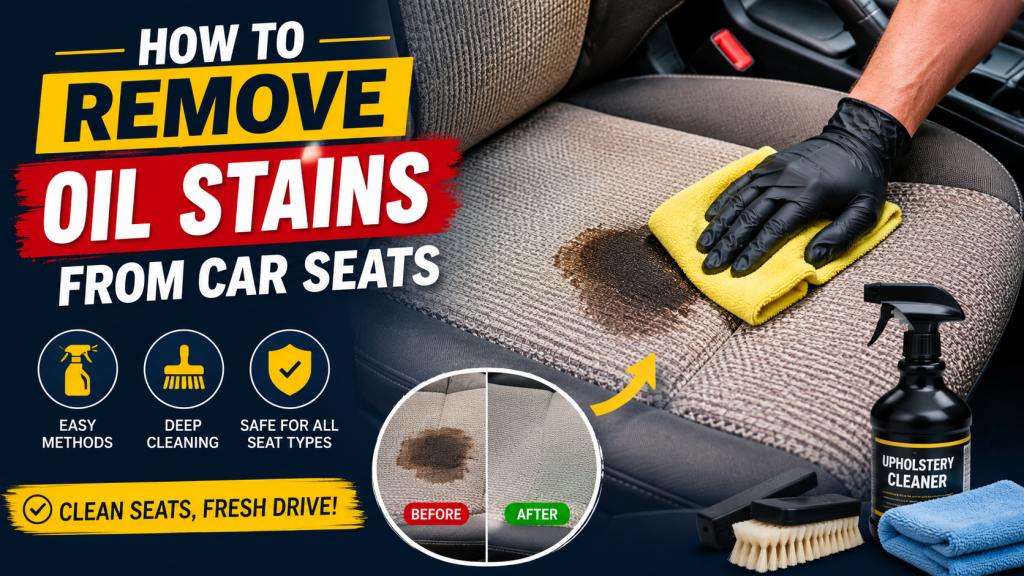
Oil stains are among the toughest messes to remove from a car’s interior. Whether the stain comes from greasy food, motor oil, sunscreen, body lotion, cosmetics, or cooking oil, it can quickly soak into the upholstery and leave an unsightly dark patch. If ignored, the stain may attract even more dirt and become increasingly difficult to clean over time.
The good news is that you don’t always need professional detailing services to restore your seats. With the right cleaning methods and a little patience, you can remove most oil stains without damaging the upholstery.
In this guide, you’ll learn how to remove oil stains from car seats safely, discover which cleaning products work best, and understand how different seat materials require different approaches. We’ll also explain common mistakes to avoid so your car interior stays clean and protected.
Why Oil Stains Are Difficult to Remove from Car Seats
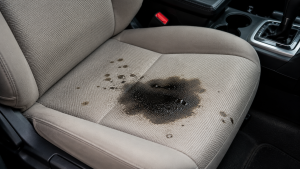
Unlike water-based spills, oil doesn’t evaporate. Instead, it penetrates deep into the fibers of cloth and fabric seats or settles into the natural pores of leather upholstery. Because oil is hydrophobic, plain water cannot dissolve it effectively.
As time passes, the stain attracts dust and dirt, making the affected area appear darker than the surrounding upholstery. Heat from sunlight can also cause the oil to spread further into the seat, increasing the size of the stain.
The sooner you begin cleaning, the better your chances of removing the stain completely.
How to Remove Oil Stains from Car Seats Before They Set
Fresh oil stains are much easier to remove than older ones. Acting quickly prevents the oil from soaking deeper into the upholstery foam.
Begin by gently blotting the stain with a clean microfiber cloth or paper towel. Avoid rubbing the area because this spreads the grease and pushes it further into the fabric.
If the spill is thick, carefully lift away any excess oil before applying a cleaning product.
Once you’ve removed as much surface oil as possible, allow the upholstery to rest for a few minutes before moving on to the cleaning process.
What Causes Oil Stains on Car Seats?
Oil stains can come from many everyday situations, often without you realizing it until later.
Some of the most common sources include:
- Fast food and fried snacks
- Motor oil from work clothes
- Hair products and body lotion
- Sunscreen
- Cosmetic products
- Baby oil
- Cooking oil from grocery bags
- Greasy tools or equipment
- Pet grooming products
Knowing the source of the stain helps you choose the most effective cleaning method.
Best Products for Remove Oil Stains
Choosing the right cleaner is just as important as using the correct technique. Harsh household chemicals may damage your upholstery, while automotive-specific cleaners are designed to break down grease without harming the material.
For cloth and fabric seats, a quality automotive upholstery cleaner is usually the safest choice. These cleaners lift grease while preserving the color and texture of the fabric.
Leather seats require a dedicated leather cleaner because standard fabric products may strip away protective coatings or dry out the surface.
Microfiber towels are ideal for wiping away residue because they absorb oil efficiently without scratching delicate materials.
Soft detailing brushes also help loosen grease trapped within upholstery fibers while minimizing wear.
Avoid using bleach, ammonia, acetone, or other aggressive solvents, as these can permanently damage automotive interiors.
Removing Oil Stains from Car Seats Using Upholstery Cleaner
After vacuuming any loose dirt around the stain, spray a small amount of automotive upholstery cleaner onto a microfiber cloth or directly onto the affected area if recommended by the product instructions.
Allow the cleaner to sit for a minute or two so it can begin breaking down the grease.
Using a soft upholstery brush, gently work the cleaner into the stain with small circular motions. Avoid aggressive scrubbing because this can fray fabric fibers or spread the oil further.
Once the stain begins lifting, wipe away the residue with a clean, damp microfiber cloth.
Repeat the process if necessary. Several gentle cleaning sessions usually produce better results than one heavy scrubbing attempt.
Cleaning Oil Stains from Leather Car Seats
Leather requires a gentler approach than cloth upholstery.
Start by wiping away any excess oil using a dry microfiber towel. Next, apply a leather-safe cleaner to a cloth instead of spraying it directly onto the seat.
Clean the stained area using light circular motions while avoiding excessive moisture.
After the stain has been removed, apply a leather conditioner to restore moisture and maintain the material’s flexibility.
Conditioning also helps protect the leather against future stains and prevents premature cracking caused by dryness.
Removing Stubborn Oil Stains from Car Seats
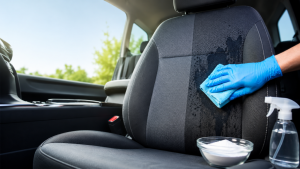
Fresh stains are always easier to remove, but older oil stains don’t necessarily mean your car seat is permanently damaged. With patience and the right cleaning method, you can often restore the upholstery.
Start by vacuuming the area to remove dust and debris. This prevents dirt from mixing with the cleaning solution and creating additional marks.
Apply a quality upholstery cleaner directly to the stain or onto a microfiber cloth, depending on the manufacturer’s instructions. Let the cleaner sit for several minutes so it has time to break down the grease.
Use a soft-bristle brush to gently work the cleaner into the fibers. Avoid using excessive force, as aggressive scrubbing can damage the upholstery and spread the stain.
After brushing, wipe the area with a clean damp microfiber cloth. If the stain remains visible, repeat the process instead of applying stronger chemicals. Several gentle cleaning sessions are usually more effective than one harsh treatment.
For stubborn stains that have been on the seat for weeks or months, professional detailing products may provide better results than general-purpose cleaners.
Natural Methods to Remove Oil Stains
If you prefer not to use commercial cleaners immediately, a few household ingredients may help absorb fresh oil stains.
Baking soda is one of the most effective natural absorbents. Sprinkle a generous amount over the stain and let it sit for several hours, or overnight if possible. The powder helps draw grease out of the upholstery fibers. Vacuum it thoroughly before checking the stain.
Cornstarch works in a similar way and can be particularly useful for fresh oil spills. Apply it generously, leave it undisturbed, then vacuum the residue.
After using either absorbent, clean the remaining stain with an automotive upholstery cleaner to remove any leftover residue.
Although these natural methods can be helpful, they may not completely remove heavy or deeply embedded grease stains. They work best as part of a larger cleaning process rather than as a complete solution.
Common Mistakes When Removing Oil Stains
Many people unintentionally make the stain worse while trying to clean it.
One common mistake is rubbing the stain immediately after the spill occurs. This forces the oil deeper into the upholstery instead of lifting it away.
Another mistake is soaking the seat with excessive water or cleaner. Too much moisture can penetrate the foam beneath the upholstery, increasing drying time and potentially causing mold or mildew.
Using harsh household cleaners is another frequent problem. Products containing bleach, ammonia, acetone, or strong solvents may discolor fabric, damage stitching, or dry out leather surfaces.
Some people also skip testing the cleaner before using it. Even products labeled as upholstery-safe should always be tested on a hidden area first to ensure they won’t affect the material or color.
Finally, don’t ignore the drying process. Leaving damp upholstery in a closed vehicle can create unpleasant odors and encourage bacterial growth.
How to Prevent Oil Stains on Car Seats
Prevention is always easier than cleaning stubborn stains.
If you often transport food, tools, or automotive supplies, place them in sealed containers to reduce the chance of leaks. Wearing clean clothing after working with engine oil or grease also helps prevent accidental stains.
Seat covers provide another layer of protection, especially if you regularly travel with children, pets, or work equipment.
Cleaning spills immediately is one of the simplest ways to prevent permanent marks. The longer oil remains on the upholstery, the deeper it penetrates and the harder it becomes to remove.
Routine vacuuming and interior cleaning also help maintain the appearance of your seats by preventing dirt from bonding with greasy residue.
Frequently Asked Questions
Can Oil Stains Be Removed Completely?
Yes, in many cases they can. Fresh stains are usually much easier to remove than older ones. The final result depends on the type of oil, how long it has been on the seat, and the upholstery material.
Is Baking Soda Good for Grease Stains?
A small amount of mild dish soap may help break down grease on cloth seats, but it should be used carefully and rinsed thoroughly. For the safest results, automotive upholstery cleaners are generally the better option.
Does baking soda remove oil stains from car seats?
Baking soda can absorb fresh oil and reduce the severity of a stain. However, it usually works best when followed by proper upholstery cleaning.
Should I use hot water to clean oil stains?
Not necessarily. Excessively hot water may spread certain stains or damage some upholstery materials. Always follow the cleaning product’s recommendations and your vehicle manufacturer’s care instructions.
When should I hire a professional detailer?
If the oil stain covers a large area, has soaked deep into the seat foam, or remains after several cleaning attempts, professional detailing may be the most effective solution.
Final Thoughts
Learning how to remove oil stains from car seats can save you time, money, and frustration. Whether the stain comes from food, motor oil, sunscreen, or everyday accidents, acting quickly gives you the best chance of restoring your seats.
The key is to avoid harsh chemicals, work gently, and choose cleaning products designed for automotive upholstery. Regular maintenance and prompt attention to spills can also prevent permanent damage and keep your vehicle looking its best.