
Table of Contents
ToggleIntroduction
Engine oil is often called the lifeblood of a car’s engine because it lubricates moving parts, reduces friction, prevents overheating, and helps keep the engine clean. Without the proper amount of oil, even a healthy engine can suffer serious damage that may cost thousands of dollars to repair.
The good news is that checking your engine oil level is one of the easiest vehicle maintenance tasks and takes only a few minutes. Whether you’re a new driver or an experienced car owner, knowing how to check engine oil level can help extend your engine’s lifespan and improve overall performance.
In this complete guide, you’ll learn when to check your oil, the tools you’ll need, how to read the dipstick correctly, common mistakes to avoid, and tips for maintaining the proper oil level.
Why Checking Engine Oil Level Is Important
Your engine contains many moving metal components that operate at high temperatures and speeds. Engine oil creates a protective layer between these parts, reducing wear and carrying away heat.
Regularly checking your oil level helps you:
- Prevent engine damage
- Improve fuel efficiency
- Reduce engine wear
- Detect leaks early
- Extend engine life
- Save money on costly repairs
Ignoring low oil levels can lead to overheating, poor lubrication, and even complete engine failure.
What Does Engine Oil Do?
Engine oil performs several essential functions:
- Lubricates engine components
- Reduces friction
- Helps cool internal parts
- Prevents corrosion
- Cleans dirt and contaminants
- Supports smooth engine performance
Because oil gradually breaks down and is consumed over time, it must be checked and replaced according to your vehicle manufacturer’s recommendations.

When Should You Check Engine Oil?
For the most accurate reading:
- Park on a flat, level surface.
- Turn off the engine.
- Wait 5–10 minutes after driving so the oil can drain back into the oil pan.
- Ensure the vehicle is stable before opening the hood.
Many experts recommend checking the oil:
- Once a month
- Before long road trips
- After noticing an oil warning light
- If the engine sounds louder than usual
Tools You’ll Need
Checking engine oil requires very few tools:
- Clean paper towel or cloth
- Protective gloves (optional)
- Flashlight (if visibility is poor)
Most vehicles already have everything needed because the dipstick is built into the engine.
Step 1: Park on Level Ground
This is one of the most important steps.
If the vehicle is parked on a slope, the oil may collect unevenly inside the oil pan, giving an inaccurate reading.
Always choose a flat surface before checking the oil.
Step 2: Turn Off the Engine
Never check the oil immediately after shutting off the engine.
Wait approximately 5–10 minutes so the oil has time to drain back into the oil pan. This provides a more accurate measurement.
Step 3: Open the Hood
Locate the hood release lever inside the vehicle.
Open the hood and secure it properly using the support rod or built-in hydraulic struts.
Be careful around hot engine components if the vehicle was recently driven.
Step 4: Locate the Oil Dipstick
The oil dipstick usually has a brightly colored handle, often yellow or orange.
Consult your owner’s manual if you’re unsure of its location.
The dipstick is designed specifically for measuring engine oil level.
Step 5: Remove and Clean the Dipstick
Pull the dipstick out completely.
Using a clean cloth or paper towel:
- Wipe all oil from the dipstick.
- Remove any dirt or debris.
This first wipe prepares the dipstick for an accurate reading.
Step 6: Insert the Dipstick Again
Push the cleaned dipstick fully back into its tube.
Make sure it is inserted completely before removing it again.
Step 7: Read the Oil Level
Pull the dipstick out carefully and observe the oil mark.
Most dipsticks have indicators such as:
- MIN and MAX
- LOW and FULL
- Two holes or notches
Ideal Reading
The oil should fall between the minimum and maximum marks.
If it’s near the maximum mark, the level is generally acceptable.
If it’s near or below the minimum mark, additional oil may be needed.
Understanding Dipstick Markings
Different manufacturers use different markings, but the principle is similar.
| Reading | Meaning |
|---|---|
| Above MAX | Too much oil |
| Near MAX | Excellent |
| Middle | Normal |
| Near MIN | Low |
| Below MIN | Add oil promptly |
Never overfill the engine, as excessive oil can also cause problems.
Step 8: Check Oil Condition
The oil’s appearance provides clues about engine health.
Healthy Oil
- Amber or light brown
- Smooth consistency
Old Oil
- Dark brown or black
- Thick texture
Possible Problems
Milky or creamy oil may indicate coolant contamination and should be evaluated promptly.
Metal particles or unusual debris may suggest internal engine wear.
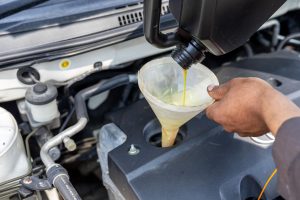
How to Add Engine Oil
If the level is low:
- Locate the oil filler cap.
- Remove the cap.
- Add the correct oil gradually.
- Wait a minute for the oil to settle.
- Recheck the dipstick.
- Repeat if necessary until the level is within the recommended range.
Adding too much oil can be harmful, so add small amounts rather than pouring in a large quantity at once.
Choosing the Right Engine Oil
Always use the oil grade specified by your vehicle manufacturer.
Common examples include:
- 0W-20
- 5W-20
- 5W-30
- 10W-30
The recommended viscosity and specification are typically listed in the owner’s manual or on the oil filler cap.
Signs Your Engine Oil May Be Low
Watch for these warning signs:
- Oil warning light
- Engine knocking sounds
- Burning oil smell
- Reduced engine performance
- Increased engine temperature
- Poor fuel economy
These symptoms don’t always mean low oil, but they should never be ignored.
Common Mistakes When Checking Engine Oil
Avoid these common errors:
- Checking on uneven ground
- Measuring immediately after shutting off the engine
- Forgetting to wipe the dipstick before reading
- Overfilling the engine
- Using the wrong oil type
- Ignoring oil leaks
Proper technique ensures a reliable reading.
How Often Should You Check Engine Oil?
For most drivers:
- At least once every month
- Before long trips
- After noticing warning indicators
- According to your owner’s manual
Older vehicles or high-mileage engines may benefit from more frequent checks.
Can You Drive With Low Engine Oil?
Driving with insufficient oil can quickly damage the engine because moving parts lose proper lubrication.
If the oil level is below the minimum mark, check the owner’s manual for the correct oil specification, add oil as needed, and investigate why the level is low. Persistent oil loss may indicate a leak or excessive oil consumption.
Engine Oil Level vs. Oil Quality
A correct oil level does not necessarily mean the oil is still in good condition.
Oil gradually degrades due to:
- Heat
- Contaminants
- Oxidation
- Normal engine operation
Even if the level is correct, follow the manufacturer’s recommended oil change intervals.
Tips to Maintain Proper Engine Oil Level
- Check the oil regularly.
- Use the manufacturer-recommended oil.
- Replace the oil filter during scheduled oil changes.
- Fix leaks promptly.
- Avoid overfilling.
- Keep maintenance records.
These simple habits can help improve engine reliability and longevity.
Frequently Asked Questions
Can I check engine oil when the engine is hot?
It’s best to turn the engine off and wait several minutes before checking so the oil can drain back into the oil pan for a more accurate reading.
What color should engine oil be?
Fresh oil is usually amber or light brown. Over time it darkens as it collects contaminants, which is normal to a degree.
Is it bad to overfill engine oil?
Yes. Too much oil can cause foaming, increased pressure, and potential engine problems. Aim for a level within the recommended range on the dipstick.
How long does it take to check engine oil?
Typically, only 5–10 minutes, including waiting time after shutting off the engine.
Should I check oil before every trip?
For daily driving, monthly checks are often sufficient, but checking before a long journey is a good precaution.
Conclusion
Learning how to check engine oil level is one of the simplest and most valuable maintenance skills for any vehicle owner. By parking on level ground, waiting for the engine to cool slightly, using the dipstick correctly, and keeping the oil within the recommended range, you can help protect your engine from unnecessary wear and costly repairs.
Making this quick inspection part of your regular routine can improve performance, extend engine life, and give you greater confidence every time you drive.