
If you’ve ever wondered what to use to clean car interior surfaces without causing damage, you’re not alone. Your car’s interior faces daily wear and tear from dust, dirt, food crumbs, fingerprints, and accidental spills. Over time, these messes can make even a well-maintained vehicle look dirty and feel less comfortable.
The good news is that you don’t need expensive equipment or professional detailing services to keep your vehicle looking fresh. By knowing what products work best on different interior surfaces and following a simple cleaning routine, you can maintain a spotless cabin with minimal effort.
In this guide, you’ll discover exactly what to use to clean car interior surfaces, from dashboards and fabric seats to leather upholstery and glass. You’ll also learn practical cleaning tips, recommended tools, and common mistakes to avoid so your vehicle stays clean, fresh, and protected for years to come.
Why Choosing the Right Car Interior Cleaning Products Matters
Many drivers focus on washing the exterior while forgetting about the inside. However, the interior is where you spend most of your time.
Regular interior cleaning helps:
- Improve air quality inside the vehicle
- Remove bacteria, dust, and allergens
- Prevent stains from becoming permanent
- Protect upholstery and interior surfaces
- Maintain resale value
- Create a more comfortable driving experience
A clean interior not only looks better but also helps your vehicle stay in great condition for years.
What to Use to Clean Car Interior: Essential Products and Tools
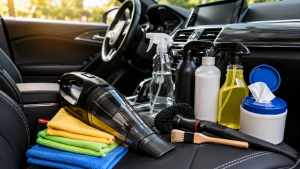
Different surfaces require different cleaning methods. Using the wrong product can cause discoloration, cracking, or damage. Here are the essential items you should have.
1.Vacuum Cleaner: What to Use to Clean Car Interior Floors and Seats
A vacuum is the foundation of any interior cleaning job.
Before applying any cleaner, remove loose dirt, dust, pet hair, and debris from:
- Seats
- Floor mats
- Carpets
- Cup holders
- Seat crevices
- Trunk area
A vacuum with a crevice attachment makes it easier to reach tight spaces where dirt tends to accumulate.
2. Microfiber Cloths
Microfiber cloths are one of the safest and most effective tools for cleaning car interiors.
They help:
- Capture dust without scratching surfaces
- Absorb moisture efficiently
- Reduce streaks on glass and screens
- Clean delicate materials safely
Keep several microfiber cloths available and use separate ones for glass, dashboard surfaces, and upholstery.
3. Interior Cleaner for Dashboard and Plastic Surfaces
A quality interior cleaner works well on many surfaces, including:
- Dashboard
- Center console
- Plastic trim
- Door panels
- Vinyl surfaces
Choose a product specifically designed for automotive interiors. Household cleaners can sometimes be too harsh and may damage protective coatings.
Spray the cleaner onto a microfiber cloth rather than directly onto electronic components.
4. Soft Detailing Brushes for Hard-to-Reach Areas
Dust often hides in places that cloths cannot reach.
Soft detailing brushes are useful for cleaning:
- Air vents
- Buttons
- Steering wheel controls
- Dashboard seams
- Cup holder edges
The soft bristles remove dirt without scratching sensitive surfaces.
5. Upholstery Cleaner for Fabric Car Seats
Fabric seats require specialized upholstery cleaners.
These products help remove:
- Food stains
- Coffee spills
- Dirt marks
- Pet-related messes
Apply according to the manufacturer’s instructions and avoid oversaturating the fabric.
For light stains, a mixture of warm water and a small amount of mild dish soap can also be effective.
6. Leather Cleaner and Conditioner for Leather Interiors
If your vehicle has leather seats, avoid using regular soap or harsh chemicals.
Instead, use:
- Leather cleaner
- Leather conditioner
The cleaner removes dirt and oils, while the conditioner helps prevent cracking and fading.
Regular conditioning keeps leather soft and extends its lifespan.
7. Glass Cleaner
Interior glass often develops haze, fingerprints, and dust buildup.
Use an ammonia-free automotive glass cleaner for:
- Windshield
- Side windows
- Rear glass
- Mirrors
Ammonia-based products may damage window tint and certain interior materials.
8. Disinfecting Wipes
Frequently touched surfaces can collect germs over time.
Disinfecting wipes work well for:
- Door handles
- Steering wheel
- Gear shifter
- Touchscreens
- Control buttons
Always check that the wipes are safe for automotive surfaces before use.
Natural Alternatives for Interior Car Cleaning
If you prefer eco-friendly cleaning methods, several household items can help.
White Vinegar
White vinegar is effective for removing odors and light grime.
Mix equal parts vinegar and water and use it on:
- Vinyl surfaces
- Rubber mats
- Certain fabric areas
Avoid using vinegar on leather.
Baking Soda
Baking soda is excellent for eliminating odors.
Simply:
- Sprinkle baking soda onto carpets or fabric seats.
- Let it sit for several hours.
- Vacuum thoroughly.
This helps absorb unwanted smells and refreshes the interior.
Mild Dish Soap
A small amount of dish soap mixed with warm water can tackle light stains and dirt on fabric surfaces.
Use sparingly and avoid soaking upholstery.
How to Clean a Car Interior Like a Pro
Following the proper process makes cleaning easier and more effective.
Step 1: Remove Trash and Personal Items
Start by clearing out:
- Empty bottles
- Food wrappers
- Receipts
- Personal belongings
This creates more space for thorough cleaning.
Step 2: Vacuum Thoroughly
Vacuum seats, carpets, floor mats, and hard-to-reach areas.
Pay extra attention to spaces under seats where dirt often accumulates.
Step 3: Clean the Dashboard and Console
Use an interior cleaner and microfiber cloth to wipe down:
- Dashboard
- Center console
- Door panels
- Plastic trim
Use a detailing brush for vents and tight spaces.
Step 4: Clean Seats
For fabric seats, apply upholstery cleaner and gently scrub stained areas.
For leather seats, use a dedicated leather cleaner followed by a conditioner.
Step 5: Clean Interior Glass
Use a streak-free glass cleaner and clean microfiber cloth to restore visibility and shine.
Step 6: Eliminate Odors
Sprinkle baking soda on carpets and seats if needed, then vacuum.
You can also use an automotive odor eliminator for persistent smells.
Common Car Interior Cleaning Mistakes to Avoid
Many people accidentally damage their interiors while cleaning.
Avoid these mistakes:
- Using bleach or harsh chemicals
- Spraying cleaners directly onto screens
- Scrubbing leather aggressively
- Using rough brushes on delicate materials
- Applying excessive water to fabric seats
- Ignoring manufacturer recommendations
Gentle cleaning is usually more effective than aggressive scrubbing.
How Often Should You Deep Clean Your Vehicle Interior?
The ideal cleaning schedule depends on how often you drive.
A good rule of thumb is:
- Quick wipe-down: Weekly
- Vacuuming: Every two weeks
- Deep cleaning: Every one to three months
- Full detailing: Two to four times per year
Regular maintenance prevents dirt buildup and reduces cleaning time.
Final Thoughts
Knowing what to use to clean car interior surfaces can make a huge difference in both appearance and comfort. A vacuum cleaner, microfiber cloths, interior cleaner, upholstery products, and a few simple tools are often all you need to keep your vehicle looking like new.
The key is using the right product for each surface and cleaning consistently rather than waiting until the interior becomes heavily soiled. With a little effort and the proper supplies, you can enjoy a cleaner, fresher, and more enjoyable driving experience every day.