
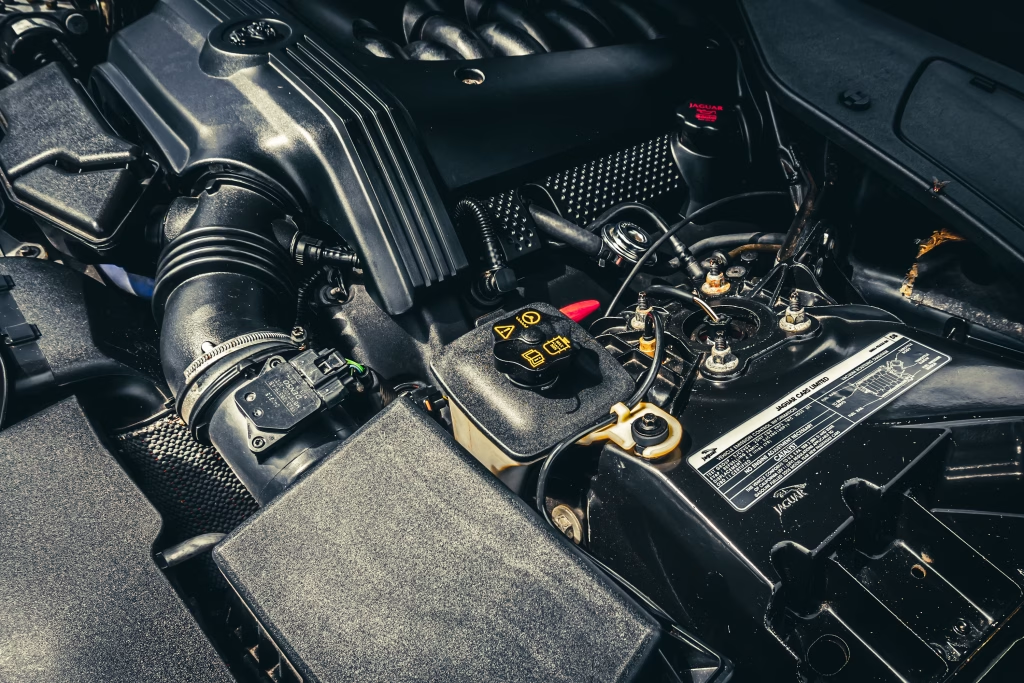

Driving down the road and noticing your dashboard lights flicker or dim unexpectedly can make any driver feel uneasy. While many people quickly jump to the conclusion that their battery is dead, the real culprit sitting under the hood is often the charging unit itself. Spotting the early signs of a failing car alternator gives you enough time to fix the issue before your engine completely cuts out in the middle of heavy highway traffic.
Your alternator acts as a mini power plant for your vehicle. While the battery gets your car started, the alternator keeps everything running smoothly and recharges the battery as you drive. Taking care of your electrical charging system goes hand in hand with regula Car Maintenance Tips, helping you avoid sudden roadside emergencies and preventing exorbitant mechanical repair bills.
How the Charging System Works in Modern Vehicles
Many vehicle owners naturally assume the car battery continuously powers all electrical devices while driving down the highway. In reality, the battery only provides the massive initial jolt of energy required to engage the starter motor and turn the crankshaft over. Once your engine starts running, a serpentine belt spins the internal rotor inside your alternator, generating electrical current.
This current powers your headlights, climate control system, radio, safety sensors, windshield wipers, and onboard computer systems. At the same time, the unit routes electricity back into the battery to restore the energy lost during startup. When this system degrades, your car relies entirely on stored battery power, which typically lasts less than thirty minutes before the engine shuts off completely.
Most Common Signs of a Failing Car Alternator

When your alternator begins to wear down, your car will almost always display subtle warning indicators long before it stops completely. Paying close attention to these symptoms lets you schedule a service visit before getting stranded.
1. Dim or Unusually Bright Lights
Because an aging alternator struggles to maintain a steady voltage supply, your headlights and dashboard backlights may begin to flicker or dim noticeably when idling at a stoplight. Conversely, a faulty internal voltage regulator can push too much electrical current through the system, causing dashboard lights to burn excessively bright or blowing out light bulbs prematurely.
2. A Growling or High-Pitched Whining Noise
Alternators rely on internal needle bearings to allow the central shaft to spin smoothly thousands of times per minute. When these bearings wear out or lose lubrication, they generate a distinct growling sound or a high-pitched whining noise that rises in pitch whenever you step on the accelerator pedal. A loose or misaligned serpentine belt slipping over the pulley will also create a loud screeching noise under the hood.
3. Sluggish Electrical Accessories and Frequent Stalls
When an alternator loses its capacity to output sufficient amperage, the vehicle’s central computer automatically prioritizes power for vital ignition components over cabin comfort. You might notice your power windows rolling up at half speed, heated seats failing to warm up, or the radio turning off unexpectedly. In severe cases, the spark plugs won’t receive enough electricity to ignite fuel, causing the engine to stall while driving.
Distinguishing Between Alternator and Battery Issues

It is extremely easy to confuse a dead battery with a broken alternator because both problems leave you with a vehicle that refuses to start. Knowing how to isolate the problem saves you from buying an unnecessary replacement battery when the real issue lies elsewhere.
A simple diagnostic trick involves jump-starting your vehicle. Connect jumper cables to another vehicle and start your engine. Once the engine is idling, carefully disconnect the jumper cables. If your car continues to run smoothly on its own, your battery is likely degraded and unable to hold a charge. However, if the engine sputters and dies shortly after the cables are removed, the alternator is failing to produce enough current to keep the fuel pump and ignition coils active.
Preventive Steps and Immediate Actions
Ignoring electrical warning signs never pays off. Modern engines rely heavily on delicate computer modules that do not tolerate voltage spikes or severe voltage drops well.
If you suspect your charging system is struggling, immediately turn off non-essential power consumers like air conditioning, stereo systems, and seat heaters to conserve remaining battery energy. Drive your vehicle directly to a trusted auto parts store or local repair shop, where technicians can attach a digital analyzer to test both the battery cranking amps and the alternator output voltage under load.
Catching these issues early protects your vehicle’s delicate wiring harness and ensures you won’t end up needing a tow truck on a rainy evening.