
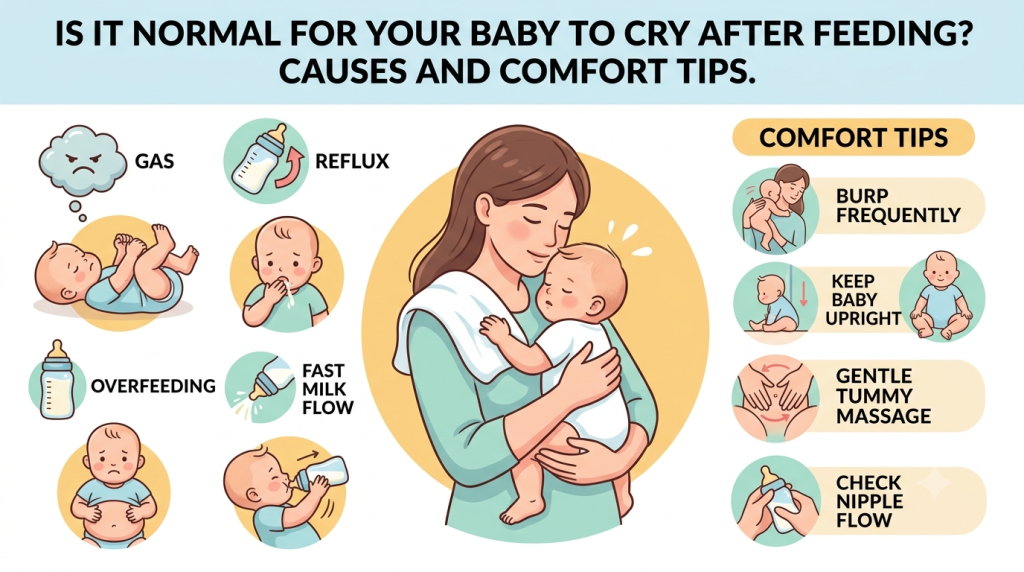
Is It Normal for a Baby to Cry After Feeding? Causes and Comfort Tips
Introduction
Baby crying after feeding is a common concern for new parents. In many cases, baby crying after feeding is caused by gas, reflux, or swallowing air during a feed. While occasional crying is normal, frequent baby crying after feeding may indicate that your baby needs burping, a feeding adjustment, or medical evaluation.

Every new parent dreams of that peaceful post-feeding moment when their baby drifts off to sleep. But sometimes, instead of a contented nap, a baby becomes fussy, arches their back, pulls up their legs, or starts crying shortly after feeding. If you’re wondering whether this is normal, the answer is usually yes. In most cases, crying after feeding is caused by temporary discomfort rather than a serious medical issue.
Why Do Babies Cry After Feeding?
A baby’s digestive system is still developing, which means feeding can sometimes be followed by discomfort. Several common causes may be responsible.
Gas and Trapped Air
Gas is one of the most common reasons babies cry after feeding. During feeding, babies often swallow air along with milk, especially if they are feeding quickly or have difficulty latching properly.
Signs of gas include:
- Pulling legs toward the tummy
- Squirming or arching the back
- Fussiness shortly after feeding
- Passing gas frequently
Infant Reflux
Infant reflux occurs when stomach contents flow back into the esophagus. Since the muscle that keeps food in the stomach is still immature in young babies, reflux is very common.
Common symptoms include:
- Spitting up after feeds
- Arching the back
- Fussiness during or after feeding
- Frequent hiccups
Silent Reflux
Not all reflux results in visible spit-up. With silent reflux, stomach contents travel upward but are swallowed again before reaching the mouth.
Babies with silent reflux may:
- Cry after feeding
- Seem uncomfortable when lying down
- Refuse feeds occasionally
- Swallow repeatedly
Overfeeding
Sometimes a baby may consume more milk than their stomach can comfortably handle. This can lead to stomach stretching and discomfort.
Signs of overfeeding may include:
- Frequent spit-up
- Fussiness after feeding
- Gulping milk rapidly
- Excessive gas
Fast Milk Flow
A fast let-down during breastfeeding or a bottle nipple with a flow rate that’s too quick can cause babies to swallow extra air and feed faster than they can comfortably manage.
How to Calm a Baby Who Cries After Feeding
Fortunately, several simple techniques may help reduce post-feeding discomfort.
Burp More Frequently
Don’t wait until the end of the feeding session to burp your baby.
Try burping:
- Halfway through a feeding
- When switching breasts
- Every few ounces during bottle feeding
Frequent burping helps release trapped air before it causes discomfort.
Keep Your Baby Upright
Hold your baby upright for 20–30 minutes after feeding. This helps gravity keep milk in the stomach and may reduce reflux symptoms.
Check Your Feeding Equipment
If bottle feeding, consider:
- Using anti-colic bottles
- Choosing the correct nipple flow rate
- Ensuring the nipple stays full of milk during feeds
These adjustments can reduce the amount of air your baby swallows.
Try Gentle Tummy Massage
About 30 minutes after feeding, gently massage your baby’s tummy in a clockwise direction.
You can also try:
- Bicycle-leg exercises
- Supervised tummy time
- Gentle rocking motions
These techniques may help move trapped gas through the digestive system.
Could It Be Colic?
If your baby cries intensely for extended periods despite being fed, changed, and comforted, colic may be a possibility.
Colic is generally defined as:
- Crying for more than 3 hours a day
- Occurring more than 3 days per week
- Lasting for at least 3 weeks
Colic usually develops within the first few weeks of life and often improves by 3–4 months of age.
When Should You Call a Doctor?
Although crying after feeding is usually normal, certain symptoms require medical attention.
Contact your pediatrician if your baby has:
- Projectile vomiting
- Blood in the stool
- Poor weight gain
- Refusal to eat
- Signs of dehydration
- Difficulty breathing
- Persistent or worsening reflux symptoms
These symptoms may indicate an underlying condition that needs evaluation.
A Reassuring Note for Parents
Hearing your baby cry after feeding can be frustrating and emotionally exhausting, especially when you’ve done everything you can think of. In most cases, however, post-feeding fussiness is simply part of your baby’s developing digestive system.
With time, frequent burping, proper feeding techniques, and a little patience, most babies outgrow these issues as their digestive tract matures.
https://www.healthychildren.org?utm_source=chatgpt.com
Conclusion
So, is it normal for a baby to cry after feeding? Yes, in most cases it is. Common causes include gas, reflux, overfeeding, or simply an immature digestive system. Understanding the reason behind your baby’s discomfort and using simple soothing techniques can help make feeding time more comfortable for both you and your little one.
If symptoms seem severe, persistent, or are affecting your baby’s growth and feeding habits, don’t hesitate to seek advice from your pediatrician.