
Table of Contents
ToggleIntroduction
Electronic devices have become an essential part of everyday life. From smartphones and laptops to televisions, smartwatches, refrigerators, and even modern cars, electronics power the world around us. Despite using these devices daily, many people wonder how electronic devices work and what happens inside them when we press a button or touch a screen.
At their core, electronic devices control the movement of electricity through tiny components that process information, perform calculations, and execute commands. These components work together like a team, allowing complex tasks to happen in fractions of a second.
Understanding the basics of electronics not only satisfies curiosity but also helps users make better purchasing decisions, troubleshoot simple problems, and appreciate the technology that shapes modern life.
In this comprehensive guide, we’ll explain how electronic devices work, their major components, the science behind electricity and circuits, and the technologies that make today’s smart devices possible.
What Are Electronic Devices?
Electronic devices are machines that use electrical energy and electronic circuits to process, transmit, or store information.
Examples include:
- Smartphones
- Computers
- Tablets
- Smart TVs
- Digital cameras
- Gaming consoles
- Smart home devices
- Medical equipment
- GPS systems
Unlike simple electrical devices that merely convert electricity into light or heat, electronic devices manipulate electrical signals to perform intelligent functions.
The Basic Principle Behind Electronic Devices
Every electronic device operates by controlling the flow of electrons through a circuit.
The basic process looks like this:
- Power enters the device.
- Electronic components regulate the electricity.
- The processor interprets instructions.
- Memory stores data.
- Output components display or perform results.
This entire process occurs almost instantly.
What Is Electricity?
Electricity is the movement of electrons through a conductor.
Think of electricity like water flowing through pipes:
- Voltage = Water pressure
- Current = Water flow
- Resistance = Narrow sections of the pipe
Electronic devices carefully manage this flow to perform useful tasks.
Understanding Electronic Circuits
A circuit is a complete path through which electricity travels.
A simple circuit contains:
- Power source
- Conductive path
- Load (device)
- Control mechanism (switch)
When the circuit is complete, electricity flows and the device functions.
Major Components of Electronic Devices
1. Power Supply
Every electronic device requires energy.
Power may come from:
- Batteries
- Rechargeable batteries
- Power adapters
- USB connections
- Solar panels
The power supply converts electricity into the form required by the device.
2. Circuit Board
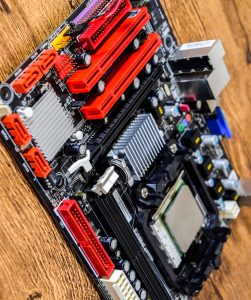
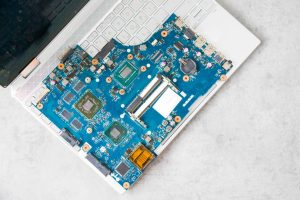
The printed circuit board (PCB) acts as the foundation of the device.
It connects components using tiny copper pathways.
Nearly every modern electronic device contains one or more PCBs.
3. Processor (CPU)
The processor is often called the brain of the device.
It:
- Executes instructions
- Performs calculations
- Controls operations
- Communicates with other components
Modern processors can perform billions of operations every second.
4. Memory
Electronic devices need memory to store information.
There are two main types:
RAM (Random Access Memory)
Used for temporary working data while the device operates.
Storage
Stores information permanently, such as:
- Photos
- Documents
- Applications
- Operating systems
Examples include SSDs and flash memory.
5. Sensors
Many devices use sensors to collect information from their surroundings.
Examples include:
- Temperature sensors
- Motion sensors
- Light sensors
- Fingerprint sensors
- Proximity sensors
- Accelerometers
Sensors convert physical changes into electrical signals.
6. Display
Displays convert electronic signals into images.
Common display technologies include:
- LCD
- LED
- OLED
They allow users to interact visually with devices.
7. Input Devices
Inputs tell the device what the user wants.
Examples:
- Keyboard
- Mouse
- Touchscreen
- Microphone
- Camera
These components transform user actions into digital signals.
8. Output Devices
Outputs communicate results back to the user.
Examples:
- Speakers
- Screens
- Printers
- Vibration motors
- Indicator lights
How Do Semiconductors Work?
Semiconductors are materials whose electrical conductivity can be controlled.
Silicon is the most widely used semiconductor.
It enables components like:
- Transistors
- Microchips
- Integrated circuits
Without semiconductors, modern electronics would not exist.
What Is a Transistor?
A transistor acts like a tiny electronic switch.
It can:
- Turn electrical signals on or off
- Amplify signals
- Process logical operations
Modern computer chips contain billions of transistors.
How Microchips Work
A microchip combines millions or billions of tiny transistors into a single integrated circuit.
The chip:
- Receives instructions
- Processes data
- Makes decisions based on programming
- Sends commands to other components
This enables everything from opening an app to streaming video.
How Software Works with Hardware
Hardware refers to the physical components of a device.
Software consists of instructions that tell the hardware what to do.
For example:
When you tap a messaging app:
- The touchscreen detects your touch.
- The processor interprets the input.
- Memory retrieves necessary data.
- The display shows the result.
- The network hardware sends messages over the internet.
Hardware and software must work together seamlessly.
How Smartphones Work
A smartphone combines many technologies:
- Processor
- Memory
- Battery
- Camera
- Display
- Sensors
- Cellular modem
- Wi-Fi and Bluetooth modules
When making a call:
- Your voice becomes an electrical signal.
- The processor digitizes the signal.
- The communication chip transmits it.
- The receiving phone converts it back into sound.
How Computers Work
Computers follow a basic cycle:
Input
Information enters through keyboard, mouse, or other devices.
Processing
The CPU performs calculations.
Storage
Data is saved in memory or storage devices.
Output
Results appear on the monitor or are sent to printers or speakers.
This process happens continuously while the computer operates.
How Smart Home Devices Work
Smart devices connect through:
- Wi-Fi
- Bluetooth
- Zigbee
- Thread
- Other wireless protocols
They receive commands from apps or voice assistants and respond automatically, such as turning lights on or adjusting thermostats.
The Role of Artificial Intelligence in Electronic Devices
Many modern devices now use Artificial Intelligence (AI).
AI helps with:
- Voice recognition
- Face detection
- Language translation
- Camera optimization
- Personalized recommendations
- Predictive typing
Instead of simply following fixed rules, AI systems can identify patterns and improve certain tasks over time.
Why Cooling Is Important
Electronic components generate heat.
Cooling methods include:
- Heat sinks
- Cooling fans
- Thermal paste
- Vapor chambers
- Passive ventilation
Proper cooling improves reliability and performance.
Common Reasons Electronic Devices Fail
Failures may result from:
- Overheating
- Water damage
- Battery degradation
- Power surges
- Dust accumulation
- Physical impact
- Component aging
Regular maintenance and careful handling can extend device lifespan.
Tips to Make Electronic Devices Last Longer
- Keep devices clean.
- Avoid excessive heat.
- Use quality chargers.
- Update software regularly.
- Protect against moisture.
- Avoid dropping the device.
- Don’t block ventilation openings.
- Replace aging batteries when necessary.
Future of Electronic Devices
Emerging technologies include:
- Flexible displays
- Wearable electronics
- AI-powered assistants
- Quantum computing research
- Advanced robotics
- Faster wireless communication
- Energy-efficient chips
These innovations will continue to make devices smarter and more capable.
Frequently Asked Questions
What is the main purpose of an electronic device?
Its purpose is to use electrical energy and electronic circuits to process information or perform specific tasks.
What is the difference between electrical and electronic devices?
Electrical devices primarily convert electricity into work, heat, or light, while electronic devices control and process electrical signals for more complex operations.
Why are semiconductors important?
Semiconductors make modern microchips and transistors possible, enabling today’s computers, phones, and countless other technologies.
Can electronic devices work without software?
Most modern electronic devices require software or firmware to control their hardware and perform intended functions.
What component is considered the brain of an electronic device?
The processor, or CPU, is commonly considered the brain because it executes instructions and coordinates the device’s operations.
Conclusion
Understanding how electronic devices work reveals the remarkable cooperation between electricity, circuits, processors, memory, sensors, and software. Every action—from sending a text message to streaming a movie—depends on billions of tiny electronic operations happening almost instantly.
As technology continues to evolve, electronic devices will become even more intelligent, efficient, and interconnected. Learning the fundamentals of how they work not only builds technological knowledge but also helps users use, maintain, and appreciate these innovations more effectively.