
Have you ever been stuck outside, watching your phone’s battery hit 1% just when you needed it most? That sinking feeling of being disconnected is exactly why portable chargers exist. Whether you’re on a long commute, traveling abroad, or camping off-grid, a power bank is the modern-day lifesaver that keeps your devices powered up when wall outlets are nowhere in sight.
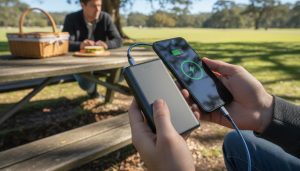
This guide breaks down everything you need to know about what a power bank charger is, how it works, what features matter, and why it has become an essential everyday tool. We’ll also explore real-world tips, types of chargers, and even peek into the future of this fast-evolving technology.
What Exactly is a Power Bank Charger?
In simple terms, a power bank charger is a portable energy storage device that allows you to recharge your gadgets, such as smartphones, tablets, wireless earbuds, or even laptops, without needing a traditional power outlet.
Think of it as a rechargeable electricity bottle. You “fill it up” by plugging it into a wall socket or computer, and later, you can pour that stored energy into your devices when their batteries are running low.
Many people call it a backup battery or external battery pack, which fits perfectly because that’s exactly what it does it gives your devices a second chance when their own battery can’t keep up.
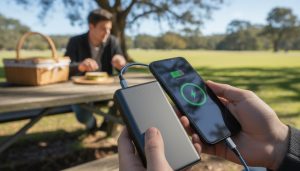
How Portable Chargers Work
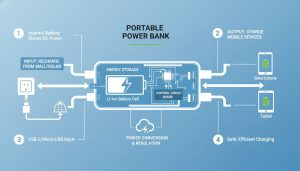
The concept is simple but brilliantly engineered. Here’s the breakdown of how a power bank charger actually works:
- You charge the power bank itself by connecting it to a power source like a wall socket, laptop, or even a solar panel.
- It stores that energy inside its built-in lithium-ion or lithium-polymer batteries.
- When your device runs low, you plug it in using a compatible cable (or simply place it on top if it’s a wireless model).
- The internal circuit board regulates voltage and current, ensuring your phone or tablet receives safe, efficient charging without overheating or damage.
In essence, it’s like having an electric energy reservoir that you carry in your pocket. The moment your phone screams “low battery,” your power bank quietly steps in to save the day.
Different Types of Portable Chargers
Not all portable chargers are created equal. They vary in size, capacity, charging speed, and technology. Let’s break down the main categories so you can pick one that fits your lifestyle.
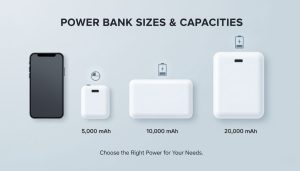
Power Bank Size and Capacity
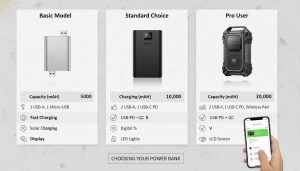
- Pocket-sized (2,000–5,000 mAh): Ideal for emergencies or short trips. They can usually recharge a smartphone once.
- Everyday models (5,000–15,000 mAh): Perfect balance between portability and performance, they can recharge a phone two to three times.
- Heavy-duty (15,000–30,000 mAh+): Built for travelers, vloggers, or professionals who need to power multiple devices or even laptops.
By Technology
- Standard USB models: Basic and affordable, but with slower charging speeds.
- Fast-charging units (PD or QC): These push higher wattage for rapid charging rates for phones that support fast charge protocols.
- Wireless chargers: Let you charge your device simply by placing it on top, convenient and cable-free.
- Solar chargers: Equipped with small solar panels, they’re perfect for outdoor enthusiasts or campers looking for sustainable power.
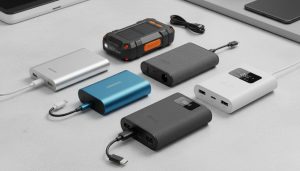
Features to Look For Power Bank
When buying a portable charger, the market can feel overwhelming endless shapes, sizes, and specs. But only a few features really matter. Here’s what to focus on:
- Capacity (mAh): The higher the number, the more energy it holds and the more recharges you get. However, bigger capacity also means more weight.
- Output Power (W): Determines how fast your power bank can charge your device. For example, a 20W unit can fill up your phone much faster than a 10W one.
- Ports: Multiple USB ports (or USB-C + USB-A combo) allow you to charge more than one gadget simultaneously.
- Portability: Slim 10,000 mAh chargers are often more practical than chunky 30,000 mAh ones.
- Safety Features: Look for overcharge protection, short-circuit prevention, and temperature control.
- Display Indicators: LED screens showing battery percentage are far clearer than blinking dots.
Real-Life Benefits
Owning a power bank isn’t just convenient, it’s transformative. Once you get used to having one, it’s hard to go back.
- Travel convenience: Keep your phone alive during long flights, bus rides, or hiking trips.
- Work reliability: Freelancers or digital nomads can keep laptops charged even in cafés or airports without power outlets.
- Emergency backup: During power cuts or natural disasters, a power bank keeps you connected.
- Multi-device sharing: Great for families or group travelers when everyone’s battery dips into the red.
- Eco-consciousness: Solar models offer a renewable way to stay powered on the go.
| Pros | Cons |
| Portable and easy to carry | Adds weight to your bag |
| Works anywhere, no outlet needed | Needs to be recharged itself |
| Can power multiple devices | Capacity decreases over time |
| Comes in many sizes and prices | High-capacity units can be bulky |
Overall, the advantages outweigh the drawbacks, especially when you pick a model suited to your daily routine.
Choosing the Right Power Bank
Choosing the right power bank depends on how and where you’ll use it. Here’s a simple guide:
- If you just want to top up your phone once a day, go for a slim, pocket-sized model (5,000–10,000 mAh).
- For students, travelers, or commuters, a 10,000–15,000 mAh power bank offers the best mix of portability and performance.
- If you’re a professional or laptop user, pick a high-capacity (20,000 mAh+) model with Power Delivery (PD) and high wattage output.
You can also explore my article https://pickerzen.com/how-does-a-power-bank-work-guide/ for a deeper technical understanding.
And always buy from reputable brands. Trusted names like Anker, Baseus, UGREEN, and Xiaomi are known for safety and durability.
For a technical breakdown, Anker offers a helpful guide on portable batteries.
Safety and Care Tips for Power Bank
Even though power banks are designed for convenience, they still require proper care to stay safe and efficient.
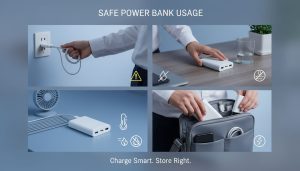
- Avoid overheating: Never leave it in direct sunlight or a hot car. Heat shortens battery lifespan.
- Use quality cables: Cheap or damaged cables reduce charging efficiency and can pose safety risks.
- Recharge regularly: Even when not in use, top it up every few months to maintain healthy battery cells.
- Unplug when full: Most power banks stop automatically, but it’s still a good habit to disconnect once charged.
- Keep it clean and dry: Moisture or dust can affect performance over time.
By following these small habits, you’ll extend your power bank’s life and ensure it performs like new even after hundreds of uses.
Future Trends
Power banks are evolving rapidly, and the future looks bright (and fast). Here are a few trends shaping the next generation of portable chargers:
- Solar Integration: Newer models with high-efficiency solar panels are becoming viable for campers and travelers.
- Eco-Friendly Materials: Brands are now using recyclable or biodegradable casings to reduce waste.
- Smart Displays: Expect LED or OLED screens showing real-time wattage, temperature, and estimated charging time.
- Ultra-Fast Charging: Imagine recharging your phone in under 10 minutes upcoming PD 3.1 tech is making that possible.
- Wireless Expansion: Future designs will combine magnetic alignment, wireless charging pads, and even dual-direction charging.

Frequently Asked Questions
Q: How many times can a power bank charge my phone?
A 10,000 mAh unit typically recharges a smartphone 2–3 times, depending on your phone’s battery size.Q: Can I use my device while charging it from a power bank?
Yes, you can, but it drains the power bank faster. I often use mine this way while navigating with GPS or streaming music.Q: How long does a power bank last?
Most units handle 300–500 full charging cycles before their capacity starts to degrade. With good care, that’s 2–4 years of dependable use.Q: Is it safe to fly with a power bank?
Yes. Power banks under 27,000 mAh (100 Wh) are allowed in carry-on luggage. However, airlines usually ban them in checked baggage due to fire risk.Q: What does mAh mean?
It stands for milliampere-hour, a measure of how much charge a battery can store, similar to a car’s fuel tank size.Final Thoughts
A portable power bank charger isn’t just another tech accessory; it’s a modern essential. Whether you’re a traveler, student, freelancer, or just someone who hates the “low battery” warning, a power bank ensures you stay connected and productive anywhere.
The beauty of these little devices lies in their versatility. From compact keychain-sized packs to heavy-duty laptop chargers, there’s a model for every lifestyle and budget. The key is knowing what you need and investing in one that matches your routine.
So next time you step out the door, don’t forget to toss one in your bag. You never know when you’ll need that extra burst of power, and when you do, future-you will thank present-you.