
Infant bottle sterilizer is every parent’s secret weapon against germs, sleepless nights, and endless cleaning. Feeding a newborn already feels like a full-time job—consequently, between late-night bottle prep and constant washing, it’s natural to worry if your routine is truly keeping your baby safe.
The good news? A reliable bottle sterilizer can save you precious time, kill harmful bacteria, and give you total peace of mind.
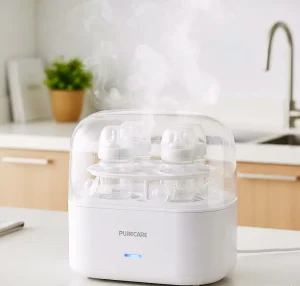
In the following sections, we’ll break down why sterilizing matters, how to pick the right infant bottle sterilizer for your needs, pro tips for hassle-free use, and our top product recommendations you won’t want to miss.
Ultimately, you’ll know exactly how to keep those bottles squeaky-clean—and your baby’s tummy happy.
Why Sterilizing Baby Bottles Matters
Newborns are adorable little germ magnets. Their immune systems are still developing; therefore, this makes them more vulnerable to bacteria, viruses, and fungi that can linger on bottles—even after a thorough wash.
Specifically, according to pediatricians and the American Academy of Pediatrics, proper sterilization:
- Kills up to 99.9% of germs that regular cleaning might miss.
- Reduces the risk of gastrointestinal infections and tummy upsets.
- Provides a safer feeding experience during those critical first months.
Types of Infant Bottle Sterilizers
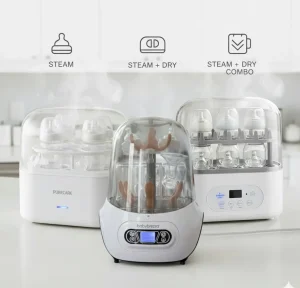
Today’s sterilizers are smarter, faster, and far more effective than old-school boiling pots. To illustrate, here are the main options:
- Electric Steam Sterilizers Countertop units that use high-temperature steam to kill germs—no chemicals required.
- Best for: Parents sterilizing multiple bottles daily.
- Why you’ll love it: Large capacity, quick cycles, and often built-in drying functions so bottles come out ready to use.
- Examples: Baby Brezza SuperFast, Papablic Dryer Pro.
- Microwave Steam Sterilizers: Lightweight, compact, and budget-friendly.
- Best for: Small kitchens, apartment living, or frequent travel.
- Why you’ll love it: Sterilizes in just a few minutes using the microwave you already own.
- Star pick: Philips Avent Microwave Steam Sterilizer—perfect if you’re already using Avent bottles.
- UV Sterilizers Use ultraviolet light to kill bacteria without heat or chemicals.
- Best for: Parents worried about mineral buildup or hard water scaling.
- Why you’ll love it: No water, no drying time, and it’s capable of sanitizing toys, pacifiers, and even your phone.
- Portable & Travel Sterilizers Think small bags or mini units designed for on-the-go sanitizing.
- Best for: Pumping at work, daycare, road trips, or airports.
- Top choice: Medela Quick Clean Micro-Steam Bags—reusable up to 20 times and fit in any diaper bag.
Key Features to Consider Before Buying
| Feature | Why It Matters |
| Capacity | Can it handle all the bottles and accessories you use in a day? |
| Drying Function | Prevents mold and bacteria growth after sterilization. |
| Ease of Cleaning | Dishwasher-safe parts or simple wipe-down designs save sanity. |
| Cycle Speed | Shorter cycles (under 10 minutes) mean more sleep and less waiting. |
| Compatibility | Ensure it fits wide or tall bottles, such as Dr. Brown’s or Philips Avent. |
| Water Type | Some electric models require distilled water to avoid mineral buildup. |
Pro Tip: If you live in an area with hard water, look for models that recommend or include a descaling cycle—this will extend the life of your machine.
Best Infant Bottle Sterilizers for 2025
We tested and researched parent favorites and expert picks in order to find the best of the best:
Best Overall: Baby Brezza SuperFast Sterilizer & Dryer
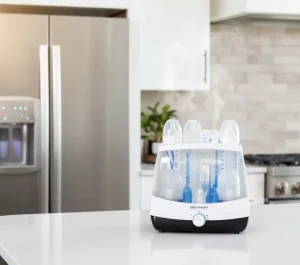
- Sterilizes and dries in as little as 10 minutes.
- Holds six bottles plus accessories.
- Furthermore, the automatic 24-hour cycle keeps contents sterile throughout the day.
- Best Budget Pick: Munchkin Steam Microwave Sterilizer
- Around $20, yet it’s surprisingly spacious.
- Dishwasher-safe with heat-resistant handles for safe removal.
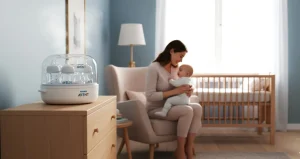
- Best for Convenience: Philips Avent Microwave Steam Sterilizer
-
- Durable, simple, and lightning fast—just a few minutes in the microwave.
- A natural match for Philips Avent bottles.
- Planning to buy? Don’t miss our Philips Avent Sterilizer Review for hands-on testing details.
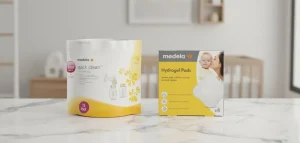
Best for Travel: Medela Quick Clean Micro-Steam Bags
-
- Lightweight, foldable, and reusable up to 20 times.
- This makes them perfect for pumping at work or sanitizing on vacation.
- Best High-Capacity: Papablic Baby Bottle Sterilizer and Dryer Pro
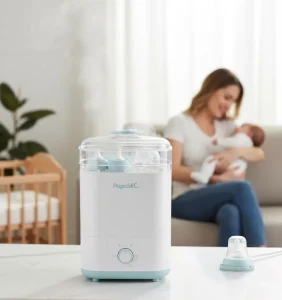
- Fits up to 13 bottles—great for twins or big pumping days.
-
- Additionally, it doubles as a bottle warmer and even a food dehydrator.
Step-by-Step: How to Use an Infant Bottle Sterilizer for Feeding Bottles
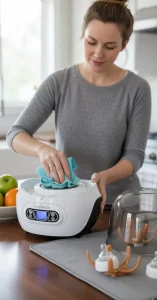
While every product has its own instructions, most follow this simple routine:
- Wash First—Clean bottles and parts with warm, soapy water.
- Add Water—Fill the sterilizer with the recommended amount (distilled if required).
- Load Bottles—Place them upside down for even steam exposure.
- Select Cycle—Choose sterilize, dry, or both.
- Cool & Store—Let bottles cool before using, or keep them inside with the lid closed to stay sterile for up to 24 hours.
Pro Tip: Always read your model’s manual for specific water levels and cycle times—otherwise, skipping this step is how “mystery beeps” happen at 2 a.m.
How Often Should You Sterilize?
For newborns under 3 months, pediatricians recommend sterilizing daily or after every use. However, between 3 and 6 months, once a day or after an illness is usually enough.
After that, for the following 6 months, hot soapy washing is fine most of the time, with an occasional sterilizing session for extra caution.
Curious about how often to sterilize? Don’t miss our in-depth, expert-backed timelines and age-specific tips.
Cleaning & Maintenance Tips for Feeding Bottle Sterilizer
Even sterilizers need love to stay effective:
- Daily: Wipe the base with a damp cloth to remove spills.
- Weekly: Run a vinegar-water cycle to remove mineral buildup.
- Monthly: Check hidden areas for mold or residue.
If you notice cloudy bottles, it’s usually hard-water scaling. Soak bottles in a 1:1 vinegar-water solution and rinse thoroughly to restore clarity.
Expert Insights
Dr. Natalie Tarrant, FAAP, explains:
“While washing with soap and water is essential, sterilizing adds an extra layer of protection that’s worth the effort—particularly in the first two months when babies are most vulnerable.”
Sterilizing isn’t overkill—instead, it’s smart insurance for tiny immune systems.
FAQ
Cleaning & Washing
- Do you need to wash bottles before sterilizing?
- Yes! Sterilizers kill germs, but they can’t remove milk residue. Always wash first.
- Is regular dish soap acceptable?
- Yes, as long as it’s mild and fragrance-free.
- Is the dishwasher enough?
- If your dishwasher has a sanitize or hot dry cycle, it can double as a sterilizer. Just place small parts in a mesh basket.
Sterilizing Frequency & Methods
- Do formula-fed babies need more frequent sterilizing?
- Yes. Formula is more prone to bacterial growth; consequently, daily sterilization is a must in the early months.
- Is boiling safe for plastic bottles?
- If bottles are BPA-free and labeled boil-safe, yes. Keep boil time under 5 minutes to prevent warping.
- Can I skip sterilizing if I use filtered water?
- No. Germs can come from hands, nipples, and milk—not just water.
Storage & Safety Tips For Bottle Sterilizing Machine
- How long do bottles stay sterile?
- Up to 24 hours if kept in a closed sterilizer or sealed container.
- Can I dry bottles with a towel?
- Skip the towel—air-dry on a clean rack to avoid lint and bacteria.
- Can you over-sterilize?
- Daily use is safe, but you should replace bottles every 3–6 months if they become cloudy or cracked.
Troubleshooting
- Why does my sterilizer smell or show white deposits?
- This is limescale. Wipe with vinegar and run an empty cycle.
- Do glass bottles need sterilizing too?
- Yes—germs don’t discriminate by material.
Final Thoughts: Do You Really Need an Infant Bottle Sterilizer?
Technically, you could boil bottles or rely on a dishwasher’s sanitize cycle. However, when you’re juggling midnight feedings and running on three hours of sleep, a sterilizer is pure parenting gold.
Ultimately, whether you choose a budget microwave unit, a high-tech electric model, or a travel-friendly bag, the right infant bottle sterilizer guarantees every feeding starts clean, safe, and stress-free.
Because when your baby’s health (and your sanity) is on the line, why gamble with germs?