
I still remember the first time I unboxed my mandoline. At first, I thought it was just a fancy gadget; however, I quickly realized it’s a game-changer in the kitchen. Perfectly uniform slices in seconds, whether for salads, gratins, or homemade chips — it’s like having a professional chef in my kitchen.Over time, I’ve learned the best techniques, safety tips, and tricks; as a result, I now get the most out of this versatile tool.In the same way, thin cucumber, radish, or apple slices create a professional look.
Consequently, it turns simple carrots or zucchini into professional-looking matchsticks.
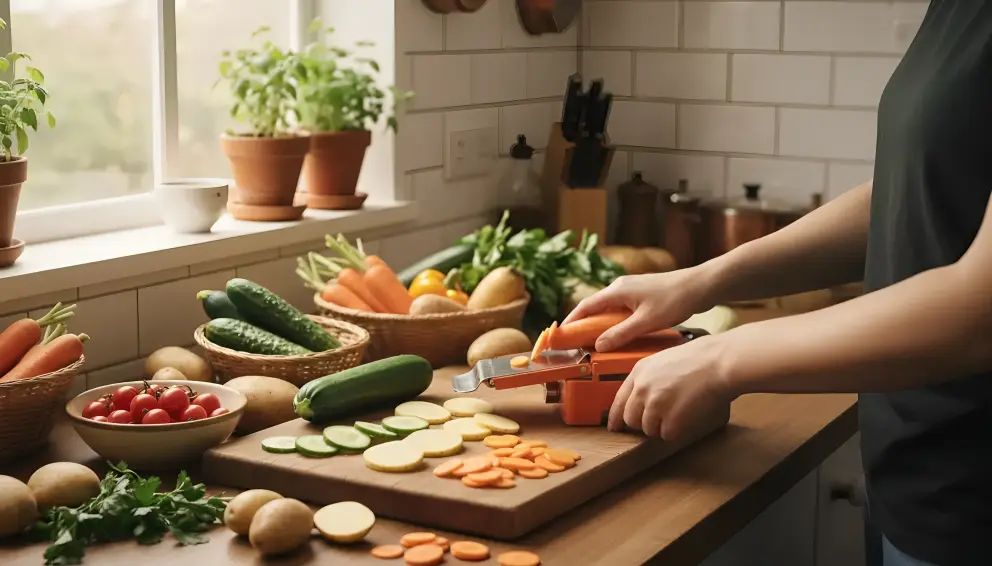
Here’s what I’ll cover in this guide on how I use my mandoline:
- Why I love my mandoline
- Understanding your mandoline’s parts and blades
- Preparing ingredients for slicing and julienning
- Step-by-step slicing techniques
- Safety tips to avoid accidents
- Cleaning and maintenance
- Troubleshooting common issues
- Hacks for tricky vegetables and fruits
- Creative recipes using thin slices
- Recommended settings for different foods
Without proper prep, efficiency and safety become much harder to maintain.
By the end, you’ll feel confident using your mandoline to make cooking faster, easier, and more precise.
Why I Love My Mandoline
In fact, mandoline have completely changed how I prep vegetables and fruits:
- Uniform Slices: Everything looks professional, from thin cucumber slices to thick potato wedges.
- Time-Saving: Slicing dozens of potatoes for gratin used to take forever; however, now it’s done in minutes.
- Versatility: From thin julienne carrots for stir-fries to decorative garnishes, this tool does it all.
- Consistency: Every slice is the same thickness, ensuring even cooking.
- Fun Factor: I have to admit, using it feels a little like being a kitchen ninja — precise, fast, and satisfying.
In the same way, thin cucumber, radish, or apple slices create a professional look.
For complementary prep tools, check out our [kitchen gadgets guide]. Pairing the mandoline with a good cutting board and storage containers makes the process seamless.
With proper prep, attention to safety, and a little practice, you can easily create uniform slices.

Understanding Your Mandoline
Before you start,Before anything else, it’s essential to know the main parts and blades of your mandoline. Consequently, understanding how each component works will make slicing safer, faster, and more precise:
- Body/Base: This is the main platform where the vegetables or fruits glide over the blade. Most mandolines have an adjustable base to control the thickness of your slices — from paper-thin to chunky cuts. I usually test a small piece first; therefore, I can ensure the setting matches what I need.
- Blade Types:
- Straight Blade: Perfect for classic slicing of vegetables and fruits. For instance, I use this for potatoes, cucumbers, and apples.
- Julienne Blade: Creates thin, uniform strips, ideal for salads, stir-fries, or garnishes. As a result, it turns simple carrots or zucchini into professional-looking matchsticks in seconds.
- Waffle or Crinkle Cut Blade: Great for decorative cuts or chips. I love using this for homemade potato chips or adding texture to veggie side dishes.
- Food Holder/Guard: One of the most important parts for safety. It holds the vegetable securely while keeping your fingers away from the blade. I never skip this because it’s a small step that prevents painful mistakes.
- Adjustment Knob: Allows you to fine-tune the thickness of each slice. I usually start thicker for sturdier vegetables and thinner for delicate produce or garnishes.
However, once I got comfortable, it felt like magic.
After a while, you’ll wonder how you ever prepped vegetables without it.
Pro Tip: If your mandoline comes with multiple blade inserts, start with the straight blade for general slicing until you get comfortable. Afterward, experimenting with julienne or waffle cuts becomes easy and fun once you’ve mastered it.
For the most part, larger vegetables are easier to handle.
Eventually, it becomes completely indispensable.
Preparing Ingredients
First of all, proper prep ensures efficiency and safety:
- Wash and Dry: Clean produce thoroughly to remove dirt. Moreover, drying prevents slipping.
- Trim Ends: Remove stems, ends, or peels that may catch on the blade.
- Size Matters: Larger vegetables are easier to handle, but don’t force overly large pieces that won’t fit on the mandoline platform.
- Use the Food Holder: Always use the guard, even for small vegetables, to protect fingers.
By the end, you’ll feel confident using your mandoline; furthermore, cooking will become faster, easier, and more precise.
For recipes that pair well with thin or julienned vegetables, see our [healthy salad guide].

Meanwhile, you can slice large quantities and store them in airtight containers.
Step-by-Step Slicing Techniques
Here’s how I usually work with my mandoline:
- Adjust Thickness
Decide on the thickness of the slice. For potatoes, I usually set it to 3–4 mm for gratin; for chips, 1–2 mm.
- Place Vegetable on Holder
Secure the vegetable in the food holder. This keeps fingers away from the blade while giving you control.
- Slide Evenly
Slide the vegetable down the blade with steady pressure. Keep your wrist aligned and avoid jerky movements.
- Repeat
For julienne or decorative cuts, switch blades and repeat the same sliding motion.
In the end, the dish looked like it came straight from a restaurant.
- Collect Slices
I usually place a tray or cutting board underneath to catch slices. It keeps the workspace clean and organized.
As a result, everything looks professional, from thin cucumber slices to thick potato wedges.

Safety Tips
Without a doubt, mandolines are sharp, so I’ve learned to respect the blade:
- Always Use the Guard: Never slice by hand.
- Slow and Steady: Most importantly, don’t rush because slipping can lead to serious cuts.
- Cut Resistant Gloves: Optional, but they add extra protection.
- Keep Fingers Away: Focus on even, controlled movements.
- Stable Surface: Ensure the mandoline sits flat on a cutting board or countertop.
Perfectly uniform slices appear in seconds; for example, they work wonderfully for salads, gratins, or homemade chips, and it feels like having a professional chef in my kitchen.
Cleaning and Maintenance
In addition, proper care keeps your mandoline working smoothly:

Without question, the mandoline has turned simple meal prep into a fun challenge.
- Disassemble Carefully: Remove blades and guards.
- Wash Immediately: Warm soapy water removes residue; avoid soaking for too long to protect blades.
- Dry Thoroughly: Prevents rust and keeps blades sharp.
- Store Safely: Keep blade covers on or store in a drawer away from children.
As a result, thin slices of cucumber or carrot absorb brine very quickly
After that, slide the vegetable down the blade with steady pressure.
Troubleshooting Common Issues
- Slices Uneven: Check that the mandoline is on a flat, stable surface and that the vegetable is held firmly.
- Slipping Produce: Make sure vegetables are dry, and use the holder/guard.
- Blade Dulling: Sharpen or replace blades if slicing becomes difficult.
- Sticking Food: Lightly oil very sticky vegetables like sweet potatoes for smoother slicing.
Meanwhile, I usually place a tray or cutting board underneath to catch slices.
Hacks for Tricky Vegetables and Fruits
However, some produce can be tricky to slice:
- Eggplant: Soft and slippery; slice quickly and use the guard. Pat dry if wet.
- Tomatoes: Very soft; use a fine serrated mandoline blade for smooth, even slices.
- Leafy Greens: Stack leaves together and roll them for thin julienne cuts, perfect for salads or garnishes.
- Soft Fruits (Kiwi, Mango): Cut into manageable pieces and use gentle pressure to avoid squashing.
- Cabbage: Dense heads can be sliced thinly for coleslaw; cut into quarters first for stability.
For the most part, larger vegetables are easier to handle.
Tip: If a vegetable or fruit is too small for the holder, I usually switch to a chef’s knife for safety.
To be fair, I’ve had my fair share of learning moments with the mandoline.
For best results, warm soapy water removes residue quickly.
Creative Recipes Using Thin Slices
For example, using a mandoline opens the door to many creative dishes:

- Potato Gratin: Thin, even potato slices layered with cream and cheese. Slices cook uniformly for a creamy, golden result.
- Homemade Chips: Slice thin, toss with a bit of oil, season, and bake or air fry for crispy chips.
- Julienne Stir-Fries: Carrots, zucchini, and bell peppers cook evenly and look visually appealing.
- Salads: Thin cucumber, radish, or apple slices create a professional, restaurant-style look.
- Garnishes: Waffle or crinkle cuts make fries or veggie decorations pop on the plate.
- Pickles: Thin slices of cucumber or carrot absorb brine quickly for quick pickles.
On the other hand, some produce can be tricky to slice.
Similarly, waffle or crinkle cuts make fries or veggie decorations stand out beautifully on the plate.-
Recommended Settings for Common Foods
| Vegetable/Fruit | Blade Type | Thickness/Julienne | Notes |
|---|---|---|---|
| Potatoes | Straight | 2–4 mm | Chips or gratin |
| Carrots | Julienne | 2–3 mm | Stir-fry, salads |
| Cucumbers | Straight | 2–3 mm | Salads, sandwiches |
| Zucchini | Straight/Julienne | 2–3 mm | Stir-fry, noodles |
| Radishes | Straight | 1–2 mm | Garnish, salads |
| Apples | Straight | 2–3 mm | Fruit salads, pies |
| Onions | Straight | 2–3 mm | Even cooking, caramelizing |
| Tomatoes | Serrated | 3 mm | Soft, delicate slices |
| Cabbage | Straight | 2–3 mm | Coleslaw |
Therefore, the slices cook uniformly and create a creamy, golden result.
Generally, if a vegetable or fruit is too small for the holder, I switch to a chef’s knife.
Extra Tips & Tricks
- Rotate Vegetables: If one side is hard to slice, rotate for easier handling.
- Stack Carefully: Thin slices can stick together; separate with a spatula.
- Use for Garnishes: Mandoline is perfect for fancy garnishes or thin slices for sandwiches.
- Batch Prep: Slice large quantities and store in airtight containers for quick meals.
- Experiment With Cuts: Waffle cuts or crinkle cuts add fun textures to dishes like fries or chips.
- Dry Ingredients: Patting wet vegetables dry prevents slipping and improves slicing.
- Mind the Blade: Always handle carefully, and keep a dedicated storage cover.
Similarly, thin slices of cucumber or carrot absorb brine quickly for quick pickles.
Even so, some produce can still be tricky to slice.
Personal Anecdotes
Of course, mandolines are extremely sharp.
Instead, cut the fruit into manageable pieces first.
I’ve had my fair share of “learning moments” with the mandoline. I remember the first time I tried to julienne carrots without using the guard — let’s just say a tiny nick on my finger was a very effective lesson in respecting the blade! Since then, the guard has become my best friend in the kitchen.If needed, rotate vegetables when one side becomes hard to slice.Consequently, this prevents rust and keeps the blades sharp.
Eventually, it felt almost like magic.
Another memorable moment was when I prepped zucchini noodles for a stir-fry. I carefully sliced them on the mandoline, and the even size made a huge difference: every strand cooked perfectly, none of them turned mushy, and the dish looked like it came straight from a restaurant.
Consequently, this tool will save time and elevate your dishes.
Mandoline use definitely has a small learning curve. At first, I was a little intimidated by the sharp blades and quick slicing motion; however, that feeling disappeared with practice. But once I got comfortable, it felt like magic — precise slices in seconds, beautiful julienne cuts, and endless possibilities for creative dishes.
Honestly, the mandoline has turned simple meal prep into a bit of a fun challenge, and now I can’t imagine my kitchen without it. It’s one of those tools that rewards patience and practice, and once you get the hang of it, it becomes indispensable.Ultimately, the mandoline has turned simple meal prep into a fun and rewarding challenge.
In addition, most mandolines have an adjustable base to control the thickness of your slices.
Cut Resistant Gloves: Even though they are optional, they add extra protection.
Finally, store the mandoline safely after cleaning.
Final Thoughts
Overall, a mandoline is an incredibly useful tool for anyone who wants precision, efficiency, and professional-looking results in the kitchen. With proper prep, attention to safety, and a little practice, you can create uniform slices, perfect julienne strips, and even decorative cuts in minutes. Whether you’re making gratin, stir-fry, salads, or garnishes, this tool will save time and elevate your dishes. As a result, dense cabbage heads can be sliced thinly for coleslaw.
Even so, some produce can still be tricky to slice.
Even though the mandoline is versatile, some produce can still be tricky to slice.
For recipe ideas and inspiration, check out our [healthy salad guide] or [vegetable side dishes]. Once you master the mandoline, you’ll wonder how you ever prepped vegetables without it!
Because of that, the workspace stays clean and organized.