
Breast milk warmer vs. bottle warmer—which one truly keeps your baby’s milk safe and nutrients intact? New parents often face this dilemma when setting up their feeding routine.
At first glance, both devices may appear identical, but the differences extend far beyond their appearance. From how they preserve breast milk’s nutrients to how quickly they warm up a bottle during those 2 a.m. cries, the choice can impact your baby’s health and your peace of mind.
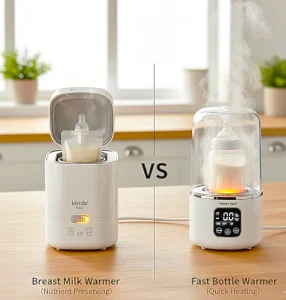
In this guide, we’ll break down breast milk warmers vs bottle warmers so you’ll know exactly which one suits your lifestyle—and when it’s worth investing in the best milk warmer or a portable warmer bottle for stress-free feeding on the go.
1. What Is a Breast Milk Warmer?
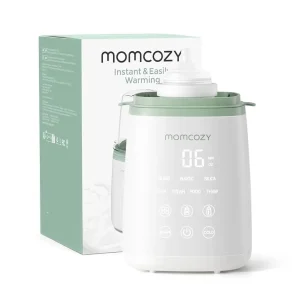 A breast milk warmer is specifically designed to heat expressed breast milk to a temperature that’s safe for babies and gentle enough to protect the milk’s natural nutrients.
Unlike microwaves or boiling water, a breast milk warmer uses low, consistent heat—usually a warm water bath or precise digital temperature control—to avoid destroying antibodies and enzymes in breast milk.
Key features often include:
- Gentle warming cycles that never exceed body temperature (around 98°F/37°C).
- Temperature presets for frozen, refrigerated, or room-temperature milk.
- Slow, even heat distribution to avoid hot spots.
These features are crucial for parents who pump and store milk because breast milk contains living components that are easily damaged by high heat.
If you’re shopping for the best milk warmer, focus on models with precision temperature settings and automatic shut-off to protect nutrients.
2. What Is a Bottle Warmer?
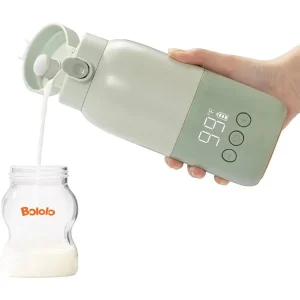
A bottle warmer is a broader category of device meant to warm baby bottles of either formula or breast milk. Most work by steaming or heating water to raise the bottle’s temperature quickly.
Typical characteristics include:
- Steam heating for rapid results (often under 3 minutes).
- Universal fit for different bottle shapes and sizes.
- Simple controls—often just “on” and “off.”
While bottle warmers are versatile and fast, some models can heat to higher temperatures, which may be fine for formula but risky for breast milk if not carefully monitored.
3. Key Differences Between Breast Milk Warmers and Bottle Warmers
Here’s a quick comparison to show how these devices differ:
| Primary Purpose | Warm breast milk gently | Warm formula or milk quickly |
| Heating Method | Low-temp water bath/precision control | Steam or rapid hot-water bath |
| Temperature Range | Body-temp safe (~98°F/37°C) | Can reach higher temps |
| Speed | Moderate (5–10 minutes) | Fast (2–5 minutes) |
| Nutrient Preservation | Excellent | Depends on settings |
| Cost | Slightly higher | Broad price range |
Takeaway: If nutrient protection is your top priority, a breast milk warmer is safer. If speed is critical—like during midnight feedings—a standard bottle warmer may appeal more.
4. Can You Warm Breast Milk in a Regular Bottle Warmer?
Yes, but with caution.
Many parents successfully use a regular bottle warmer to heat breast milk, provided the warmer offers adjustable temperature settings or a gentle warming mode.
To safely warm breast milk in a bottle warmer:
- Check the manual for a breast milk setting or low-heat option.
- Avoid overheating—milk should never exceed 104°F (40°C).
- Swirl, don’t shake after warming to preserve nutrients.
If your warmer uses only high-temperature steam, consider adding a layer of water around the bottle to reduce heat exposure or invest in the best milk warmer designed specifically for breast milk.
5. Best 2-in-1 Warmers for Both Breast Milk and Formula
If you want the best of both worlds, several dual-purpose warmers work beautifully for both breast milk and formula:
- Philips Avent Fast Bottle Warmer – Offers gentle warming and a defrost setting for frozen milk.
- Baby’s Brew Portable Bottle Warmer – Battery operated with adjustable temps for travel and breast milk safety.
- Tommee Tippee Easi-Warm—Affordable and fits most bottle sizes.
These models combine speed and nutrient protection, making them ideal for households where parents alternate between pumping and formula feeding.
If you’re looking for the best milk warmer but also want to heat formula, these combo devices are excellent starting points.
6. How to Safely Warm Breast Milk (With or Without a Warmer)
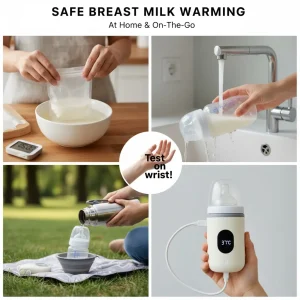
Even if you don’t own a specialized warmer, you can still warm breast milk safely:
- Warm Water Bath: Place the sealed bottle or storage bag in a bowl of warm (not boiling) water for 5–10 minutes.
- Running Warm Tap Water: Hold the bottle under warm running water, gently rotating it for even heat.
- Portable Thermal Flask: For travel, carry hot water in a thermos and use it to create a warm bath when needed.
Always test the milk on your wrist before feeding. It should feel lukewarm, never hot.
Parents who travel frequently might prefer a portable warmer bottle that can heat milk without access to electricity.
7. Breast Milk Warmer vs. Bottle Warmer: Cost & Convenience Comparison
- Breast Milk Warmers: Typically range from $30 to $70, with premium digital models exceeding $100. They warm more slowly but protect milk quality.
- Bottle Warmers: Range widely from $20 to $80, with budget models available at most baby stores. They’re fast and versatile but may require more monitoring to prevent overheating.
Parents who pump regularly often find the higher cost of the best milk warmer worthwhile, while those using mostly formula may prefer a quick-heating bottle warmer.
8. Travel-Friendly Options
Parents on the go often need a device that can warm milk safely without an outlet:
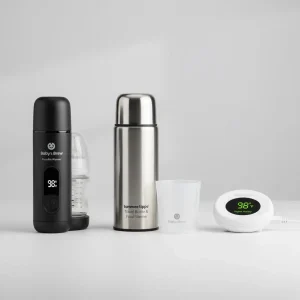
- Baby’s Brew Portable Warmer—A battery-powered breast milk warmer that heats milk anywhere.
- Tommee Tippee Travel Bottle & Food Warmer – Uses an insulated flask of hot water to warm bottles.
- Munchkin 98° Digital Warmer – Compact and USB-powered for car or stroller use.
When traveling with breast milk, remember to store milk in an insulated cooler and warm only the amount needed to avoid waste.
Among these, a portable warmer bottle is the ultimate convenience because it doubles as both a storage container and a heating device.
9. Cleaning & Maintenance Tips
Proper cleaning keeps any warmer safe and long-lasting:
- Unplug and cool down the device before cleaning.
- Wipe the heating chamber with a damp cloth and mild soap.
- Descale monthly using a vinegar-water solution to remove mineral buildup.
- Dry completely before reassembly.
Breast milk warmers may require more frequent descaling if they use water baths, while steam-based bottle warmers need regular checks for calcium deposits.
FAQ
Q: Can I thaw frozen breast milk directly in a warmer?
Yes, if your warmer includes a defrost or thawing mode. Otherwise, thaw milk overnight in the refrigerator first.
Q: Can I reuse warmed breast milk if my baby doesn’t finish the bottle?
No. Once warmed and fed, leftover milk should be discarded within two hours to prevent bacterial growth.
Q: Are glass bottles safe in warmers?
Heat-resistant glass bottles are safe, but always check the manufacturer’s instructions.
Final Thoughts
Choosing between a breast milk warmer and a bottle warmer depends on your feeding routine:
- If you’re exclusively pumping or want to protect the delicate nutrients in breast milk, a breast milk warmer with precision temperature control is the safest bet.
- If you need a fast, versatile solution for formula and occasional breast milk, a bottle warmer—especially one with adjustable settings—may be the better value.
Whichever you choose, focus on gentle, even heating to keep your baby’s milk safe and nutritious. By understanding the differences and following safe warming practices, you’ll save time and give your baby the healthiest feeding experience possible.