
Understanding the right bottle feeding schedule by age can help parents ensure their baby receives the nutrition they need for healthy growth and development. While every baby is unique, having a general feeding schedule can make daily routines easier and reduce concerns about whether your baby is eating enough.
During the first year of life, a baby’s feeding needs change rapidly. Newborns typically eat small amounts frequently, while older babies consume larger feedings less often. Knowing how much milk to offer and how often to feed can help parents build a comfortable feeding routine.
Parent Bottle Feeding a Newborn Baby

In this guide, we’ll break down bottle feeding schedules by age, explain hunger cues, and provide practical tips for successful feeding.
Understanding Baby Feeding Needs
Every baby grows at a different pace. Factors such as weight, growth spurts, activity level, and whether they are consuming breast milk or formula can affect feeding patterns.
Rather than following a strict clock, parents should also pay attention to their baby’s hunger and fullness cues.
Common hunger signs include:
- Rooting reflex
- Sucking on hands
- Lip smacking
- Increased alertness
- Fussiness before feeding
Bottle Feeding Schedule for Newborns (0–1 Month)
During the first month, newborns have very small stomachs and require frequent feedings.
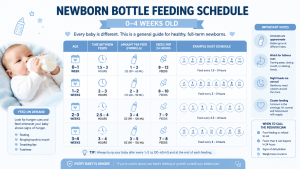
Typical Feeding Schedule
- Every 2–3 hours
- 8–12 feedings per day
- 1–3 ounces per feeding
Newborns often wake during the night to feed, which is completely normal.
Newborn feeding schedule chart
Bottle Feeding Schedule for Babies 1–2 Months Old
As babies grow, they begin consuming more milk at each feeding.
Typical Feeding Schedule
- Every 3–4 hours
- 6–8 feedings per day
- 3–4 ounces per feeding
Parents may begin noticing slightly longer sleep stretches at night.
Bottle Feeding Schedule for Babies 2–4 Months Old
At this age, babies become more efficient feeders.
Typical Feeding Schedule
- Every 3–4 hours
- 5–7 feedings per day
- 4–6 ounces per feeding
Growth spurts may temporarily increase hunger.
Baby drinking from bottle at 3 months old

Bottle Feeding Schedule for Babies 4–6 Months Old
Many babies continue relying primarily on breast milk or formula during this stage.
Typical Feeding Schedule
- Every 4 hours
- 5–6 feedings per day
- 5–7 ounces per feeding
Some babies may begin showing signs of readiness for solid foods around six months.
Bottle Feeding Schedule for Babies 6–9 Months Old
As solids are introduced, milk remains an important source of nutrition.
Typical Feeding Schedule
- 4–5 feedings per day
- 6–8 ounces per feeding
- Solids 1–2 times daily
Parents should continue prioritizing breast milk or formula alongside complementary foods.
Bottle Feeding Schedule for Babies 9–12 Months Old
By this stage, babies eat a wider variety of foods but still rely heavily on milk.
Typical Feeding Schedule
- 3–4 bottle feedings daily
- 6–8 ounces per feeding
- Three meals and healthy snacks
Gradually, babies begin obtaining more calories from solid foods.
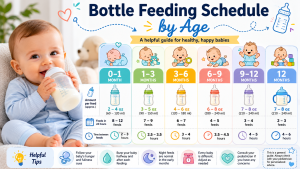
Sample Bottle Feeding Schedule by Age
| Age | Feedings Per Day | Amount Per Feeding |
|---|---|---|
| 0–1 Month | 8–12 | 1–3 oz |
| 1–2 Months | 6–8 | 3–4 oz |
| 2–4 Months | 5–7 | 4–6 oz |
| 4–6 Months | 5–6 | 5–7 oz |
| 6–9 Months | 4–5 | 6–8 oz |
| 9–12 Months | 3–4 | 6–8 oz |
Easy-to-read baby feeding schedule infographic
Signs Your Baby Is Getting Enough Milk
Parents often worry about overfeeding or underfeeding.
Signs your baby is getting enough milk include:
- Consistent weight gain
- Regular wet diapers
- Healthy growth
- Content after feedings
- Normal energy levels
If you have concerns about your baby’s intake, consult your pediatrician.
Common Bottle Feeding Mistakes
Feeding on a Strict Schedule Only
Following hunger cues is often more important than watching the clock.
Ignoring Growth Spurts
Babies may temporarily require more milk during growth spurts.
Overfeeding
Encouraging babies to finish every bottle can lead to discomfort.
Using the Wrong Nipple Flow
A nipple flow that is too fast may cause feeding difficulties.
Helpful Tips for Successful Bottle Feeding
- Hold your baby during feedings.
- Practice paced bottle feeding.
- Burp your baby regularly.
- Monitor hunger and fullness cues.
- Keep feeding equipment clean and sterilized
When to Contact Your Pediatrician
While feeding schedules can serve as helpful guidelines, there are times when professional medical advice is necessary. Contact your pediatrician if your baby consistently refuses feedings, shows signs of dehydration, experiences poor weight gain, vomits frequently after meals, or seems unusually lethargic. Early intervention can help identify and address any feeding or growth concerns.
Breast Milk vs. Formula Feeding Schedules
Both breast milk and formula can provide excellent nutrition for babies, but feeding patterns may differ slightly. Breastfed babies often feed more frequently because breast milk is digested faster. Formula-fed babies may go a little longer between feedings due to slower digestion. Regardless of the feeding method, parents should focus on their baby’s hunger cues and growth rather than strictly following a schedule.
Tracking Your Baby’s Feeding Routine
Keeping a simple feeding log can help parents monitor feeding amounts, feeding times, diaper output, and growth patterns. Many parents use mobile apps or notebooks to track daily feedings. This information can be especially useful during pediatric appointments and can help identify changes in feeding habits over time.
Frequently Asked Questions
How much formula should a newborn drink?
Most newborns consume between 1 and 3 ounces every 2–3 hours.
Can I feed my baby whenever they seem hungry?
Yes. Responsive feeding based on hunger cues is generally recommended.
Is it normal for feeding amounts to vary?
Absolutely. Appetite often changes during growth spurts and developmental stages.
When should I reduce bottle feedings?
Bottle feedings naturally decrease as babies begin eating more solid foods, typically after six months of age.
Final Thoughts
Following a bottle feeding schedule by age can help parents understand their baby’s nutritional needs and create a predictable routine. However, every baby develops differently, so flexibility is important. By paying attention to hunger cues, growth patterns, and feeding behavior, parents can ensure their baby receives the nourishment needed for healthy development.