
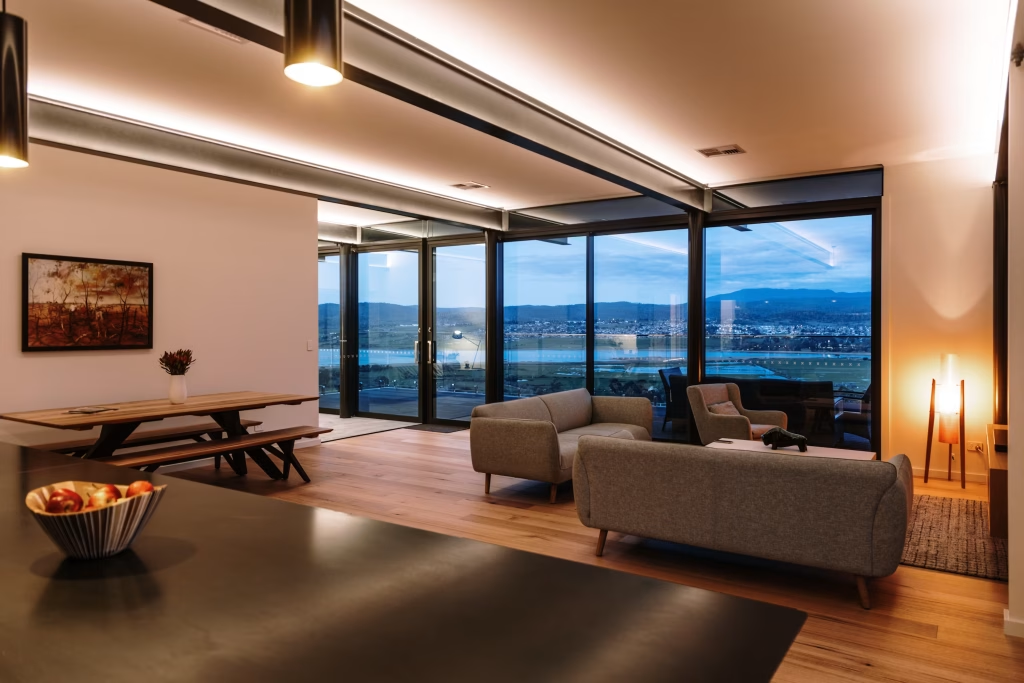

Flipping mechanical wall switches every time you enter or leave a room is a routine of the past. Modern smart lighting technology allows you to transform your home ambiance, enhance security, and lower monthly electricity expenses with minimal physical effort. Learning how to automate home lighting system configurations gives you complete control over brightness levels, color temperatures, and scheduled routines directly through smartphone applications or simple hands-free voice commands.
Upgrading your fixtures does not require completely rewiring your walls or hiring commercial electrical contractors. By understanding the differences between smart LED bulbs, automated in-wall switches, and wireless motion sensors, you can create a tailored setup that aligns with your daily habits. Integrating smart lighting into your living space acts as a major functional upgrade for your overall Smart Home Devices Guide, making your home feel truly modern and intuitive.
Why Automated Lighting Superior to Traditional Bulbs
Traditional lighting relies entirely on manual physical intervention. If you forget to turn off basement or porch lights before leaving for work or heading to bed, those fixtures burn electricity unnecessarily for hours. Furthermore, standard incandescent and halogen bulbs lack dimming flexibility unless paired with specialized physical wall dimmers.
Automated lighting solves energy waste by introducing dynamic scheduling, occupancy tracking, and remote network accessibility. You can configure lights to turn on automatically at sunset, dim gradually as bedtime approaches, or shut off instantly when your smartphone leaves your home Wi-Fi network. Additionally, automated light scheduling serves as an effective security measure, making an empty house appear occupied while you are traveling away from home.
Choosing Between Smart Bulbs and Smart Switches
When figuring out how to automate home lighting system hardware, your first major decision is choosing whether to replace individual light bulbs or upgrade the physical light switches in your walls.
Option A: Smart LED Bulbs for Simple Plug and Play
Smart bulbs are the easiest entry point for renters and home automation beginners. You simply unscrew your existing traditional bulb and screw in the smart LED replacement. Each bulb contains its own built-in wireless radio, allowing you to control individual fixtures independently. Smart bulbs are perfect for floor lamps, bedside table lighting, and fixtures where you want to adjust color temperatures or experiment with millions of RGB color options.
Option B: Smart In-Wall Switches for Multi-Bulb Fixtures
If you have ceiling recessed can lights or chandeliers containing six or eight individual bulbs, buying smart bulbs for every single socket becomes expensive. Installing a single smart in-wall switch allows you to control the entire fixture array at once using your existing traditional bulbs. Smart switches maintain physical wall control for guests while keeping the circuit powered continuously for automated app and voice commands.
Step by Step Guide to Automating Your Lights
Once you have selected your preferred hardware style, implementing automated lighting routines involves a few straightforward software steps.
Step 1: Connect Hardware to Your Local Wireless Network
Screw in your smart bulbs or install your smart switches according to manufacturer electrical safety guidelines. Open the manufacturer companion app on your phone, put the lighting hardware into pairing mode, and connect it to your 2.4 GHz home Wi-Fi network or Zigbee mesh hub.
Step 2: Organize Fixtures by Rooms and Groups
Assign every connected light fixture to a specific virtual room inside your application interface, such as Living Room, Kitchen, or Master Bedroom. Grouping multiple bulbs together allows you to control an entire room with a single tap or voice command rather than toggling individual bulbs one by one.
Step 3: Configure Time and Sensor Based Automation Rules
Create automated schedules inside your smart home app. For example, set outdoor porch lights to turn on automatically at dusk and turn off at sunrise. You can also pair wireless motion sensors in hallways or bathrooms so lights illuminate automatically when motion is detected at night and turn off after three minutes of inactivity.

Advanced Automation Scenarios for Everyday Comfort
Beyond basic daily timers, implementing creative lighting scenes elevates your home living experience significantly:
Sunset and Sunrise Circadian Syncing
Modern smart bulbs can adjust their color temperature automatically throughout the day to match natural sunlight. Cool white light during morning hours boosts alertness and productivity, while warm golden tones in the evening encourage melatonin production to help you relax before sleep.
Movie and Entertainment Scenes
Create custom lighting scenes for entertainment rooms. With a single command like “Movie Time,” your overhead recessed lights can turn off completely while a subtle accent light behind your television dims to ten percent brightness to reduce eye strain.
To review official safety regulations regarding residential electrical installations and energy efficiency standards, you can check the resource details on Illuminating Engineering Society Lighting Energy Standards to ensure your home setup meets industry guidelines.
Crucial Tips for a Reliable Lighting Setup
Following these basic best practices prevents common technical headaches as you expand your lighting network:
-
Educate family members and guests not to turn off physical wall switches connected to smart bulbs, as cutting physical power disconnects the bulb built-in wireless radio from your network.
-
Install smart switch guards or covers over physical light switches if you rely exclusively on smart bulbs and motion sensors.
-
Ensure your home Wi-Fi router can handle the total number of connected devices if you plan to install dozens of individual Wi-Fi smart bulbs throughout your house.
Mastering how to automate home lighting system setups allows you to blend modern convenience, energy efficiency, and home security into your daily routine. By selecting the right combination of smart bulbs, in-wall switches, and automated schedules, you can enjoy perfectly illuminated living spaces that respond effortlessly to your lifestyle every day.