
How often should you change a baby’s diaper? This is one of the most common questions new parents ask. A clean diaper is essential for keeping your baby’s skin healthy, preventing diaper rash, and ensuring overall comfort. While there is no one-size-fits-all schedule, understanding how often you should change a baby’s diaper can help you provide the best care for your little one.
In this guide, you’ll learn the ideal diaper-changing frequency, signs that indicate a diaper change is needed, and expert tips to keep your baby comfortable throughout the day and night.
Why Frequent Diaper Changes Matter
Regular diaper changes are important because babies have delicate and sensitive skin. When a wet or dirty diaper remains on for too long, moisture and bacteria can irritate the skin and increase the risk of diaper rash.
Benefits of changing diapers regularly include:
- Preventing diaper rash
- Reducing skin irritation
- Keeping babies comfortable
- Minimizing bacterial growth
- Supporting healthy skin development
Therefore, maintaining a consistent diaper-changing routine is essential for every parent.
How Often Should You Change a Baby’s Diaper?
Generally, most newborns need a diaper change every 2 to 3 hours during the day. However, the exact frequency depends on the baby’s age, feeding schedule, and bowel movements.
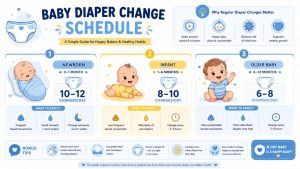
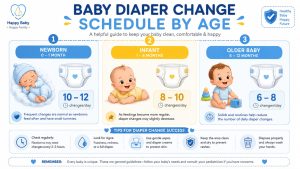
Diaper Change Schedule Infographic
Signs Baby Needs a Diaper Change
Newborns (0–1 Month)
Newborns typically require 10 to 12 diaper changes per day. Since they feed frequently, they also urinate and have bowel movements more often.
Recommended schedule:
- Check diapers every 2 hours
- Change immediately after bowel movements
- Change before and after long naps when necessary
Infants (1–6 Months)
Babies between one and six months usually need 8 to 10 diaper changes daily.
Recommended schedule:
- Every 3 hours during the day
- Immediately after a dirty diaper
- Before bedtime
Older Babies (6–12 Months)
As babies grow and begin eating solid foods, diaper changes may decrease slightly.
Recommended schedule:
- Every 3 to 4 hours
- Whenever the diaper becomes heavily wet
- Right after bowel movements
Should You Change a Baby’s Diaper at Night?
Many parents wonder whether they should wake a sleeping baby for diaper changes.
In most cases:
- Change immediately if the diaper contains stool.
- If the diaper is only wet and your baby is sleeping comfortably, you may wait until the next feeding.
- Use highly absorbent overnight diapers for longer protection.
However, newborns who wake frequently for feeding often need diaper changes during nighttime feedings.
Signs Your Baby Needs a Diaper Change
Rather than relying only on a schedule, watch for these signs:
Wetness Indicator Changes Color
Many modern diapers include a wetness indicator line that changes color when wet.
The Diaper Feels Heavy
A swollen or heavy diaper usually indicates that it is time for a change.
Your Baby Appears Uncomfortable
Some babies become fussy, restless, or irritable when wearing a wet diaper.
Unpleasant Odor
A strong smell often signals that the diaper needs immediate attention.
How to Prevent Diaper Rash
Even if you know how often you should change a baby’s diaper, proper diaper care is equally important.
Follow these tips:
- Change diapers promptly.
- Clean the diaper area gently.
- Allow the skin to air dry.
- Apply diaper cream when needed.
- Choose diapers with good absorbency.
- Avoid overly tight diapers.
As a result, your baby’s skin stays healthier and more comfortable.
Common Diaper Changing Mistakes
Many parents accidentally make these mistakes:
Waiting Too Long Between Changes
Even highly absorbent diapers should not remain on for extended periods.
Ignoring Small Bowel Movements
Small amounts of stool can still irritate sensitive skin.
Using Too Many Wipes
Excessive wiping may cause friction and redness.
Skipping Nighttime Checks
Although babies sleep longer, occasional checks can help prevent skin irritation.
Expert Recommendations
Pediatric experts generally recommend:
- Checking diapers every 2–3 hours.
- Changing immediately after bowel movements.
- Monitoring skin condition regularly.
- Using quality diapers designed for your baby’s age and weight.
By following these recommendations, parents can significantly reduce diaper-related skin issues.
Quick Diaper Change Chart
| Baby Age | Recommended Changes Per Day |
|---|---|
| 0–1 Month | 10–12 |
| 1–6 Months | 8–10 |
| 6–12 Months | 6–8 |
| 12+ Months | 4–6 |
Frequently Asked Questions (FAQ)
How often should you change a baby’s diaper during the day?
Most babies need a diaper change every 2 to 3 hours during the day, although dirty diapers should be changed immediately.
Should I change a diaper after every pee?
Not always. However, newborns and babies with sensitive skin benefit from more frequent changes, especially when diapers become noticeably wet.
Can a baby sleep all night in one diaper?
Older babies using overnight diapers may sleep through the night without needing a change if the diaper contains only urine and is not overly saturated.
How many diapers does a newborn use per day?
Newborns typically use between 10 and 12 diapers daily due to frequent feeding and bowel movements.
What happens if diapers are not changed often enough?
Infrequent diaper changes can lead to diaper rash, skin irritation, discomfort, bacterial growth, and potential infections.
Final Thoughts
Understanding how often you should change a baby’s diaper is essential for maintaining your baby’s comfort and skin health. While most babies need a diaper change every 2 to 3 hours, every child is different. Therefore, always monitor your baby’s diaper condition and respond promptly to wet or dirty diapers.
By following a consistent diaper-changing routine, you can reduce the risk of diaper rash, keep your baby comfortable, and support healthy development from the very beginning.